WhatsApp Cart Recovery for Shopify Stores in India (2026 Playbook)
Cart abandonment kills more Indian Shopify revenue than any other single thing. The standard number across Indian D2C stores in 2026 is that 70 percent of carts never make it to checkout. For a Rs 500 AOV store with 1,000 carts a month, that is Rs 350,000 of revenue that never lands. Email recovery wins back 2-4 percent of those, which is fine but leaves most of it on the table. WhatsApp recovery wins back 8-15 percent of the same carts, with messages that get read within 5 minutes instead of 5 hours.
This guide is the practical playbook for setting up WhatsApp abandoned cart recovery on a Shopify store in India. It covers the 3-message sequence, the exact templates you should submit for Meta approval, the timing windows that actually convert, the real INR cost, and the common mistakes that get cart recovery flows flagged as spam.
Why WhatsApp beats email for cart recovery in India
Email and WhatsApp do different things well. Email is good for long-form content, image-heavy product showcases, and customers who want to comparison shop. WhatsApp is good for time-sensitive simple messages that need to be read in the moment. Cart recovery is exactly the second category.
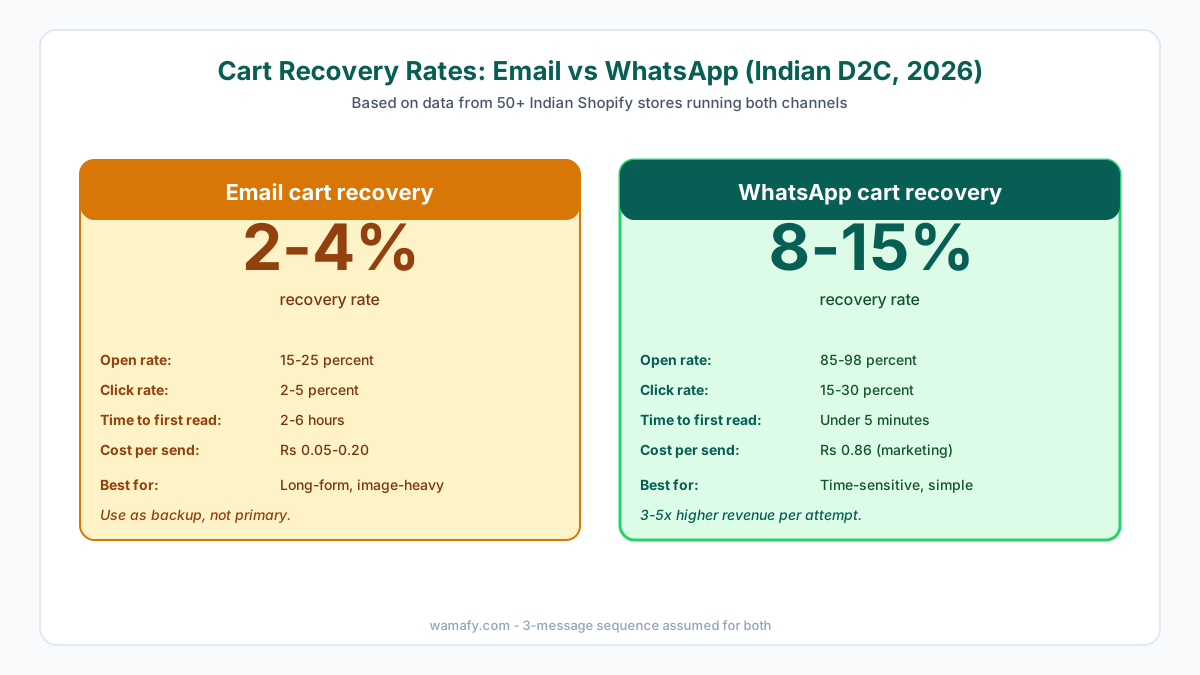
The numbers across 50+ Indian Shopify stores running both channels: email recovery sits at 2-4 percent on a 3-message sequence, with open rates of 15-25 percent and time-to-first-read of 2-6 hours. WhatsApp recovery sits at 8-15 percent on the same 3-message sequence, with open rates of 85-98 percent and time-to-first-read under 5 minutes. The 3-5x lift comes from the basic fact that WhatsApp messages reach the customer while they are still mentally in shopping mode. Email arrives hours later when they have moved on to a different tab.
Use both. Send email as a backup channel for customers without opt-in or those who unsubscribed from WhatsApp. WhatsApp does the heavy lifting; email catches the long-tail.
The 3-message sequence that works
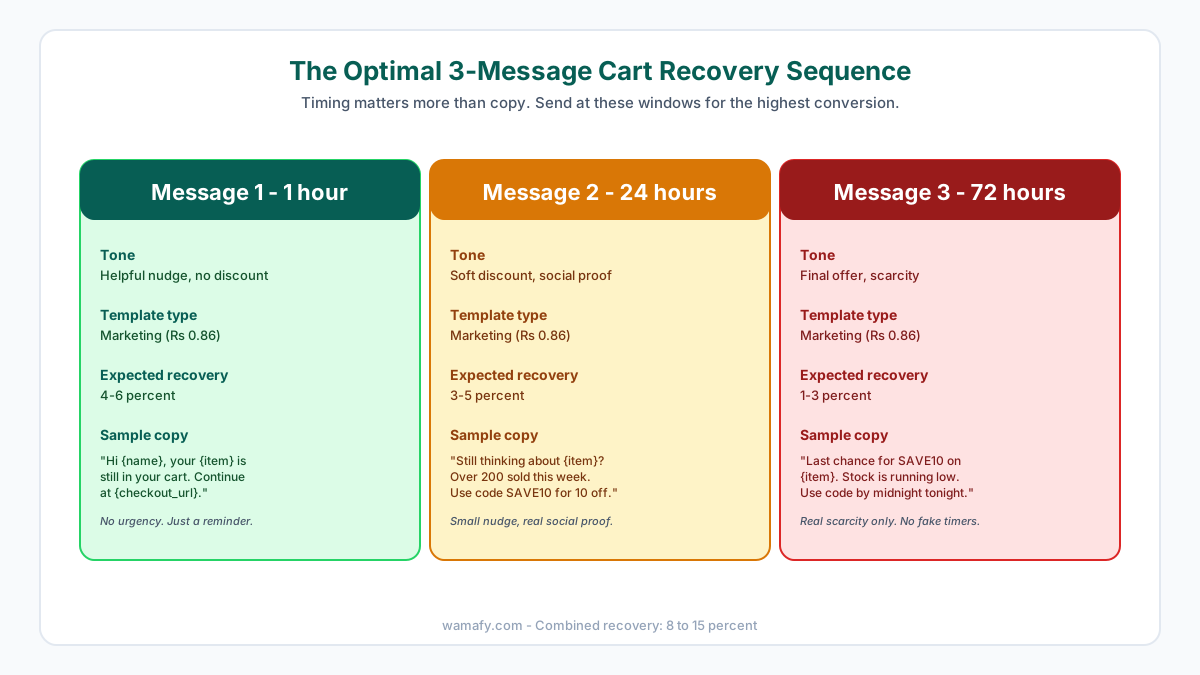
The structure that delivers 8-15 percent recovery across Indian Shopify stores has three messages sent at specific intervals after the cart abandonment. Each message has a different job. Skip the timing rules and your recovery drops by half.
Message 1 at 1 hour: Helpful reminder, no discount
Send the first message 1 hour after cart abandonment. The job here is purely to remind the customer they have an open cart. No discount, no urgency, no social proof. Just a clean nudge with a direct link back to checkout. Recovery on this message alone runs 4-6 percent.
Hi {name}, your {item} is still waiting in your cart. Continue your purchase at {checkout_url}. Reply STOP to opt out.
Why no discount? You will give 4-6 percent of your customers a discount they would have paid full price for. Save the discount for message 2 when the unsold carts are the ones that actually need it.
Message 2 at 24 hours: Soft discount with social proof
If the customer has not converted on message 1, send the second message 24 hours later. Now you can introduce a small discount and a piece of social proof. A 10 percent code is the sweet spot for Indian D2C; smaller and it does not move the needle, larger and you eat your margin. Recovery on this message runs 3-5 percent.
Still thinking about {item}? Over 200 sold this week. Use code SAVE10 for 10 percent off your cart. Shop now at {checkout_url}.
The social proof number needs to be true and verifiable. If you have not sold 200 of the item this week, do not say that you have. Customers can check your reviews and Instagram. Fake numbers tank trust.
Message 3 at 72 hours: Final offer with real scarcity
Send the third and final message 72 hours after abandonment. This is the close-or-lose moment. Mention a real expiration on the code and any real low-stock signal you have. Recovery here is 1-3 percent, which sounds small but is pure margin since these carts would otherwise be lost.
Last chance for SAVE10 on {item}. Stock is running low. Use the code by midnight tonight at {checkout_url}.
Real scarcity only. If you have 50 units in stock, do not say "only 3 left". Fake timers and fake stock counts get you reported as spam, which hits your quality rating. The customers know what is real.
Setting it up on Shopify with WhatsApp Business API
The technical setup takes about 90 minutes if you are doing it for the first time. Most WhatsApp Business API platforms have a Shopify integration that handles the webhook and template firing for you. Here is the step-by-step:
- Connect your store to WhatsApp. Platforms like AiSensy and Interakt have dedicated Shopify apps. Wamafy has a native Shopify integration: you connect your store directly, and WhatsApp templates fire automatically on Shopify webhooks such as abandoned checkouts, order confirmations, and fulfillment updates. The native Shopify integration is available on the Wamafy Forest plan. Developers who want custom triggers can also use the Wamafy REST API. Either way, link your Shopify store to your WhatsApp Business Account.
- Add WhatsApp opt-in at checkout. Add a checkbox at checkout that says "Send me order updates and offers on WhatsApp". This is your opt-in proof. Around 60-80 percent of Indian shoppers tick it.
- Submit 3 marketing templates for approval. One for each message in the sequence. Use the sample copy above as a starting point. Meta usually approves clean cart recovery templates in 15-30 minutes.
- Configure the trigger and timing. In your platform's automation panel, set the trigger to "cart abandoned" and the timing to 1 hour, 24 hours, and 72 hours after the event.
- Test with 5 fake carts. Use your own number and 4 friends. Walk through the full sequence. Look for broken variables, wrong product names, or templates that did not fire.
- Launch to live traffic. Start with 100 percent of abandoned carts from day one. Track recovery rate, unsubscribe rate, and block rate. Adjust if any single message gets above a 2 percent unsubscribe rate.
The real INR cost and ROI math
Cart recovery is one of the highest-ROI flows in WhatsApp marketing because the carts that recover would otherwise be lost. The cost is small. The incremental revenue is large.
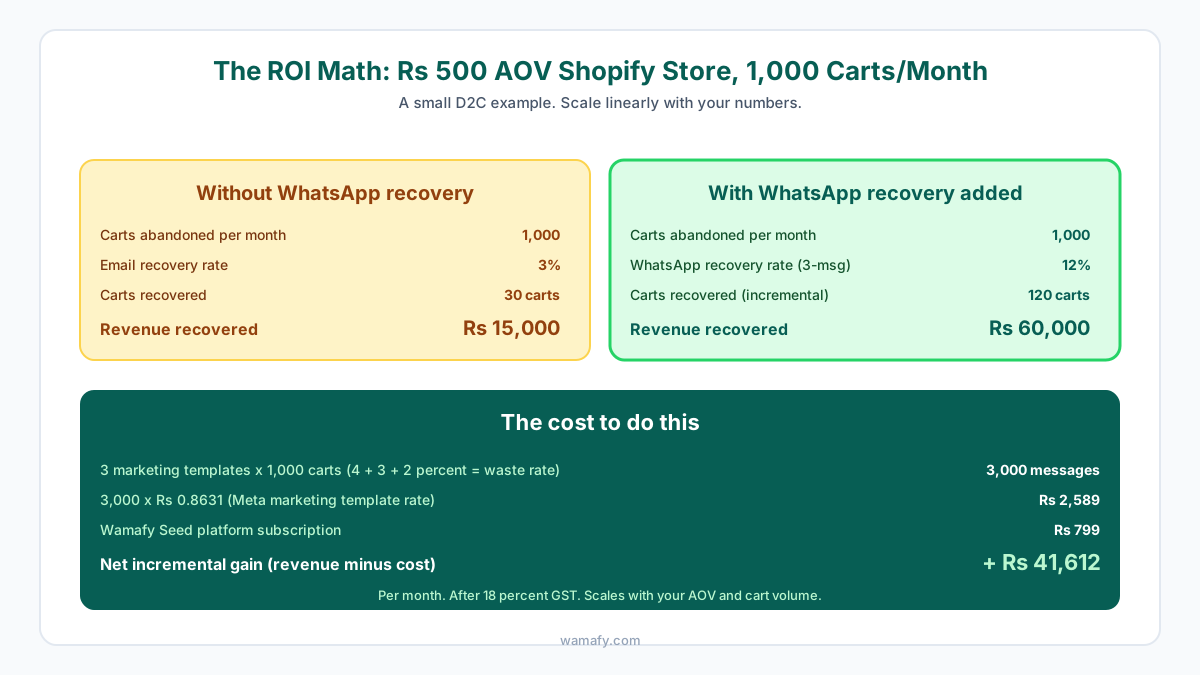
For a Rs 500 AOV store with 1,000 carts a month: email recovery at 3 percent wins back 30 carts and Rs 15,000 in revenue. Adding WhatsApp at 12 percent wins back another 120 carts and Rs 60,000 in incremental revenue. The cost is roughly 3,000 marketing template sends at Rs 0.8631 each (Rs 2,589), plus the Wamafy Seed subscription of Rs 799. Net gain: Rs 41,612 a month after 18 percent GST. Scale that with your AOV and cart volume. For the full pricing math across plans and competitors, see our real cost of WhatsApp marketing in India breakdown.
5 mistakes that kill cart recovery flows
The same five mistakes show up in almost every Shopify WhatsApp cart recovery setup that underperforms or gets flagged. Avoid these and you will be in the top 20 percent of senders:
- Sending too soon. 5 or 10 minutes feels desperate and triggers blocks. 1 hour is the sweet spot for the first nudge. The customer needs time to either come back on their own or move on.
- Discount on message 1. You train customers to abandon carts to get a discount. Save the discount for message 2 when the customer has actually demonstrated they need a nudge.
- No opt-in proof. Sending cart recovery to customers who did not tick the WhatsApp opt-in box at checkout will spike your block rate and tank your quality rating. Always tie cart recovery to explicit opt-in.
- Same copy for everyone. A cart with one Rs 200 item needs a different message than a cart with Rs 5,000 of jewelry. Segment by cart value at minimum: under Rs 500, Rs 500-2000, and above Rs 2000.
- Forgetting to stop the sequence. If the customer completes checkout after message 1, do not send messages 2 and 3. This sounds obvious but is the most common bug in DIY setups. Use a platform that handles this automatically.
For a working flow on how to build the chatbot logic that powers cart recovery sequences, see our no-code WhatsApp chatbot guide.
Frequently Asked Questions
What recovery rate should I expect from WhatsApp cart recovery in India?
Indian D2C Shopify stores running a 3-message WhatsApp sequence typically recover 8-15 percent of abandoned carts. Email recovery on the same carts sits at 2-4 percent. WhatsApp is 3-5x more effective because it gets read within 5 minutes instead of 5 hours.
Do I need a WhatsApp Business API to do cart recovery?
Yes. The WhatsApp Business app cannot automatically trigger cart recovery messages and cannot use approved templates. You need the WhatsApp Business API through a Meta Tech Provider like Wamafy. A Shopify app or API integration then handles the webhook firing for you.
What template category should I use for cart recovery messages?
Marketing template category. Cart recovery is a promotional message that re-engages an inactive customer to complete a purchase, which fits Meta's definition of marketing. Picking utility for a cart recovery template will get it rejected at approval.
How much does WhatsApp cart recovery cost in India?
Each message is a marketing template at Rs 0.8631 per send. A 3-message sequence sent to 1,000 abandoned carts costs Rs 2,589 per month plus your platform subscription. The incremental revenue from a Rs 500 AOV store is around Rs 60,000 per month, giving a net gain of Rs 41,000+ after subscription, message costs, and GST.
When should I send the first cart recovery message?
1 hour after abandonment is the sweet spot in India. Earlier than that feels desperate and triggers blocks. Later than that and the customer has fully moved on. Run the second message at 24 hours and the third at 72 hours for the full 3-message sequence.
Can I do WhatsApp cart recovery without an opt-in checkbox at checkout?
No, not legally. Meta requires explicit opt-in before sending marketing messages on WhatsApp. Add an opt-in checkbox at checkout (around 60-80 percent of Indian shoppers tick it). Sending to non-opted-in customers spikes block rates and triggers number suspension.
Set up cart recovery today
WhatsApp cart recovery is one of the highest-ROI flows you can build on a Shopify store. The setup takes 90 minutes. The first month typically pays for itself many times over. Start a free 14-day Wamafy trial, connect your store, submit your 3 templates, and launch this week. Card is authorized during trial activation and charged only on day 15.