WhatsApp Usernames Are Coming in 2026: What Indian Businesses Must Do Now
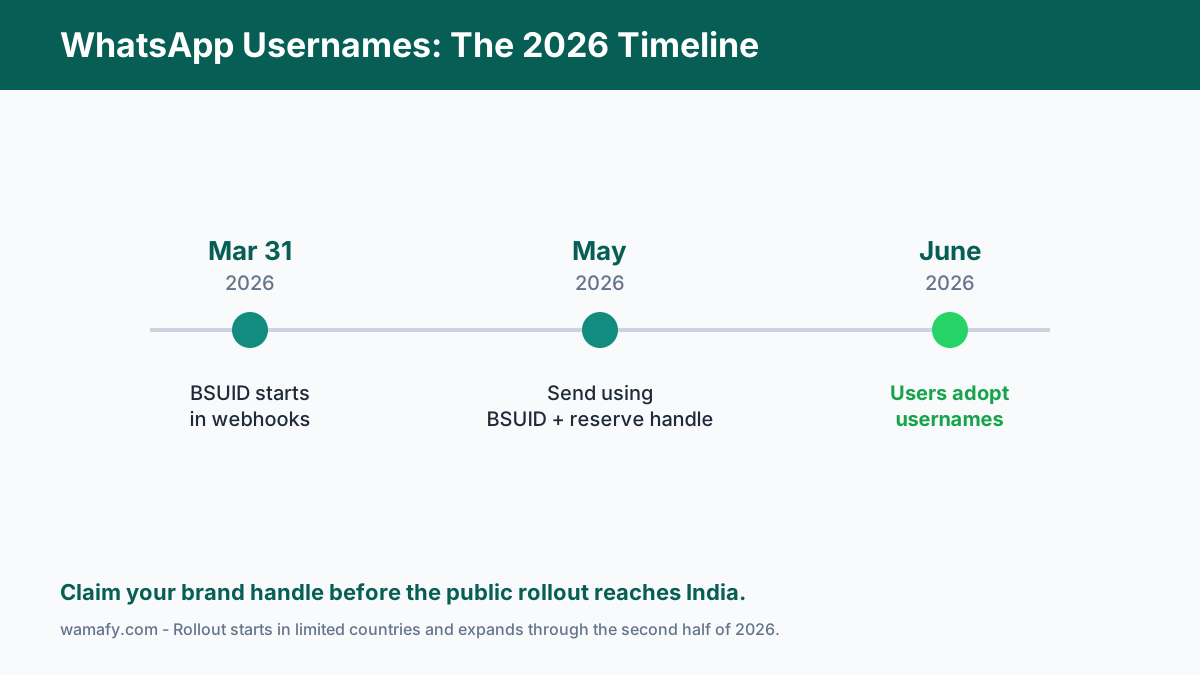
WhatsApp is about to change how customers reach your business. Starting in June 2026, people can use a username instead of their phone number. The phone number you rely on today may simply stop showing up. If you run an Indian business, this is the biggest WhatsApp shift of the year, and most owners have not heard of it yet.
This guide explains what the WhatsApp usernames feature is, why it matters for your business, and the exact steps to take in the next 30 days. The early movers will claim the cleanest handles and avoid a scramble later.
What WhatsApp usernames actually are
A WhatsApp username is a handle, like @yourbrand. It works the way an Instagram handle does. A customer can message you using your handle, and you can hold a handle that matches your brand name.
For regular users, the bigger change is privacy. A customer can pick a username and then message a business without sharing their phone number at all. The feature is optional for users, but adoption is expected to grow fast once it lands.
Behind the scenes, Meta adds a new identifier called the Business-Scoped User ID, or BSUID. When a customer with a username messages you, you receive their BSUID instead of their phone number. The BSUID is unique to that one customer and your business. It is how you keep track of who is who once phone numbers go quiet.
Why this matters for Indian businesses
India is one of the most privacy-aware mobile markets in the world. Urban users already think twice before sharing a number. Younger buyers are used to handles on Instagram and prefer not to expose a phone number to every brand they message.
So in India, username adoption could move quickly. That has two effects for you. First, the handle that matches your brand is worth claiming early, before someone else does. Second, your customer data starts to look different. You will collect more BSUIDs and fewer fresh phone numbers over time.
If WhatsApp is a core channel for your sales or support, this is not a minor update. It changes how you identify customers, how you build lists, and how you word your opt-in flows.
The reservation race has already started
Here is the part that rewards speed. Meta lets eligible businesses reserve a username ahead of the public launch. You do not get a blank field to type anything you want. You can reserve a handle that matches one of these:
- Your WhatsApp Display Name
- Your Official Business Account name
- Your Meta Verified Name
- Your Facebook or Instagram Business handle
Verified businesses with a blue badge get early access to reserve first. Trademark holders get priority if there is a clash. This is mostly first-come, first-served within those rules, so the clean version of your brand handle is a prize worth claiming now.
How to reserve your username
The steps are simple, but the timing matters. Here is the path most businesses will take.
- Check your eligibility. Open WhatsApp Manager or Meta Business Suite. Look for the username or handle reservation option in your account.
- Confirm your names. Make sure your Display Name, Meta Verified Name, and social handles are set the way you want. Your reservable handle is based on these.
- Reserve the handle. Claim the version that matches your brand most cleanly. Shorter and exact-match handles are best.
- Do it through your provider. If you use a Tech Provider, the reservation flows through your account there. A good provider surfaces this option for you rather than making you hunt for it.
If you are not yet on the WhatsApp Business API, setup is the first step. The fastest route is Embedded Signup. See how WhatsApp Embedded Signup works and gets you live in minutes.
What the Contact Book feature does
Meta quietly shipped a related feature in April 2026 called the Contact Book. It is the piece that makes this whole transition manageable, and it is on by default for every business.
Here is how it works. Every time you send or receive a message with a customer's phone number, WhatsApp stores the mapping between that number and their BSUID. The Contact Book is hosted by Meta. You do not build or maintain it.
Why does this matter? Because it protects your existing relationships. Say a long-time customer adopts a username next month. You will still be able to reach them, because the Contact Book already links their phone number to their BSUID in the background. You do not lose contacts you have already earned.
One more useful rule. If you have messaged a customer in the last 30 days, or they are already in your Contact Book, you still receive their phone number along with the BSUID. New, cold contacts who use a username are the ones who arrive as a BSUID only.
What this means for your marketing
The username shift touches a few parts of your WhatsApp marketing. None of it is hard, but you should plan for it.
- Customer profiles change. Store the BSUID as a stable key for each customer. Do not rely on the phone number being present for every new contact.
- Opt-in flows need a look. Some flows assume you have a phone number at first contact. Update them so a BSUID-only customer can still opt in cleanly.
- Opt-out language stays critical. Clear consent and easy opt-out matter as much as ever. If anything, privacy-first users will judge you harder on this. For the rules, read the WhatsApp marketing compliance guide for India.
- Your handle becomes a marketing asset. Put your @handle on your website, ads, and email signature. It is easier to share than a 10-digit number.
What does not change
It is easy to read a big update and assume everything is different. Most of your day-to-day stays the same. Here is what usernames do not touch.
- Per-message rates. Meta's pricing does not change because of usernames. Your marketing and utility message costs stay as they are.
- Template approval. The way you create and submit templates is unchanged.
- Quality rating. The mechanics of your number's quality rating work the same way.
- Existing contacts. Customers you already message keep working through the Contact Book, phone number intact.
So treat this as an identity and privacy update, not a pricing or deliverability one. The core of how you run campaigns is steady. If you are new to all of this, start with the WhatsApp marketing beginner's guide for India.
Your 30-day username checklist
Here is a clean plan to get ready. You can finish most of it in an afternoon.
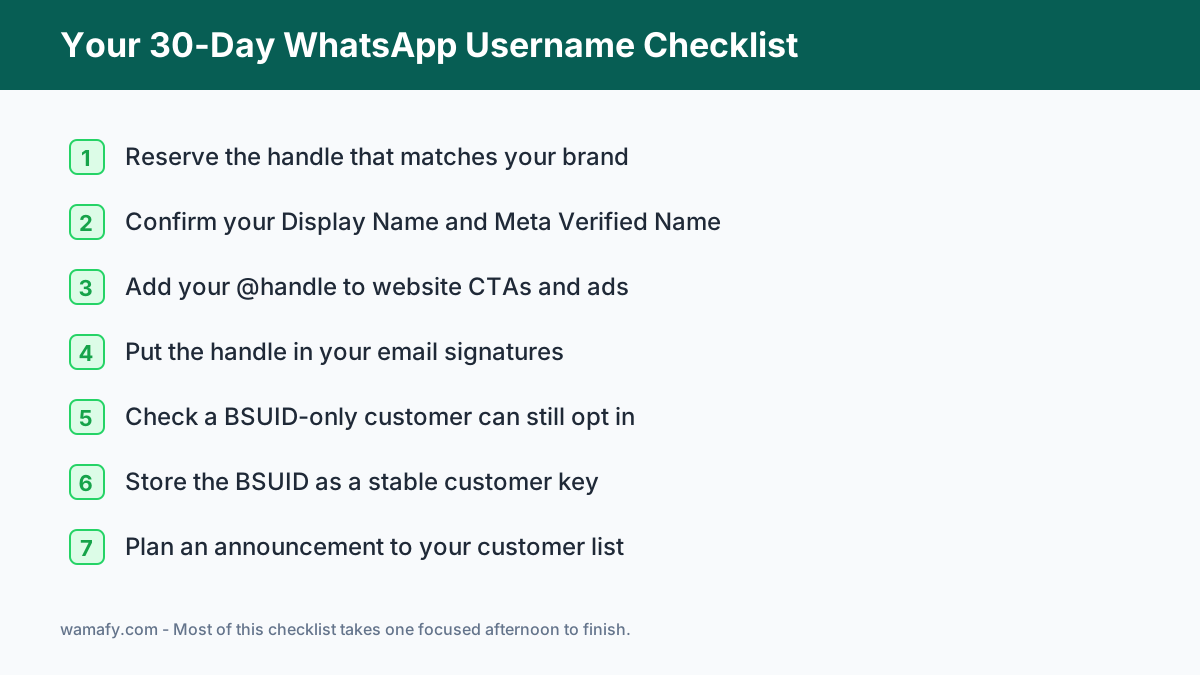
- Reserve your handle. Claim the cleanest brand match now, before the public rush.
- Confirm your account names. Set your Display Name and Meta Verified Name correctly first.
- Update your website CTAs. Add your @handle next to or instead of your number.
- Add the handle to email signatures. Make it easy for customers to find you.
- Check your opt-in flows. Confirm a BSUID-only customer can still subscribe.
- Store BSUID as a key. Update your records so each customer has a stable identifier.
- Plan an announcement. Tell your list you now have a WhatsApp handle.
Frequently Asked Questions
When do WhatsApp usernames launch?
Meta starts rolling out usernames in June 2026, beginning with a limited set of countries and expanding through the second half of the year. Business reservation access and BSUID support arrived earlier in 2026 so businesses could prepare.
Can two businesses have the same WhatsApp username?
No. Each handle is unique. Reservation is based on your existing names and is mostly first-come, first-served, with trademark holders getting priority in a clash. That is why claiming your brand handle early matters.
What is a BSUID on WhatsApp?
BSUID stands for Business-Scoped User ID. It is a backend identifier that uniquely links one customer to your business. When a customer uses a username, you receive their BSUID instead of their phone number.
Will I lose my existing WhatsApp contacts?
No. The Contact Book, on by default since April 2026, maps each customer's phone number to their BSUID. Customers you have already messaged stay reachable, with their phone number intact.
Do WhatsApp usernames change my message pricing?
No. Usernames are an identity and privacy feature. Per-message rates, template approval, and quality rating all work exactly as before. Only how you identify new customers changes.
What happens if someone squats on my brand handle?
Reservation rules favor verified businesses and trademark holders, which reduces squatting risk. The safest move is to reserve your handle as early as you can rather than wait for the public rollout.
The bottom line
WhatsApp usernames are a real shift, but a manageable one. The work is small and the window is now. Claim the handle that matches your brand, store the BSUID as your customer key, and tidy up your opt-in flows. Do that this month and you stay ahead of the change instead of reacting to it.
Want a platform that surfaces these updates and handles setup for you? Start a 14-day free Wamafy trial. Your card is authorized during trial activation and charged only on day 15. Get your number live, reserve your handle, and be ready before usernames reach your customers.