Budgeting WhatsApp From Onam to Diwali (2026 Festive Cost Plan)
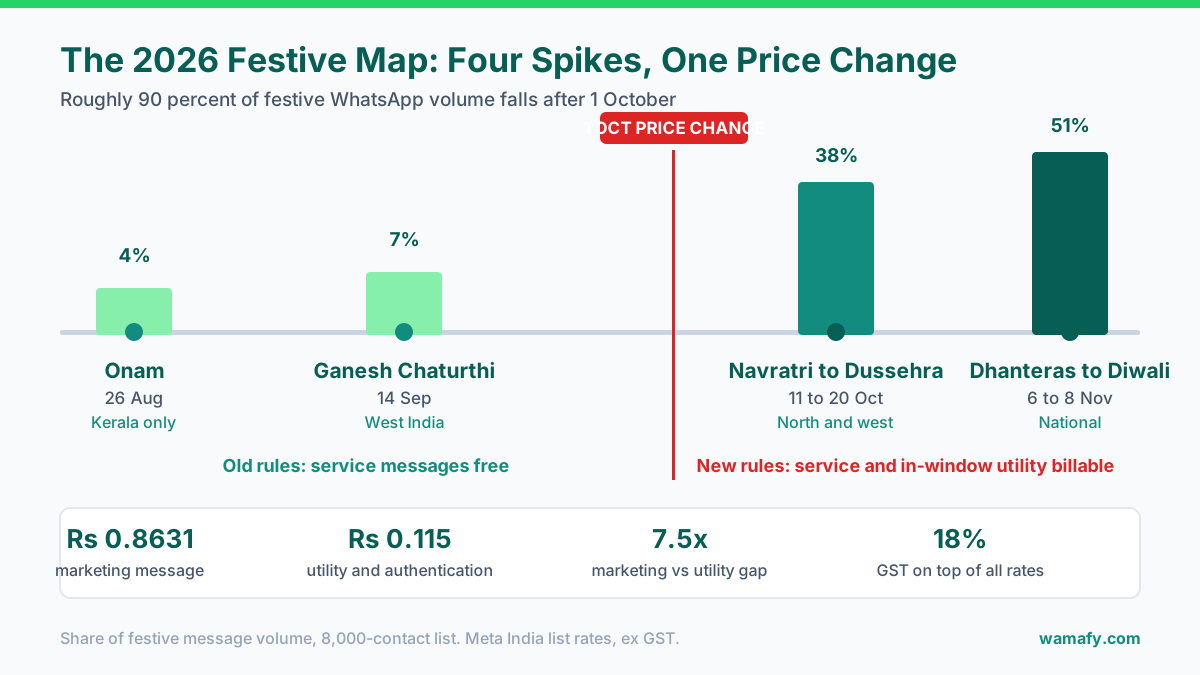
The short answer: the 2026 festive run is four separate spikes, not one long sale. And this year a price change cuts straight through the middle of it. Diwali falls on 8 November 2026, which is nineteen days later than last year. That pushes roughly 90 percent of your festive WhatsApp volume past the 1 October pricing change. Budget per moment, not per season, or you will overspend in September and run dry in November.
The 2026 festive map: four spikes, not one season
Most festive guides treat the season as one long block from September to November. That is a budgeting mistake. Your customers do not shop in a block. They shop in bursts. Each burst has a different audience.
Here is how 2026 actually falls:
| Moment | 2026 date | Who it reaches |
|---|---|---|
| Onam (Thiruvonam) | Wed 26 August | Kerala. Holidays run 25 to 28 August. |
| Ganesh Chaturthi | Mon 14 September | Maharashtra, Goa, parts of Karnataka and Telangana. |
| Navratri to Dussehra | 11 to 20 October | Gujarat, the north and the west. Ten days, not one. |
| Dhanteras to Diwali | 6 to 8 November | National. The single biggest spend window. |
Two of these are regional. Onam is a Kerala event. Ganesh Chaturthi is mostly a western India one. Blast your whole national list for either and you pay full price. Most of those people do not mark the festival at all.
Then there is the calendar shift. 2026 carries an extra lunar month. Most festivals land later than they did in 2025. Diwali 2025 was 20 October. Diwali 2026 is 8 November. Your festive season is longer this year. It is also weighted much harder toward the back end.
When each moment actually needs to start
The date of a festival is not the date you send. Indian festive buying starts well before the day itself. Sending on the day is usually too late.
Use these lead times as a default:
- Onam and Ganesh Chaturthi: start 7 to 10 days out. These are shorter, more local buying windows.
- Navratri to Dussehra: start 5 days before Navratri opens on 11 October. The window runs ten days. Pace your steps across it rather than front-loading them.
- Dhanteras to Diwali: start 14 days out, around 23 October. Dhanteras on 6 November is the peak for anything treated as an auspicious purchase.
Lead time shapes your budget too. A campaign that starts 14 days out has room for four steps. One that starts three days out does not. Leave planning late and you pay for a compressed blast. It will perform worse than a paced sequence.
Building the message budget
WhatsApp campaign cost in India is easy to work out. You need three numbers.
- List size for that moment, after segmenting
- Steps in the sequence (teaser, offer, reminder, last call)
- Rate per message, which is Rs 0.8631 for a marketing template in India
Multiply the three, then add 18 percent GST. That is your Meta bill. A marketing message costs Rs 1.0185 all in.
Take a D2C brand with 8,000 opted-in contacts. Here is a sensible plan across the four moments:
| Moment | Contacts | Steps | Messages | Cost (ex GST) |
|---|---|---|---|---|
| Onam (Kerala only) | 1,200 | 2 | 2,400 | Rs 2,071 |
| Ganesh Chaturthi (west only) | 2,000 | 2 | 4,000 | Rs 3,452 |
| Navratri to Dussehra | 8,000 | 3 | 24,000 | Rs 20,714 |
| Dhanteras to Diwali | 8,000 | 4 | 32,000 | Rs 27,619 |
| Total | 62,400 | Rs 53,857 |
With GST that is Rs 63,552 for the season. Now look at where it sits. Diwali alone is 51 percent of the spend. Navratri is another 38 percent. The two August and September moments together are under 11 percent.
This is the number that should shape your plan. Nearly 90 percent of your festive messages get sent in October and November. If you spend freely in September, you are borrowing from the month that actually pays.
Where markup quietly doubles the bill
The table above is what Meta charges. It is not what most Indian businesses pay.
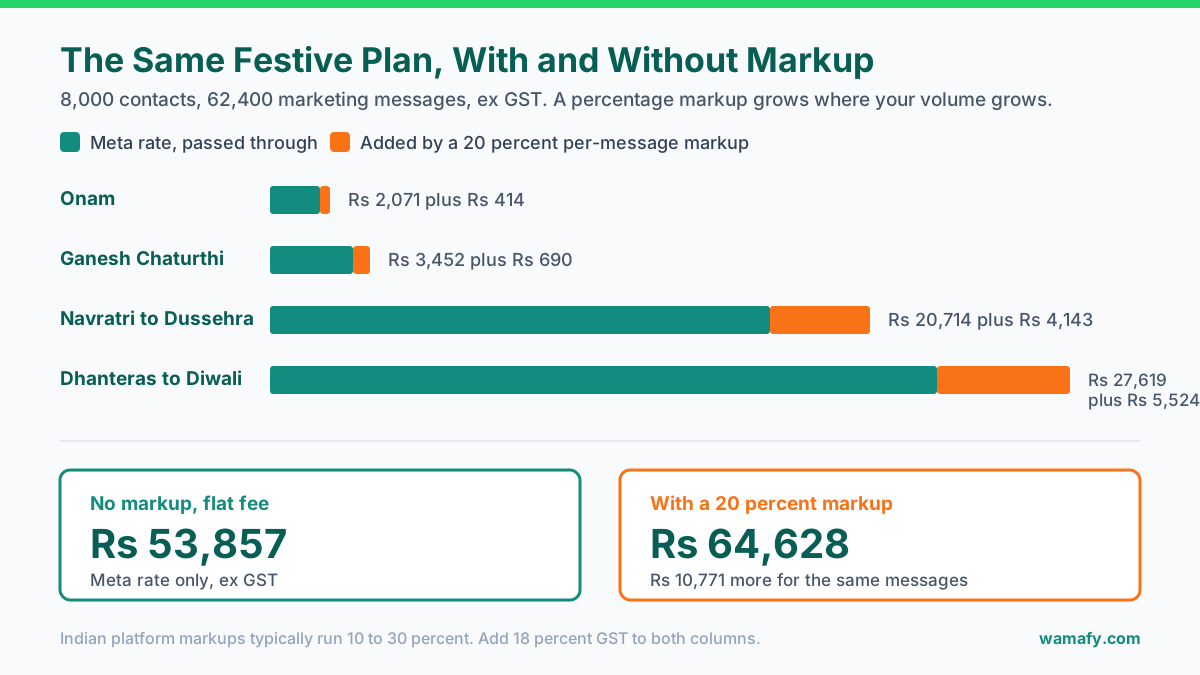
Most WhatsApp platforms in India add a per-message markup on top of Meta's rate. The usual range is 10 to 30 percent. Some also charge per conversation on top of that. On a Rs 53,857 season, a 20 percent markup adds Rs 10,771 before GST.
Here is the part that catches people out. The markup is a percentage. Your bill is back-loaded. So the markup grows fastest in exactly the weeks when your volume peaks. A cost you barely noticed at Onam becomes a real line item at Diwali.
A 20 percent markup on a September test campaign costs you Rs 690. The same 20 percent across Navratri and Diwali costs you Rs 9,667. Same rate. Very different bill.
This is why the pricing model matters more than the sticker price. A platform with a lower monthly fee and a per-message cut can cost far more across a festive season than a flat-fee platform. The cheapest WhatsApp marketing platform guide walks through this maths across six Indian platforms. Wamafy passes Meta's rate through with no markup, so the table above is the bill.
The 1 October change lands mid-festive
From 1 October 2026, two things stop being free on the WhatsApp Business Platform:
- Service messages. These are the free-form replies your team or chatbot sends inside the 24-hour customer service window.
- Utility templates sent in-window. These have been free since July 2025. That ends.
Meta has said these will be charged at the same rate as utility and authentication templates in each country. In India that rate is Rs 0.115 today. Meta confirms exact figures by 1 September, so treat that as a planning number and check it before you lock your budget.
Now put it on the calendar. 1 October sits after Ganesh Chaturthi and before Navratri. So Onam and Ganesh Chaturthi run under the old rules. Navratri, Dussehra, Dhanteras and Diwali all run under the new ones.
What does that actually cost? Less than the panic suggests. Take the same store, doing 900 orders across the festive peak. Three utility templates per order, plus four free-form replies per order, is 6,300 messages. At Rs 0.115 that is Rs 725 before GST.
That is the honest picture for most SMBs. The 1 October change is a few hundred to a few thousand rupees. Your marketing templates are the real cost. Do not let a small change distract you from a Rs 53,000 line item.
Support-heavy businesses are the exception. Restaurants, clinics and travel firms answer far more messages per order. Send 20,000 in-window messages in the peak and that is Rs 2,300 before GST. It also keeps running after the season ends. There is a fuller breakdown in the guide to what changes with service message pricing.
Cheap wins that cost you nothing
Three things reduce your festive bill without cutting a single customer from your list.
1. Use the free entry point window
When someone messages you from a click-to-WhatsApp ad, you get a 24-hour service window. Reply inside it, and a 72-hour free entry point window opens. For those three days you can send any message type at no charge.
For festive traffic this is significant. Ad-driven conversations cost nothing to run for three days, which is long enough for most purchase decisions. Wamafy captures click-to-WhatsApp ad leads and routes them into a chatbot or Flow, then sends conversion events back through the Conversions API. The ad itself is still built in Meta Ads Manager.
2. Categorise correctly
A marketing template costs Rs 0.8631. A utility template costs Rs 0.115. That is a 7.5x gap.
Order confirmations, shipping updates and delivery alerts are utility messages. They should never be written as marketing. Add a discount code to an order update and it can be reclassified as marketing. Every one of those messages then costs 7.5 times more. Across a 900-order peak, that one slip costs about Rs 2,000.
3. Segment by region
Sending an Onam offer to your Delhi list is money spent on people who are not celebrating. In the plan above, segmenting Onam to Kerala saved 13,600 messages against a full national blast. That is Rs 11,738 before GST, on one campaign.
Where to cut when the budget is fixed
Say your festive budget is capped at Rs 40,000 and the plan says Rs 53,857. Something has to go. There are two ways to cut, and they are not equal.
Option A: trim the list. Drop your Diwali audience from 8,000 to 6,000, keeping four steps. That is 24,000 messages instead of 32,000. You save Rs 6,905.
Option B: drop a step. Keep all 8,000 contacts, run three steps instead of four. That is also 24,000 messages. You also save Rs 6,905.
Same saving. Very different outcome. Option A means 2,000 customers never hear from you at all. Option B means every customer still hears from you, just one time fewer.
Almost always, drop the step. In classic direct marketing the advice runs the other way, because extra exposures cost little. WhatsApp is different. Every extra message is a real per-message charge. It also carries a real opt-out and quality-rating risk. And the fourth step in a festive sequence is usually the weakest performer anyway. On a paid, opted-in channel, keeping reach is the safer cut.
If you must cut deeper, cut the middle of the sequence rather than the first or last message. The teaser sets up the offer and the closing reminder catches procrastinators. The message in between does the least work.
Your one-page festive budget template
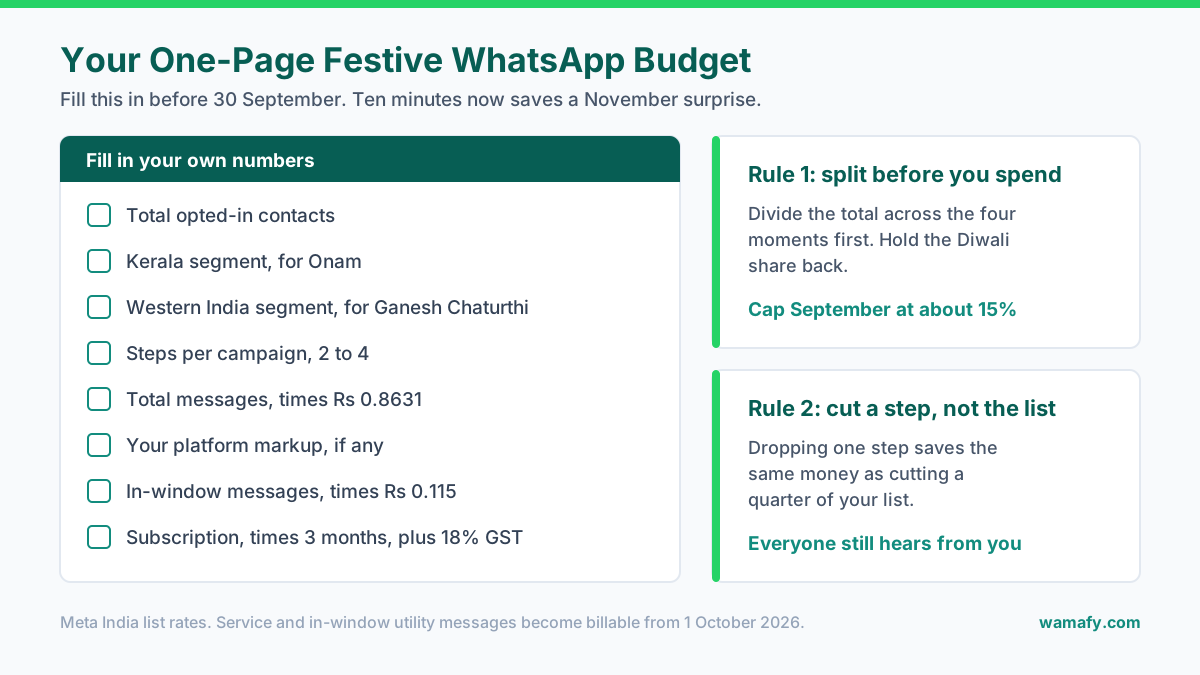
Fill this in for your own list. It takes about ten minutes and it will save you from a November surprise.
| Line | Your number |
|---|---|
| Total opted-in contacts | |
| Kerala segment (for Onam) | |
| Western India segment (for Ganesh Chaturthi) | |
| Steps per campaign (2 to 4) | |
| Total marketing messages across all four moments | |
| Multiply by Rs 0.8631 | |
| Add your platform's per-message markup, if any | |
| Expected festive orders | |
| In-window messages per order, times Rs 0.115 (October onward) | |
| Monthly platform subscription, times 3 | |
| Add 18 percent GST to everything | |
| Festive total |
Two rules for using it. First, split the total across the four moments before you spend anything, and hold the Diwali share back. Second, do the whole thing before 30 September. After that you are budgeting inside the peak, which is the worst time to find out your numbers were wrong.
For the full cost stack beyond messages, including subscription and setup, see the real cost of WhatsApp marketing in India. For how per-message billing has behaved since it replaced conversation pricing, see one year of per-message pricing.
Frequently Asked Questions
How much does festive WhatsApp marketing cost in India in 2026?
A marketing template costs Rs 0.8631 per message, or Rs 1.0185 with 18 percent GST. Take a brand with 8,000 contacts. Running all four festive moments sends about 62,400 messages. That works out to roughly Rs 63,552 with GST, before any platform fee or markup.
Should I hold budget back for Diwali?
Yes. Diwali and Navratri together account for close to 90 percent of festive message volume in 2026, because Diwali falls on 8 November. Spend no more than about 15 percent of your festive budget before the end of September.
Is a utility template always cheaper than a marketing template?
In India, yes. Utility is Rs 0.115 against Rs 0.8631 for marketing, a 7.5x difference. But the category is decided by content, not by your intent. Adding a promotional offer to an order update can reclassify it as marketing and you pay the higher rate.
What exactly changes on 1 October 2026?
Free-form service messages inside the 24-hour customer service window become billable, and utility templates lose their in-window free status. Both are expected to be charged at the utility and authentication rate. Meta publishes the exact rates by 1 September 2026.
Does the click-to-WhatsApp ads free window still apply after October?
Yes. Conversations that start from a click-to-WhatsApp ad or a Facebook call-to-action button still open a 72-hour free entry point window once you reply. Any message type inside that window is free, which makes ad-driven festive traffic notably cheaper to serve.
Is it better to message fewer people or send fewer messages?
Send fewer messages to the same people. Cutting one step from a four-step sequence saves the same money as cutting a quarter of your list, but every customer still hears from you. Reach beats frequency on an opted-in list.
Plan the season before it plans you
The 2026 festive run gives you plenty of warning. Onam has passed. Ganesh Chaturthi is three weeks out. The two moments that carry 90 percent of the spend are still more than a month away. That is time enough to segment your list, fix your template categories and set a cap per moment.
Wamafy charges a flat monthly fee and passes Meta's rate through with no per-message markup, so the budget you plan is the bill you get. Plans start at Rs 799 a month. Start a 14-day free trial to price your own festive plan properly. A card is authorized when the trial begins and charged only on day 15.