One Year of Per-Message Pricing: What Changed for Indian SMBs
WhatsApp per-message pricing turned one year old on July 1, 2026. On that date in 2025, Meta stopped charging for 24-hour conversations and started charging for each template message it delivers. A year on, the summary for Indian SMBs is short. The model is simpler. The free window is shrinking. Your bill now moves with how many messages you send, not how many chats you open.
This is a look back at what it did to real bills in India. It also covers what has happened to rates since, and how to plan the next six months.
What changed on July 1, 2025
Before that date, Meta billed you per conversation. You paid once to open a 24-hour window with a customer. Inside that window you could send several template messages for no extra charge.
After July 1, 2025, every delivered template is its own charge. The price depends on the template category and the country. India has its own rate card.
Three things are worth knowing about how it works now:
- You pay on delivery, not on send. If a message fails before it reaches the phone, Meta does not charge for it.
- Free-form replies are still free. Non-template messages stopped being billed in November 2024. That is changing soon, and it matters a lot. More on that below.
- Category decides the price. Marketing costs many times more than utility. Putting each template in the right bucket is now a direct way to cut costs.
The same campaign, three times the billable events
The clearest way to see the change is a campaign you have probably run.
Say you have 2,000 opted-in customers and a two-day sale. You send a launch message, a mid-sale reminder, and a last-chance message. All three land inside roughly the same window.
Under the old model, opening the conversation was the billable event. Under the new one, each delivered template is. The same campaign that once counted as 2,000 billable events now counts as 6,000.
The India marketing rate is now about Rs 0.8631 per message. Those 6,000 messages cost close to Rs 5,179 from Meta. That is before your plan fee and before 18 percent GST.
Nothing about your customer list changed. Only the counting did.
Who gained and who lost
The change was not bad news for everyone. It split senders into two groups.
Firms that gained send a small number of high-value messages. A store sending one order confirmation and one delivery update per customer was previously paying to open a conversation. Now it pays two utility messages at roughly Rs 0.115 each. Senders who lean on utility often saw bills fall.
Firms that lost send many marketing messages to the same people. Multi-step sale campaigns, drip sequences, and daily offer blasts all got more expensive, because every step is now its own charge. If your WhatsApp drip campaign has five steps, you are paying five times.
The practical takeaway: cut messages that do not earn their keep. A reminder that lifts sales by two percent was cheap under conversation pricing. It may not be now.
How markup turned one rate rise into three
Here is the part that separated platforms.
Meta raised India marketing rates by about 10 percent on January 1, 2026. The rate moved from Rs 0.7846 to Rs 0.8631 per message.
If your platform charges Meta's rate and nothing more, your cost went up 10 percent. If your platform adds a markup on every message, your cost went up 10 percent too. But it rose from a higher base. The markup itself grew in rupee terms.
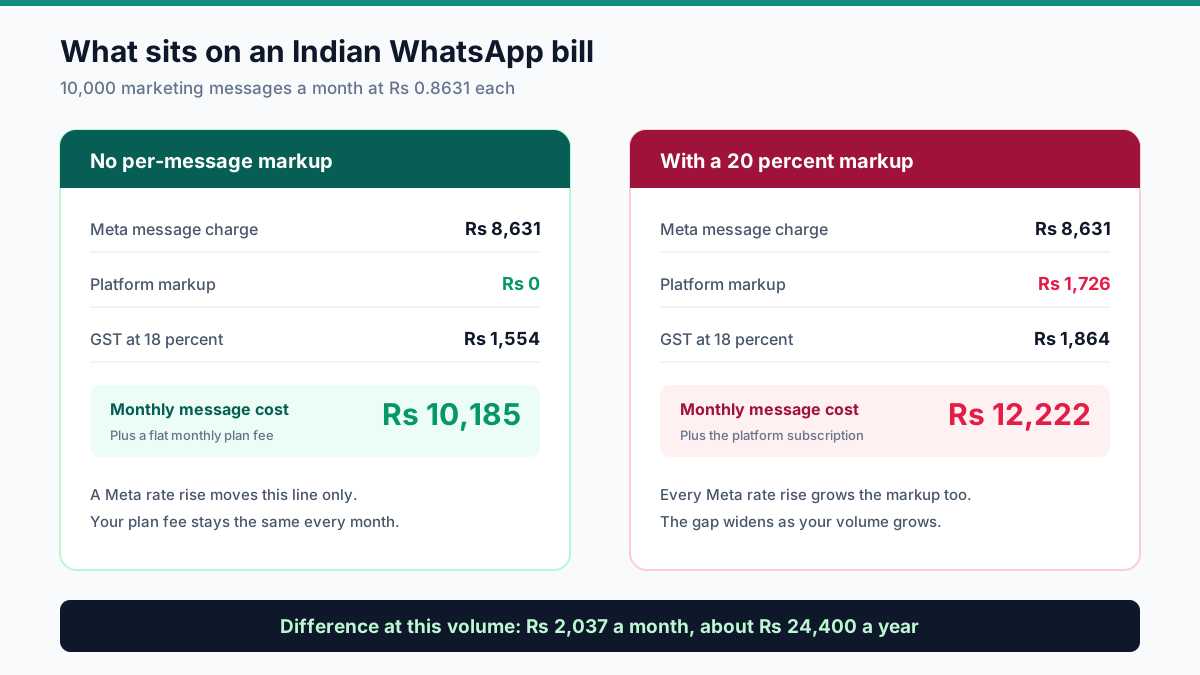
Work it through on 10,000 marketing messages a month:
| Cost line | No markup | With 20% markup |
|---|---|---|
| Meta rate per message | Rs 0.8631 | Rs 0.8631 |
| What you actually pay per message | Rs 0.8631 | Rs 1.0357 |
| Monthly message cost | Rs 8,631 | Rs 10,357 |
| Extra markup paid per year | Rs 0 | Rs 20,714 |
That gap is not a one-time thing. It widens every time Meta raises a rate, and 18 percent GST applies on top of both the Meta charge and the platform fee. This is the whole reason Wamafy charges no per-message markup and bills a flat monthly plan instead.
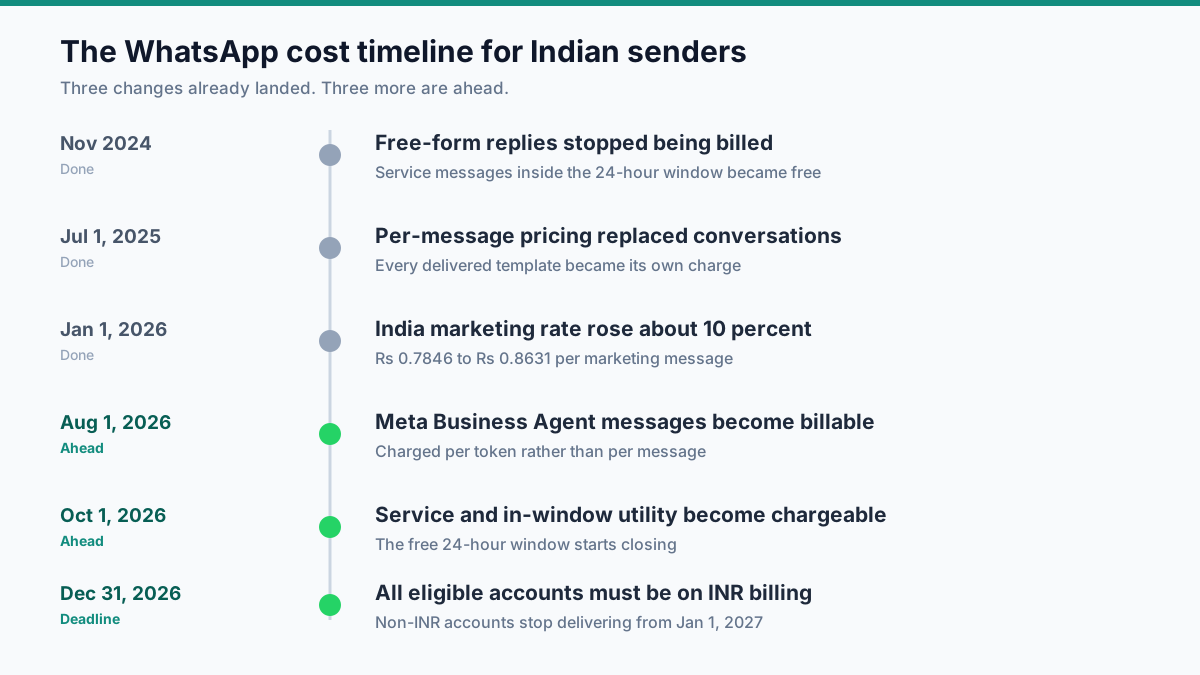
Three more cost events since
Per-message pricing was not a single event. It opened a run of changes.
January 1, 2026: rates rose about 10 percent
Marketing went to Rs 0.8631. Utility and authentication stayed far cheaper, near Rs 0.115. The gap between categories is now wide enough that putting a template in the wrong bucket costs you real money.
January 2026 onward: billing moved to INR
Meta launched local billing in Indian rupees. Eligible businesses must move every WhatsApp Business Account to INR by December 31, 2026. From January 1, 2027, Meta will stop delivering messages for eligible accounts that have not moved.
There is a catch that surprises people: an existing USD-billed account cannot simply be switched. You create a new WhatsApp Business Account and pick INR at setup. Plan for that, because it is not a settings toggle. The full walkthrough is in the guide on moving your WhatsApp billing to INR.
October 1, 2026: the free window starts closing
This is the big one, and it is only weeks away. Service messages, meaning the replies you send inside the 24-hour customer service window, become billed. Utility templates sent inside that window get billed too. Meta Business Agent messages start being billed from August 1, 2026.
Plenty of Indian firms built their whole cost plan around that free window. A detailed breakdown of both dates is in the post on WhatsApp service message pricing in 2026.
Read the run of dates together and the pattern is clear. In 2024, replies became free. In 2025, conversations gave way to messages. In 2026, rates rose and the free window began to close. The generous phase is ending.
What is coming: max-price bidding
One change ahead is worth watching, because it is the first that could push costs down.
Meta is testing max-price bidding for marketing messages. You set the most you are willing to pay for a delivery. Meta then delivers only where the auction price sits under your cap. Recipients more likely to engage cost more to reach. Quieter contacts cost less.
It works much like bidding on click-to-WhatsApp ads. The trade-off is simple: early estimates point to savings of roughly 15 to 25 percent, in exchange for reaching fewer people.
A small beta runs through mid-2026. An open beta is due around October 2026. Nothing to act on today, but if your marketing volume is high, this is the lever that could offset the October increases. Watch for it.
How to budget for the festive season
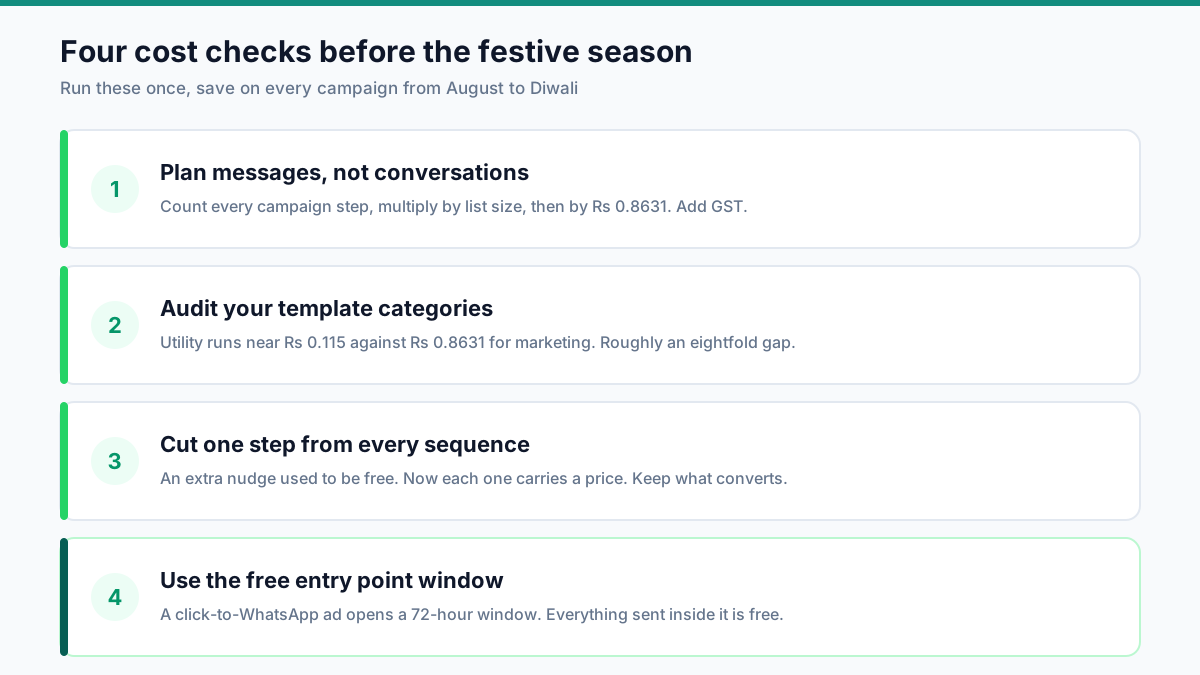
India's sale calendar runs hard from August through Diwali. Four things are worth doing before it starts.
- Plan messages, not conversations. Write out every campaign step and multiply by your list size. That number times Rs 0.8631 is your marketing floor. Add GST.
- Audit your template categories. An order or delivery update belongs in utility. The price difference between categories is roughly eightfold.
- Cut one step from every sequence. Under the old model, an extra nudge was free. Now each one has a price. Keep the steps that convert and drop the rest.
- Use the entry point window. When someone reaches you through a click-to-WhatsApp ad, a free 72-hour window opens. Anything you send inside it costs nothing. For ad-led firms this is the most missed saving on the platform.
For a full breakdown of every line on an Indian WhatsApp bill, see the guide to the real cost of WhatsApp marketing in India.
Frequently Asked Questions
What is per-conversation pricing on WhatsApp?
It was Meta's old billing model, retired on July 1, 2025. You paid once to open a 24-hour window with a customer and could send several templates inside it at no extra cost. Meta now charges for each delivered template instead.
How much does a WhatsApp marketing message cost in India?
Meta's marketing rate is about Rs 0.8631 per delivered message as of January 1, 2026. Utility and authentication templates are far cheaper at roughly Rs 0.115. On top of Meta's charge you pay your platform fee, any per-message markup, and 18 percent GST.
Do I get charged if a WhatsApp message is not delivered?
No. Meta charges only for messages it delivers. A message that fails before reaching the recipient is not billed, one of the real wins in the per-message model.
Are WhatsApp service messages still free?
They are free until October 1, 2026. After that date Meta charges for service messages and for utility templates sent inside the 24-hour service window. If you lean on that free window, redo your cost math now.
Why did my WhatsApp bill go up even though my customer list stayed the same?
Two reasons. Per-message pricing counts every template step separately, so a three-step campaign now bills three times instead of once. And India marketing rates rose about 10 percent on January 1, 2026. If your platform adds a percentage markup, both effects hit you harder.
Does moving my WhatsApp billing to INR change my rates?
The move is about the currency you are invoiced in, not a separate rate change. The rate rise happened on January 1, 2026 regardless. The deadline to move is December 31, 2026. An old USD account cannot be switched. You need to open a new one with INR picked at setup.
Where this leaves you
A year of per-message pricing has made WhatsApp costs easier to plan. It has also made careless sending costly. Every extra message in a sequence now has a rupee value on it. And the free parts of the platform are being pulled back in stages.
Firms handling this well do two dull things. They send fewer, better messages. And they refuse to pay a markup on top of Meta's rate. The first is a content problem. The second is a platform choice.
Wamafy bills a flat monthly plan starting at Rs 799 and adds no markup to Meta's per-message rate. You keep your own WhatsApp Business Account. What Meta charges is what you pay. Start a 14-day free trial to see your real numbers. The card is authorised when the trial begins and charged only on day 15.