WhatsApp Service Messages Are No Longer Free: What Changes in 2026
The free part of WhatsApp is shrinking. For a while now, the two-way replies you send inside a customer chat have been free. That is ending. Meta has confirmed two dated changes to WhatsApp service message pricing in its official non-template message pricing documentation. One lands on August 1, 2026, the other on October 1. Together they turn several previously free message types into billable ones. If you run support or a chatbot on WhatsApp, this hits your bill. Here is exactly what changes, who it affects, and how to prepare before the dates land.
None of this is a reason to panic. The amounts per message are small, and templates you already pay for are not changing. But the change rewards businesses that understand their message mix. It quietly raises costs for those who do not. This guide gets you on the right side of it.
The two dates at a glance
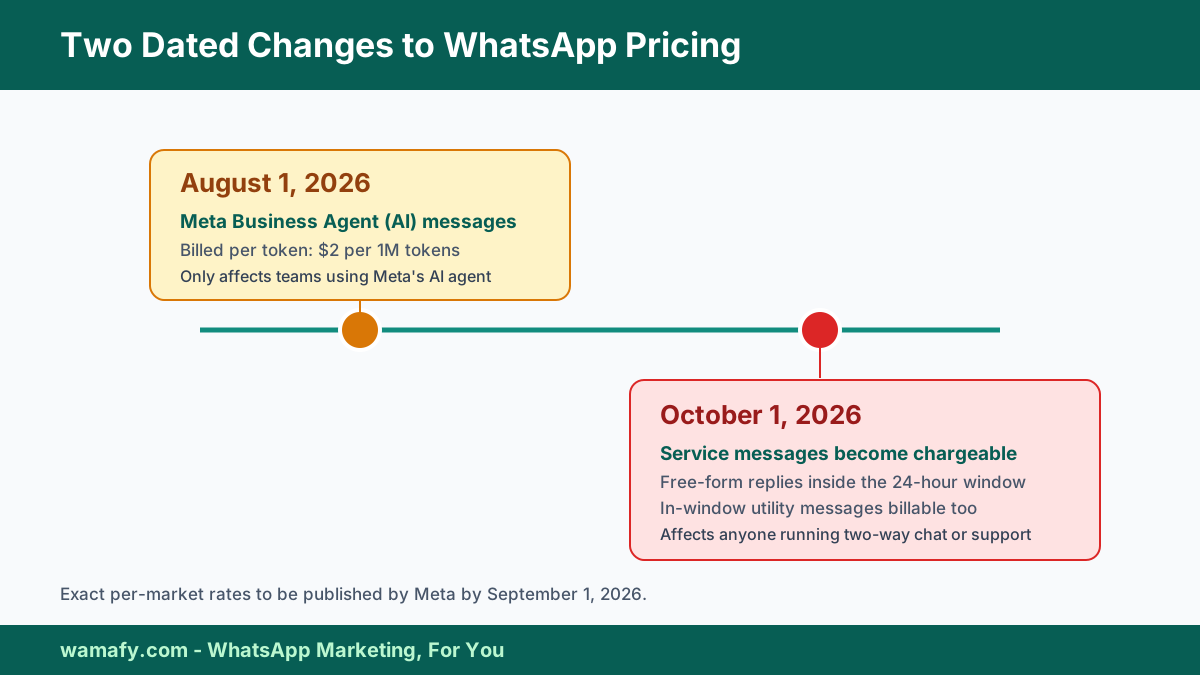
There are two separate changes, on two separate dates. Do not mix them up, because they affect different businesses.
| Date | What changes | Who it affects |
|---|---|---|
| August 1, 2026 | Meta Business Agent (AI) messages billed per token | Businesses using Meta's AI agent |
| October 1, 2026 | Service messages and in-window utility messages become chargeable | Anyone running two-way chat or support |
The October change is the one that touches nearly every business on the WhatsApp Business Platform. The August change is narrower, and only matters if you use Meta's own AI agent. Let us take them in turn.
August 1, 2026: Meta Business Agent messages
From August 1, 2026, Meta starts charging for Meta Business Agent messages. This is Meta's own AI agent that can answer customers for you. The billing is different from normal messages. You are charged per token, at 2 US dollars per one million tokens. That works out to roughly 4 to 5 cents per reply, depending on how long it is.
Here is the key point for most Indian SMBs: this only applies if you use Meta's AI agent. Maybe your automation is a rule-based chatbot, the kind that answers with set replies and buttons. If so, this August change does not apply to you. Wamafy's chatbot builder is rule-based, so it is not billed per token. Only teams using Meta's AI agent need to budget for this one.
October 1, 2026: service and in-window utility messages
This is the big one. From October 1, 2026, two message types that are free today become chargeable.
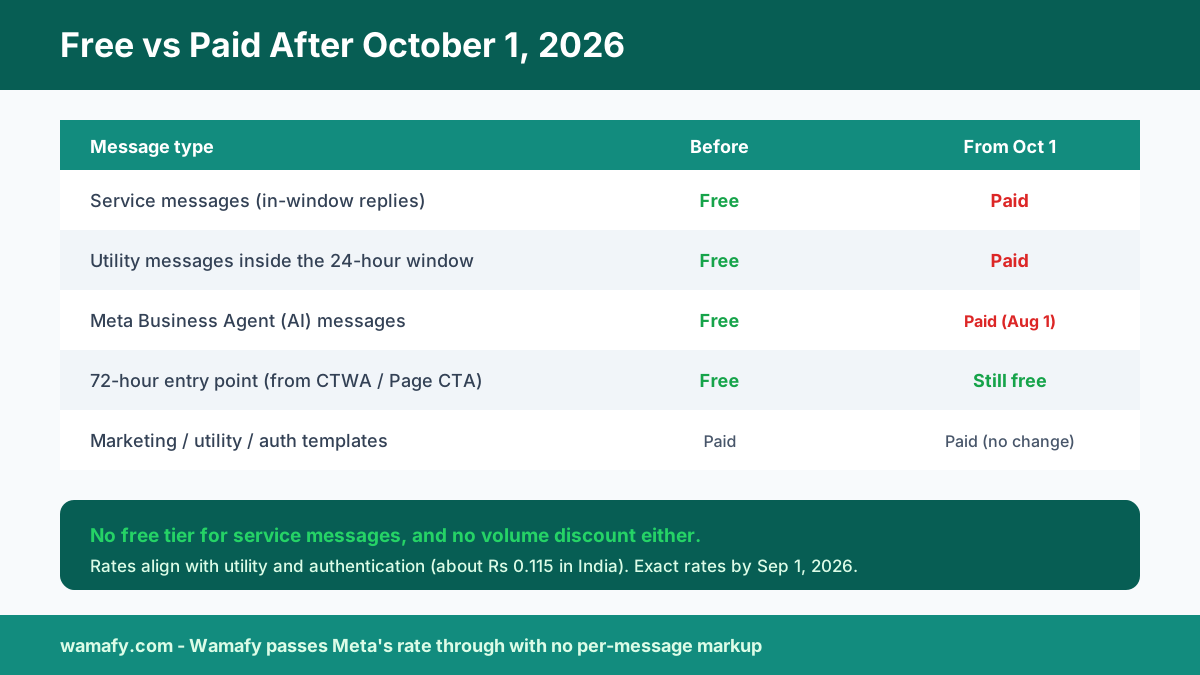
- Service messages. These are your free-form replies inside the 24-hour customer service window. You send them after a customer messages you first, whether by hand or through a non-Meta AI assistant. They have been free since November 2024. From October 1, they are charged per message.
- In-window utility messages. Utility templates sent inside that same 24-hour window have been free since July 2025. From October 1, they are billable too.
A few details matter for your budget:
- The rate. Service message rates will be set per market and aligned with utility and authentication rates. In India, utility and authentication sit at about Rs 0.115 each. So expect service messages to land in that range. Meta has said it will publish exact per-market rates by September 1, 2026.
- No free tier. There is no free allowance for these categories. You pay from the first message.
- No volume discount on service messages. Service messages get no volume tier. The per-message rate stays flat no matter how many you send. Utility and authentication messages keep their volume tiers.
In plain terms, your team answers customers by hand or with a bot inside the chat window. Those replies stop being free in October. For the full picture of what you already pay, see our guide to the real cost of WhatsApp marketing in India.
The one thing that stays free: the entry point window
There is a useful exception. A conversation can start from a Click-to-WhatsApp ad or a Facebook Page call-to-action button. That opens a 72-hour free entry point window. Message delivery inside that window stays free, and that is not changing.
This is worth planning around. If paid social is part of your funnel, leads that arrive through a click-to-WhatsApp ad give you a 72-hour free window to reply and convert. Wamafy now supports click-to-WhatsApp ads and the Conversions API. So you can route those ad leads into a chat and use that free window well. It is a small lever, but a real one once service replies start costing money.
What it means for your bill
For most businesses the added cost is modest, but it is not zero. Picture a store or a clinic that handles 2,000 inbound support chats a month. Each has a handful of free-form replies. Today those replies are free. From October, they cost roughly Rs 0.115 each. A few thousand a month add up to a few hundred rupees, plus 18 percent GST. Not painful, but real, and it grows with your support volume.
The businesses that feel it most are high-touch ones. Think lots of two-way chat, long support threads, and heavy chatbot use inside the window. If that is you, this is the moment to understand your message mix, because every free-form reply now has a price.
How to prepare before the dates
You have until October, which is plenty of time to get ready. A short checklist:
- Audit your message mix. Look at how many service and in-window utility messages you send a month today. That is your new billable volume.
- Sort templates correctly. Make sure utility messages are filed as utility, not marketing, so you pay the lower rate. Our compliance guide covers how categories work.
- Use the free entry point. Where you can, bring leads in through click-to-WhatsApp ads to get the 72-hour free window.
- Tighten long threads. A clear first reply that answers the question beats ten short back-and-forth messages, and now it costs less too.
- Watch for the September 1 rates. Meta will publish exact India rates by then. Re-check your budget once they are out.
Why no markup matters more now
Every new billable message type is another place a provider can quietly add a markup. When service messages were free, there was nothing to mark up. From October, there is. Some platforms add a margin to Meta's rate. On those, this change costs you more than the rate rise alone.
Wamafy passes Meta's rate through with no per-message markup. So when these new charges begin, you pay Meta's rate and nothing extra. Our founder explains the reasoning in why Wamafy charges no per-conversation markup. As more message types become billable, a markup-free bill is worth more than it was a year ago.
Frequently Asked Questions
What exactly is a service message on WhatsApp?
A service message is a free-form reply you send inside the 24-hour customer service window. It goes out after a customer messages you first. It is not a template. These have been free since November 2024. From October 1, 2026 they are charged per message, at rates aligned with utility and authentication.
When do WhatsApp service messages start costing money?
October 1, 2026. On that date, service messages and utility messages sent inside the 24-hour window become chargeable. Separately, on August 1, 2026, Meta Business Agent AI messages start being billed per token. The two changes have different dates and affect different businesses.
How much will service messages cost in India?
Meta has not published exact figures yet. But service message rates will align with utility and authentication rates, which sit at about Rs 0.115 each in India today. Meta has committed to publishing exact per-market rates by September 1, 2026, so confirm your numbers then.
Does this affect my rule-based chatbot?
The August per-token charge only applies to Meta's AI agent, not a rule-based chatbot like Wamafy's. However, any free-form replies your bot sends inside the 24-hour window are service messages. Those become chargeable from October 1 like any other service message.
Is there any way to keep some messages free?
Yes. Chats that start from a Click-to-WhatsApp ad or a Facebook Page CTA button open a 72-hour free entry point window. Message delivery in that window stays free. This is unchanged. Routing ad leads into chat is a good way to use it.
Do I need to change anything before October?
Audit how many service and in-window utility messages you send. Make sure templates are sorted into the right category, and lean on the free entry point where you can. Then re-check your budget once Meta publishes exact rates by September 1, 2026. There is no urgent action, just sensible preparation.
Get ready, do not panic
This is a real change, but a manageable one. The free-message era for two-way chat is ending, on August 1 for Meta's AI agent and October 1 for service and in-window utility messages. Understand your message mix, use the free entry point, keep your templates sorted right, and the impact stays small. The businesses caught out will be the ones who did not look.
Want a WhatsApp platform that passes Meta's rate through with no markup? Then these new charges cost you exactly what Meta charges, and nothing more. Start a 14-day free Wamafy trial. Your card is authorized during trial activation and charged only on day 15. Get your setup clean before the new rates begin.