After the Sale: Turning Freedom Sale Buyers Into Regulars
The short version: A sale does not make you money. The second order does. Most Indian D2C brands lose money on a first order, and the Freedom Sale wave is the worst version of that problem. Post-sale customer retention on WhatsApp is how you fix it, and the window is about 30 days wide.
The Amazon Great Freedom Sale opened on 7 August. Flipkart followed on 8 August. Both ran to Independence Day. If you sold through that week, you now have a pile of new buyers and a thinner margin than you had in July.
Here is the uncomfortable part. You did not acquire customers. You rented them with a discount. Whether they become worth anything is decided in the next month, not during the sale.
Why sale buyers churn faster than normal buyers
A discount buyer bought a price, not a brand. Nothing has happened since the parcel arrived. There is no reason for them to think about you again.
Three things make this worse in India:
- The order may not have landed at all. Return-to-origin rates hit close to 39 percent in the November 2025 festive period, and cash-on-delivery returns ran at 58 percent during that quarter. Sale traffic skews to first-time and COD buyers, which is exactly the group that refuses delivery.
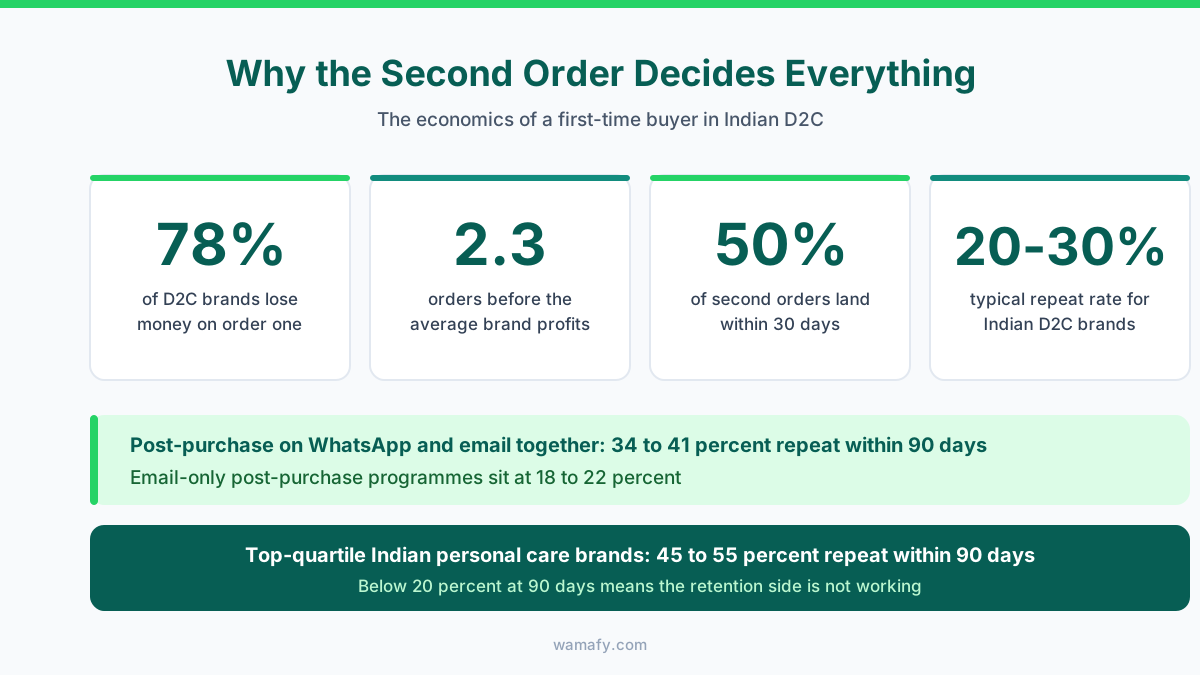
- The first order is usually unprofitable. Across D2C, roughly 78 percent of brands lose money on order one. The average brand only turns profitable around order 2.3.
- Your competitor is running the same discount. A buyer trained on sale pricing will wait for the next sale. In 2026 that next sale is only weeks away.
So the sale week was your acquisition spend. The next 30 days are the only chance to earn it back.
The 30-day post-sale sequence
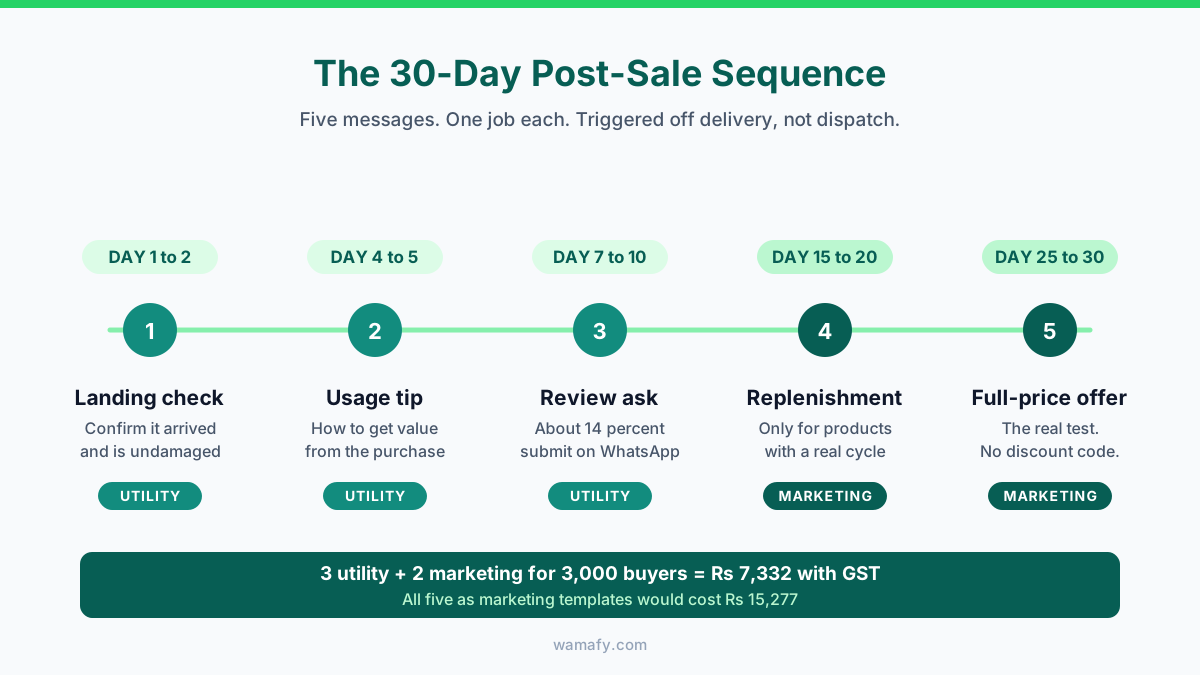
Five messages. Spread over a month. Each one has a single job. Do not add a sixth just because you can.
Day 1 to 2 after delivery: the landing check
Wait for the delivery-confirmed webhook, not the dispatch one. This matters more in India than anywhere else. Given RTO rates, dispatch is not proof that anyone has your product.
Keep it plain. Confirm what arrived, and ask one question: did it reach you in good shape? That question does two jobs. It catches a damaged parcel before it becomes a marketplace review, and it opens a reply thread you can use later.
Day 4 to 5: the usage message
This is the message almost nobody sends, and it is the one that separates a brand from a shop.
Tell the buyer how to get value from the thing they bought. Storage advice for a food product. Washing instructions for a garment. A setup step for a gadget. Two lines is enough.
It is not a sales message. That is the point. It is the first time you have contacted them without asking for anything.
Day 7 to 10: the review ask
Ask about three days after the buyer has actually used the product. WhatsApp review requests land far better than email here. Submission rates around 14 percent are realistic, against roughly 2 percent on email.
Route unhappy replies to a human instead of a form. A one-star review you catch in chat is a refund. A one-star review you catch on your product page is permanent. If you want the full mechanics, see the guide on how to collect customer reviews on WhatsApp.
Day 15 to 20: the replenishment nudge
Only send this if the product has a natural cycle. Skincare, supplements, coffee, pet food, razor blades, and staples all do. A saree does not.
Time it to run out slightly before they do. If a jar lasts 30 days, message on day 22. Reordering is a chore, and you win by removing the chore, not by discounting it.
Day 25 to 30: the full-price offer
The last message is the test. Will this person buy from you at your normal price?
Show them something they did not see during the sale. A new arrival. A bundle. A category they did not browse. No discount code. If they convert here, they are a customer. If they do not, they were a discount hunter, and now you know.
The second-order problem
The gap between order one and order two predicts almost everything about a customer's value. It is the number to run your retention on.
Two facts worth pinning up:
- About half of all second orders happen within 30 days of the first. Three-quarters happen within 90 days.
- Indian D2C brands average a 20 to 30 percent repeat purchase rate. The top quartile in personal care hits 45 to 55 percent within 90 days.
That first fact is why the sequence above is 30 days and not 90. You are not gently nurturing. You are working inside the window where the second order was always going to happen, and making sure it happens with you.
Brands running a coordinated post-purchase sequence on WhatsApp report repeat rates in the mid-thirties to low forties within 90 days. Email-only post-purchase programmes sit closer to 18 to 22 percent. The channel is doing real work there, mostly because a WhatsApp message gets read and an email does not.
Segment the wave before you message it
Sending one sequence to every Freedom Sale buyer wastes money and annoys people. Split the list into three buckets. It takes an hour in a spreadsheet.
| Bucket | Who they are | What to send |
|---|---|---|
| Discount hunters | One item, deepest-discount product, no browsing history, often COD | Full sequence, but skip the day 25 offer. Hold them for a festive push instead. |
| Genuine new buyers | Multiple items, or a mid-price item, prepaid | The full five messages. This is where your effort pays. |
| Existing customers | Bought before, used the sale to stock up | Skip the usage and review messages. They know. Go straight to replenishment. |
The third bucket is the one brands get wrong most often. Sending a "how to use your new product" message to a repeat customer of two years reads as a brand that does not know who they are talking to.
One more filter before any of this: opt-in. A completed order is not automatic consent to market. Utility messages tied to a real order are fine. Promotional messages need a proper opt-in, and India's rules on this are not vague. The WhatsApp marketing compliance guide for India covers where the line sits.
What the sequence actually costs
Take a store that took 3,000 orders across the Freedom Sale week. Five messages each, on Meta's current India rates.
The trick is category. Three of the five messages qualify as utility, because they follow up on a specific order the customer placed. Two are marketing, because they are asking for a new purchase.
| Message | Category | Rate | Cost for 3,000 |
|---|---|---|---|
| Landing check | Utility | Rs 0.115 | Rs 345 |
| Usage message | Utility | Rs 0.115 | Rs 345 |
| Review ask | Utility | Rs 0.115 | Rs 345 |
| Replenishment nudge | Marketing | Rs 0.8631 | Rs 2,589 |
| Full-price offer | Marketing | Rs 0.8631 | Rs 2,589 |
| Total before GST | Rs 6,213 | ||
| Total with 18 percent GST | Rs 7,332 | ||
Now run the same five messages as marketing templates, which is what happens when nobody checks the category box. That comes to Rs 12,946 before GST, or Rs 15,277 with it. Categorising properly saves about Rs 7,900 on one sequence.
Marketing templates cost roughly 7.5 times what utility templates cost in India. That single ratio should shape every retention flow you build. You can price your own volumes with the WhatsApp message cost calculator.
And the return side. If the sequence lifts your second-order rate by four points on 3,000 buyers, that is 120 extra orders. At an average order value of Rs 900, it is about Rs 1.08 lakh of revenue against Rs 7,332 of messaging. Even a two-point lift clears the cost several times over.
One caveat that matters after 1 October 2026. Replies inside the 24-hour service window stop being free and start costing Rs 0.115 each. A sequence built on chatty back-and-forth gets more expensive overnight. Build it now with fewer, clearer messages.
Time it against the rest of 2026
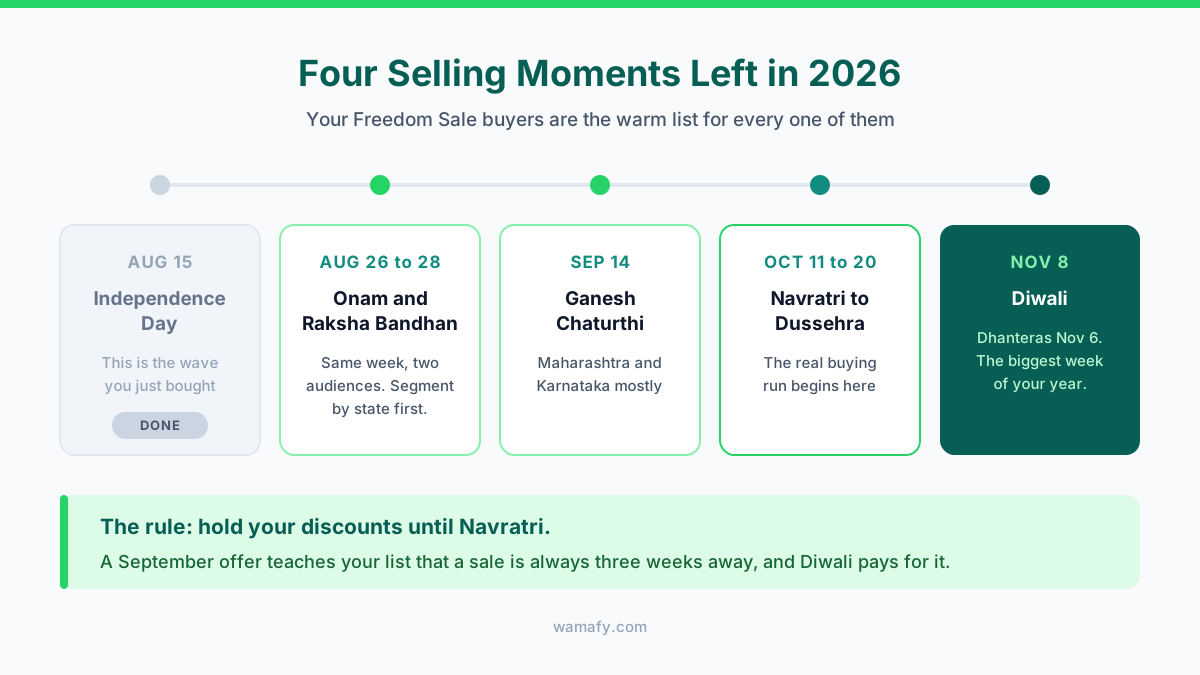
Your Freedom Sale buyers are not just a retention project. They are the warm list for every festival left this year.
- Onam, 25 to 28 August. Thiruvonam falls on Wednesday 26 August. Kerala buying starts around 15 August. Regional, so segment by state before sending.
- Raksha Bandhan, Friday 28 August. Lands in the same week as Onam. Do not send both offers to the same contact.
- Ganesh Chaturthi, 14 September. Maharashtra and Karnataka mostly.
- Navratri from 11 October, Dussehra 20 October. The start of the real buying run.
- Diwali, Sunday 8 November, with Dhanteras on 6 November. The biggest week of your year.
Work backwards from that. The 30-day sequence for an Independence Day buyer finishes in mid-September. That leaves them warm and freshly re-engaged going into Navratri. If you skip the sequence, you will be messaging a cold list in October and paying marketing rates to warm it up again.
The discipline is this: do not discount between now and Navratri. If you run an offer in September, you have told your list that a sale is always three weeks away, and Diwali will cost you margin you did not need to give.
What to measure
Four numbers. Check them monthly, not daily.
- Second-order rate. Of buyers from the sale week, what share ordered again within 30 days, and within 90.
- Days to second order. If this number falls, the sequence is working.
- Revenue per contact. Total revenue from the cohort divided by the number of people you messaged. This is the only figure that tells you whether the messaging paid.
- Opt-out rate per message. Track it per step, not per campaign. If one message drives the opt-outs, you will only see it this way.
An opt-out rate above roughly 2 percent on a single step means that message is wrong. Usually it is the day 25 offer going to people who never wanted it.
Brands with a repeat purchase rate above 25 percent run materially better margins than brands under 15 percent. That gap is not built during a sale. It is built in the quiet month afterwards.
Frequently Asked Questions
How soon after a sale should I message buyers?
Wait for delivery confirmation, then message within a day or two. Messaging before delivery is the most common mistake, because a large share of Indian sale orders are returned to origin and never reach the customer at all.
Should I discount again to get a second order?
No, not in the first 30 days. A second discount teaches the buyer to wait for the next one, and it destroys your Diwali margin. Use a new product, a bundle, or a replenishment reminder instead.
Is a post-purchase WhatsApp message allowed without opt-in?
Order-related utility messages tied to a real transaction are generally fine. Promotional messages need a clear opt-in recorded before you send. Keep the two categories separate in your flow, and keep the consent record.
How do I run a WhatsApp drip campaign for post-sale retention?
Trigger the sequence off the delivery webhook, then space the five messages across 30 days with a rule-based flow. Any message can be cancelled automatically if the customer orders again in the meantime. The WhatsApp drip campaign guide walks through the setup.
What is a good second-order rate for an Indian D2C brand?
Twenty to thirty percent within 90 days is average in India. Below 20 percent means the retention side is not working. The best personal care brands reach 45 to 55 percent.
Does this work for a store that is not on Shopify?
Yes. You need an order list with delivery dates and phone numbers, which a CSV import handles fine. Native integrations simply automate the trigger instead of you uploading the list each week.
Start with one cohort
Do not rebuild your entire retention programme this week. Take the buyers from 7 to 15 August, split them into the three buckets, and run the five-message sequence on the middle bucket only. You will know inside a month whether it moved the second-order rate.
Wamafy runs these flows on flat monthly pricing with no per-message markup on top of Meta's rates, so a retention sequence costs what Meta charges and nothing more. For the wider version of this playbook, see the D2C WhatsApp scaling playbook.
Start a 14-day free Wamafy trial. Your card is authorized when the trial starts, and charged only on day 15.