WhatsApp Drip Campaigns: Automated Sequences That Nurture and Sell
Most businesses send one message and hope. A better way exists. A WhatsApp drip campaign is a planned series of messages that reaches a contact over days, triggered by what they do. Set it up once, and it turns new leads and first-time buyers into repeat customers on autopilot. This guide shows you the five drips worth building, how to time them, and how to stay on the right side of WhatsApp's rules.
The payoff is real. Automated flows convert far better than one-off blasts. Across the industry, automated sequences land 10 to 25 percent conversion, against 3 to 7 percent for a single broadcast. On a channel with 98 percent open rates, a well-built drip is one of the highest-return things you can set up.
Drip vs broadcast: when to use each
These two often get mixed up, so let us be clear about the difference, because both have a place and you use them for very different jobs.
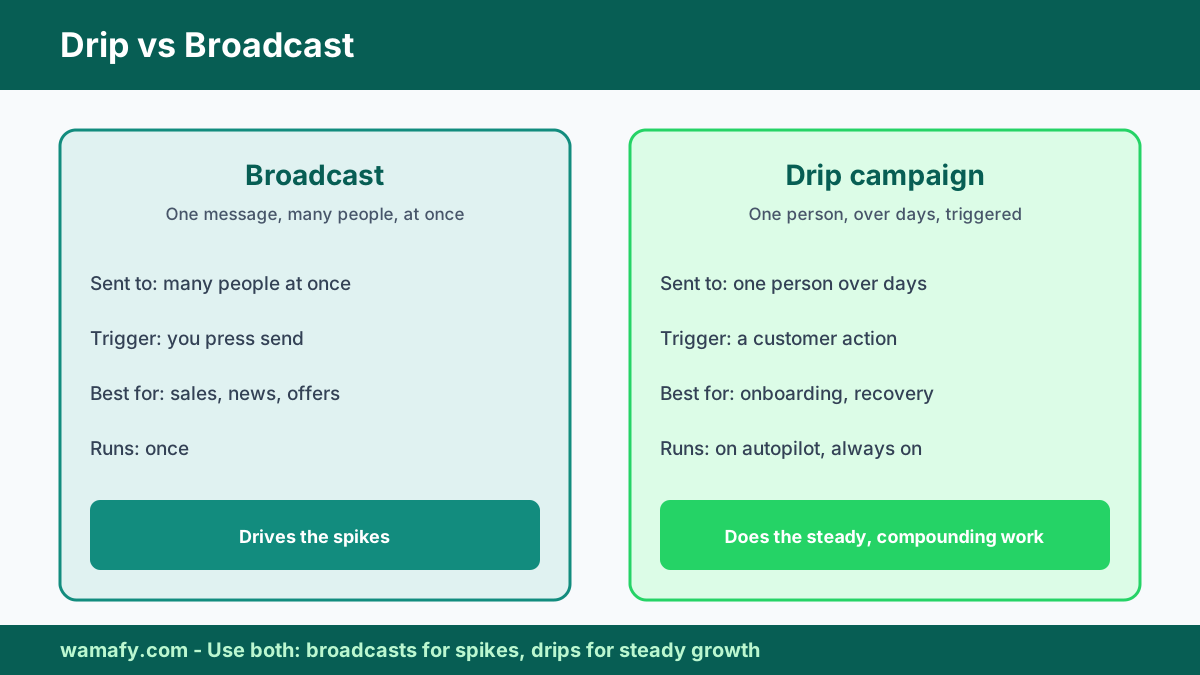
A broadcast is one message sent to many people at once. Think of a festive sale offer to your whole list. It is great for timely, one-to-many news.
A drip is a sequence sent to one person over time, triggered by an action. A new signup starts a welcome drip. An abandoned cart starts a recovery drip. The message meets the person where they are in their journey.
| Feature | Broadcast | Drip campaign |
|---|---|---|
| Sent to | Many people at once | One person over days |
| Trigger | You press send | A customer action |
| Best for | Sales, news, offers | Onboarding, recovery, nurture |
| Runs | Once | On autopilot, always on |
The smartest setup uses both together. Broadcasts drive the short-term spikes, while drips do the steady, compounding work quietly in the background.
The 5 drips every business should run
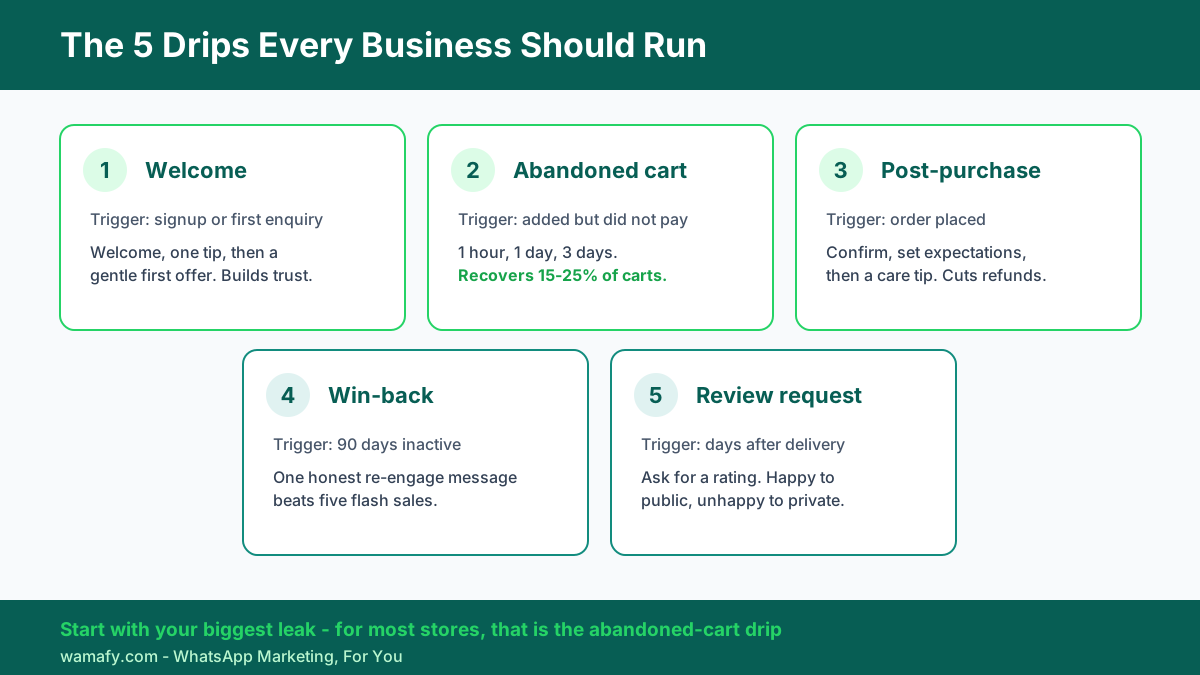
You do not need dozens of sequences. Five cover most of the value. Start with the one that fits your biggest leak, then add the rest.
1. Welcome drip
Triggered when someone signs up, opts in, or makes a first enquiry. The goal is to build trust fast. A simple three-step flow works: a warm welcome, one useful tip or how-to, then a gentle first offer or check-in. This is where you earn the second interaction.
2. Abandoned-cart drip
Triggered when a shopper adds to cart but does not pay. This is the highest-return drip for any store. A proven pattern is three touches: a reminder within the hour, a nudge after a day, and a final scarcity message after three days. Done well, this recovers 15 to 25 percent of carts. Picture a store doing 300 orders a month: even a modest recovery rate can mean dozens of extra orders from messages that essentially send themselves. Our full guide on WhatsApp abandoned-cart recovery for Shopify walks through the exact setup.
3. Post-purchase drip
Triggered right after someone buys. Confirm the order, share what happens next, and set delivery expectations. A few days later, add a care tip or a how-to-use message. This cuts support questions and refunds, and it sets up the next order.
4. Win-back drip
Triggered when a customer goes quiet, say 90 days without a purchase. Resist the urge to spam offers. One honest re-engagement message, maybe asking what changed or sharing something new, beats five flash sales they have learned to ignore. Space the follow-ups over a couple of weeks.
5. Review-request drip
Triggered a set number of days after delivery, once the customer has used the product. Ask for a quick rating or review. Send happy customers to a public review page, and catch unhappy ones privately first. WhatsApp gets far higher review response than email.
Timing and spacing: how many, how far apart
Timing is where drips are won or lost. Move too fast and it feels pushy, but move too slow and the moment quietly passes. A few simple rules keep you in the sweet spot.
- Keep sequences short. Three to five messages is plenty for most drips. More than that and reply rates fall.
- Match the pace to the intent. An abandoned cart is hot, so move fast: within the hour, then a day, then three days. A win-back is cold, so go slow: spread it over two weeks.
- Send at sensible hours. Aim for daytime in your customer's time zone. Nobody wants a marketing nudge at 2 am.
- Always stop on success. The moment a customer buys, the cart drip must stop. Nothing annoys a buyer more than a "you forgot something" message after they paid.
That last point matters most. A good tool ends the sequence automatically when the goal is met. On Wamafy, the native Shopify cart-recovery cadence auto-cancels the moment the customer pays, so you never send a stale reminder.
Writing each step: templates vs free-form
Here is the part people get wrong, because it is tied to WhatsApp's rules. What you can send depends on the 24-hour window.
When a customer messages you, a 24-hour window opens. Inside it, you can send free-form messages, no template needed. Every new message from them resets the 24 hours. Outside that window, a business-initiated message must use a pre-approved template.
Most drip steps are business-initiated across days, so they use approved templates. Templates fall into three categories:
- Marketing. Offers, nudges, win-back messages. Billed at Meta's marketing rate, about Rs 0.8631 per message in India.
- Utility. Order confirmations, shipping updates, reminders. Much cheaper, about Rs 0.115 each.
- Authentication. OTPs and login codes.
Use the right category for each step. A post-purchase confirmation is utility, not marketing, so it costs less. A win-back offer is marketing. Getting this right keeps your bill low. For copy you can adapt, see our WhatsApp template message examples. One thing to watch in 2026: Meta is set to start charging for some service and utility messages inside the 24-hour window later this year, so keep an eye on current rates.
Keeping drips compliant
A drip that ignores the rules gets your number flagged. High volume plus weak permission is the fastest way to a low quality rating, which caps how much you can send. Protect your account with a few habits.
- Only message people who opted in. A drip should start from a real signup, purchase, or enquiry, never a bought list.
- Make opt-out easy. Let people leave in one tap. Blocks hurt your rating far more than opt-outs do.
- Keep every message useful. If a step does not help the reader, cut it. Value keeps people subscribed.
- Watch your quality rating. If it dips, slow down and review your copy and targeting.
You can automate all of this with a rule-based flow, no code needed. Our no-code WhatsApp chatbot guide shows how to build the triggers and steps that power a drip.
Measuring a drip
A drip is never finished. You watch the numbers and improve it. You do not need a complex dashboard. Track four things per step and the picture is clear.
| Metric | What it tells you |
|---|---|
| Delivered | Your list and number are healthy |
| Read | Your timing and opening line work |
| Replied or clicked | The message and offer landed |
| Converted | The step drove the action you wanted |
Look for the weak step. If message two gets read but nobody clicks, rewrite it. If a whole drip stalls at step three, shorten it. Small changes to one step can lift the whole sequence. This is the quiet advantage of a drip: it gets sharper every month while you sleep.
A quick start plan
Do not try to build all five at once. Start where you lose the most money.
- Pick one drip. For a store, that is almost always abandoned cart.
- Write three steps. Reminder, nudge, last chance. Get the templates approved.
- Set the triggers and timing. Within the hour, one day, three days. Stop on purchase.
- Turn it on and watch for a week. Then add the next drip.
One working drip beats five half-built ones. Ship it, measure it, then grow.
Frequently Asked Questions
Can I pause a drip when someone buys?
Yes, and you should. A good tool stops the sequence automatically when the goal is met. On Wamafy, the Shopify cart-recovery cadence auto-cancels the moment the customer pays, so a buyer never gets a stale "you forgot something" reminder.
How long should a WhatsApp drip be?
Most drips work best at three to five messages. Match the pace to intent: an abandoned cart runs over three days, while a win-back spreads over two weeks. Longer is not better. Reply rates usually fall as sequences drag on.
Do drip messages need approved templates?
Usually yes. Any message you send outside the 24-hour customer service window must use a pre-approved template. Inside the window, after a customer messages you, you can send free-form replies. Most drip steps are business-initiated across days, so they use templates.
What is the difference between a drip and a broadcast?
A broadcast goes to many people at once when you press send. A drip goes to one person over time, triggered by an action like a signup or an abandoned cart. Broadcasts drive spikes; drips do steady, always-on nurture in the background.
How much does a WhatsApp drip cost to run?
You pay Meta's per-message rate for each delivered template, about Rs 0.8631 for marketing and Rs 0.115 for utility in India, plus 18 percent GST. Using utility templates for confirmations and reminders keeps costs low. On a no-markup platform, you pay Meta's rate with nothing added.
Which drip should I build first?
Start with the one that plugs your biggest leak. For most online stores that is the abandoned-cart drip, since it recovers 15 to 25 percent of carts that would otherwise be lost. Get one drip working well, then add welcome, post-purchase, win-back, and review requests.
Put your follow-up on autopilot
A drip is the closest thing to free money in WhatsApp marketing. You build it once, and it keeps nurturing leads and buyers while you run the rest of your business. Start with one sequence, keep each message useful, and let the numbers guide your edits.
Ready to automate your follow-up? Start a 14-day free Wamafy trial. Your card is authorized during trial activation and charged only on day 15. Build your first drip, connect your store, and turn one-time buyers into repeat customers on autopilot.