WhatsApp Marketing for Indian D2C Brands: First Sale to 10,000 Customers
WhatsApp is the highest-LTV channel an Indian D2C brand can build. Email opens sit at 20 to 25 percent. WhatsApp opens land at 85 to 95 percent. From your 100th customer to your 10,000th, this is the playbook that turns one-time buyers into a returning revenue base. It is built for Indian founders, with real INR costs and real send-level math.
Here is the hard truth most brands learn too late. Roughly 77 percent of Indian D2C first-time buyers never place a second order. You spend on ads to win the first sale, then watch the relationship go cold. WhatsApp marketing for D2C brands in India fixes that gap better than any other channel, because it is where your customer already chats every day.
This guide breaks the journey into three stages by revenue, then gives you the four numbers to track, a broadcast calendar, a channel mix, the growth blockers, and a full INR profit and loss for a Rs 5 lakh per month brand.
Why WhatsApp beats email and SMS for Indian D2C
Indian shoppers live inside WhatsApp. They check it within minutes, not days. That single behavior changes the math on every campaign you run.
- Open rates: WhatsApp hits 85 to 95 percent. Email sits near 20 percent. SMS gets read but rarely replied to.
- Two-way replies: A customer can answer your broadcast in one tap. Email cannot do that.
- Cost control: Utility messages sent inside an open chat window are free. SMS is never free.
The catch is cost discipline. A marketing template now costs about Rs 0.8631 per delivered message in India, after Meta raised rates roughly 10 percent on January 1, 2026. Add 18 percent GST. At scale, a careless brand burns cash. A disciplined one builds a profit machine. The difference is the playbook below.
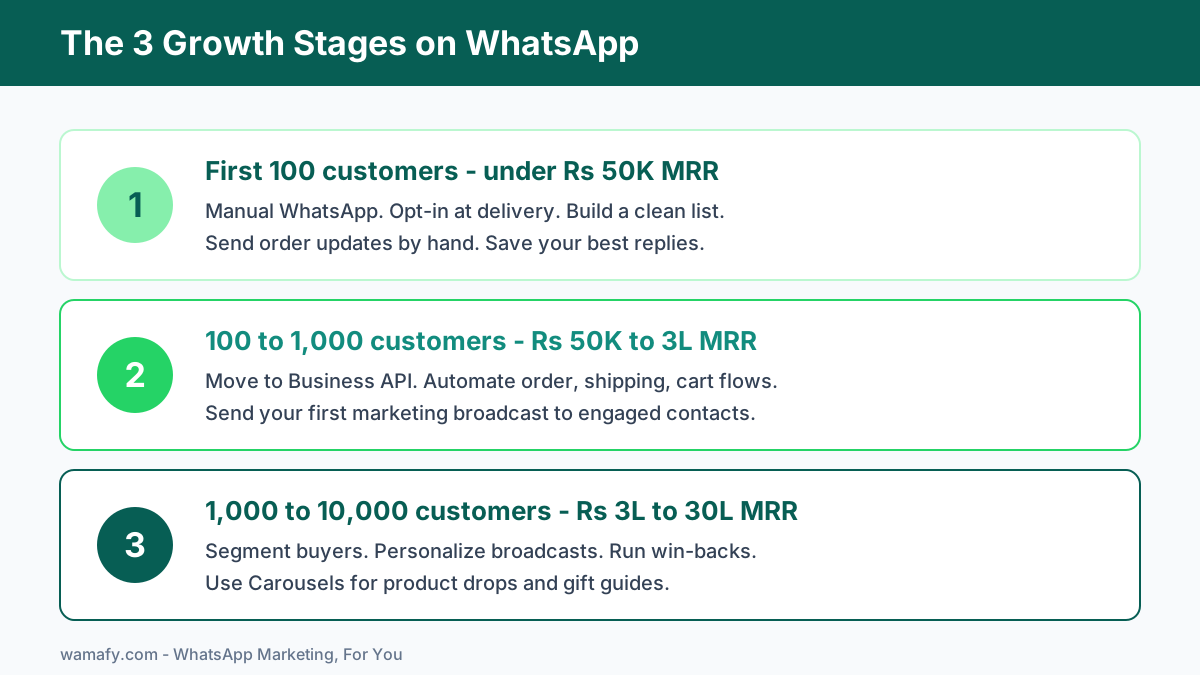
Stage 1: Your first 100 customers (under Rs 50K MRR)
At this stage you do not need the WhatsApp Business API yet. You need habits. Most brands here run on a personal number or the free WhatsApp Business app. That is fine. Use this time to build the one asset that compounds later: a clean, opted-in contact list.
What to do now
- Ask for opt-in at delivery. When you pack an order, add a small card. "Want order updates and early access to drops? Reply YES on WhatsApp." This is the cheapest list you will ever build.
- Send order updates by hand. Confirm the order, share the tracking link, ask for a photo review. Do it manually. You will learn exactly what your customers care about.
- Save your best replies. The lines that get responses become your first templates later.
Do not buy lists. Do not scrape numbers. A bought list tanks your quality rating the moment you move to the API. Every contact must say yes first. This is both the law in spirit and the smart play.
Stage 2: 100 to 1,000 customers (Rs 50K to 3L MRR)
Now manual sending breaks. You forget orders. Replies pile up at night. This is the moment to move to the WhatsApp Business API and automate the boring parts.
With an official Meta Tech Provider like Wamafy, you connect through one-click Embedded Signup and keep ownership of your WhatsApp Business Account. Setup takes minutes, not days. You pay Meta directly for messages, with no per-conversation markup added on top.
The three flows to turn on first
- Order confirmation (utility template). Fires the second an order is placed. Builds trust and cuts "where is my order" tickets.
- Shipping update (utility template). Tracking link plus expected date. Utility messages inside the chat window are free, so this barely costs you anything.
- Abandoned cart recovery (marketing template). A short three-message sequence. This one pays for the whole platform.
Cart recovery is the headline win. A focused WhatsApp cart sequence sent within the first 30 minutes recovers 25 to 30 percent of lost orders for Indian D2C brands. Text-only works. Adding a clear product image and a single offer works better.
Connecting your store
If you run on Shopify, you connect your store to Wamafy with the native Shopify integration. The native Shopify integration is available on the Wamafy Forest plan. Once connected, a Shopify event, such as an abandoned checkout or a new order, fires the matching WhatsApp flow automatically. You get abandoned cart recovery, order confirmations, and fulfillment alerts as multi-stage cadences, and a recovery cadence auto-cancels the moment the customer pays. For other platforms like WooCommerce or Razorpay-based stores, the REST API lets any system that can fire a webhook trigger the same flows. For the full setup, see our guide on how to set up WhatsApp on Shopify in 10 minutes .
Your first marketing broadcast
Once order and cart flows run on their own, send your first real broadcast. Keep it small. Pick a single product, a single offer, and your most engaged 200 contacts. Watch the delivered, read, and replied numbers. A strong first broadcast tells you your list is alive and your copy lands.
The four numbers every D2C brand should track
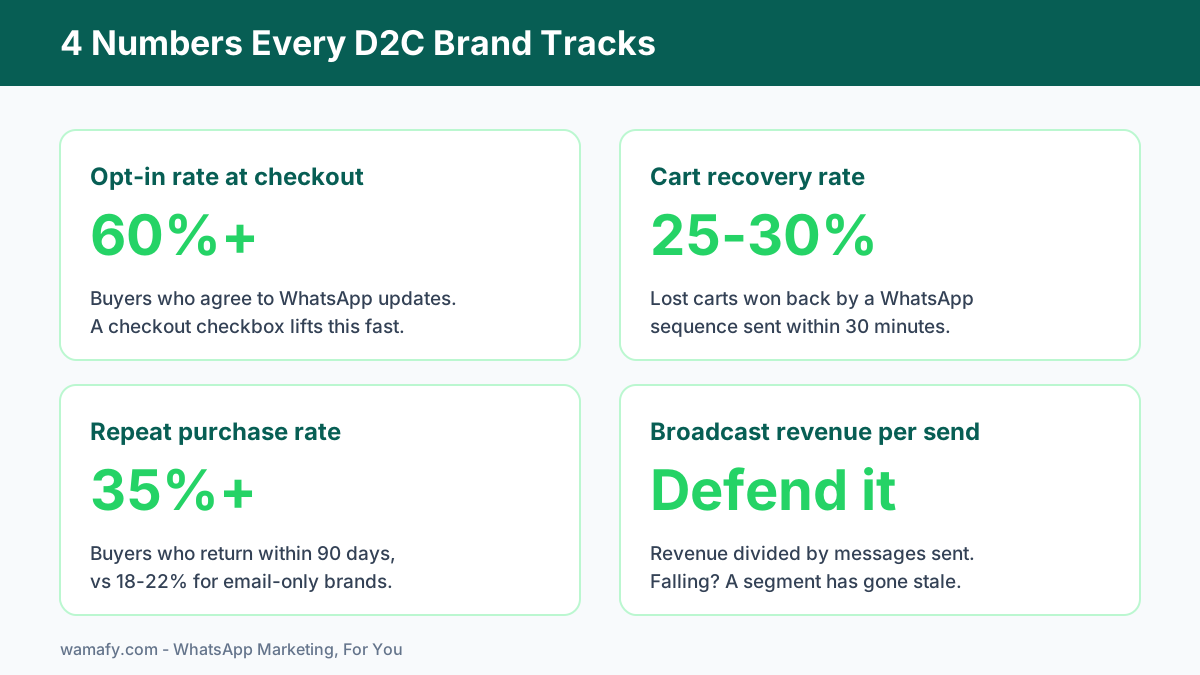
Most brands measure nothing and guess. Track these four and you will know exactly where the money is.
- Opt-in rate at checkout. Of all buyers, how many agreed to WhatsApp updates? Aim for 60 percent or higher. A checkbox at checkout plus a small first-order perk pushes this up fast.
- Cart recovery rate. Of abandoned carts, how many you win back. A healthy WhatsApp sequence sits at 25 to 30 percent.
- Repeat purchase rate. Of first-time buyers, how many buy again within 90 days. A good post-purchase WhatsApp flow lifts this past 35 percent, versus the 18 to 22 percent most email-only brands see.
- Broadcast revenue per send. Total revenue from a broadcast divided by messages sent. This is your real cost test. If a send costs Rs 0.86 and earns Rs 8, you keep sending.
The last number is the one to defend. As your list grows, broadcast revenue per send tells you when a segment has gone stale and when to stop messaging it. Chasing reach while this number falls is how brands burn money on WhatsApp.
Stage 3: 1,000 to 10,000 customers (Rs 3L to 30L MRR)
At this size, blasting one message to everyone stops working. Your quality rating drops, your unsubscribes climb, and revenue per send falls. The fix is segmentation. You stop talking to a list and start talking to groups.
Segments that earn their keep
- First-time buyers get a post-purchase welcome and a second-order nudge.
- Repeat buyers get early access and loyalty perks. They convert at the highest rate.
- Lapsed buyers (no order in 60 days) get a win-back offer. Tag them and run this every two months.
- High AOV buyers get premium drops, not discounts.
You can build these segments with tags in your inbox and a clean CSV import. Wamafy normalizes phone numbers to E.164 and removes duplicates on upload, so a messy export from your store still loads clean.
Personalize, do not just discount
Here is the lesson most brands miss. "You loved Product X, you might also love Product Y" beats "Here is 15 percent off" by roughly two to one. Discounts train customers to wait for sales. Personalized picks train them to trust your taste. Lead with relevance. Use the discount as the closer, not the opener.
Use Carousels for product drops
For new arrivals or a seasonal gift guide, a single image template feels thin. WhatsApp Interactive Media Carousels let you show up to 10 scrollable product cards in one template, each with its own image and button. One send, ten products, one charge. For copy ideas across every flow, our library of WhatsApp template message examples is a good starting point.
A monthly broadcast calendar that works
Cadence matters as much as content. Too few sends and you leave money on the table. Too many and your quality rating slides. This rhythm holds up well for Indian D2C brands.
| Cadence | Message type | Goal |
|---|---|---|
| 2 to 3 per month | Marketing broadcast | Drops, offers, restocks |
| Always on | 4 to 5 utility flows | Order, shipping, cart, delivery, review |
| Every 60 days | Segmented win-back | Re-activate lapsed buyers |
Notice the balance. The always-on utility flows do the quiet heavy lifting and mostly run free inside the chat window. The 2 to 3 marketing broadcasts are where you spend, so they must earn. The win-back runs on a timer so you never forget your lapsed buyers.
Channel mix: where WhatsApp wins and where it does not
WhatsApp is not your only channel. The smart move is to know what each one is best at.
- WhatsApp wins for order updates, cart recovery, drops, and any message that needs a fast reply. Highest open rate, two-way, India-native.
- Email wins for long-form storytelling, receipts, and content that does not need an instant read. Near-zero cost per send.
- SMS wins as a fallback for delivery OTPs and critical alerts when a customer has not opted into WhatsApp.
Run the cost math per outcome, not per message. A marketing email costs almost nothing but converts low. A WhatsApp marketing message costs about Rs 0.86 plus GST but converts far higher. For a high-intent cart recovery, WhatsApp wins on profit every time. For a low-intent monthly newsletter, email is the cheaper home.
Common growth blockers and how to recover
Scaling on WhatsApp breaks in predictable ways. Spot these early and you avoid the worst of them.
Quality rating drops
If too many people block or report you, Meta lowers your quality rating and can cut your daily send limit. The fix is boring but it works: strict opt-in, tight segments, and a frequency cap. Pause marketing broadcasts for five to seven days if your rating slips to yellow, and let it recover.
Template rejections
Templates get rejected for the wrong category, promotional copy in a utility template, or banned link patterns. Match the category to the intent. An order update is utility. A sale is marketing. Keep the copy clean and the link to your own domain.
List staleness
An old list with low engagement drags your whole account down. Run list hygiene every quarter. Drop contacts who have not opened in 90 days from your marketing broadcasts. A smaller engaged list beats a large dead one on both cost and quality.
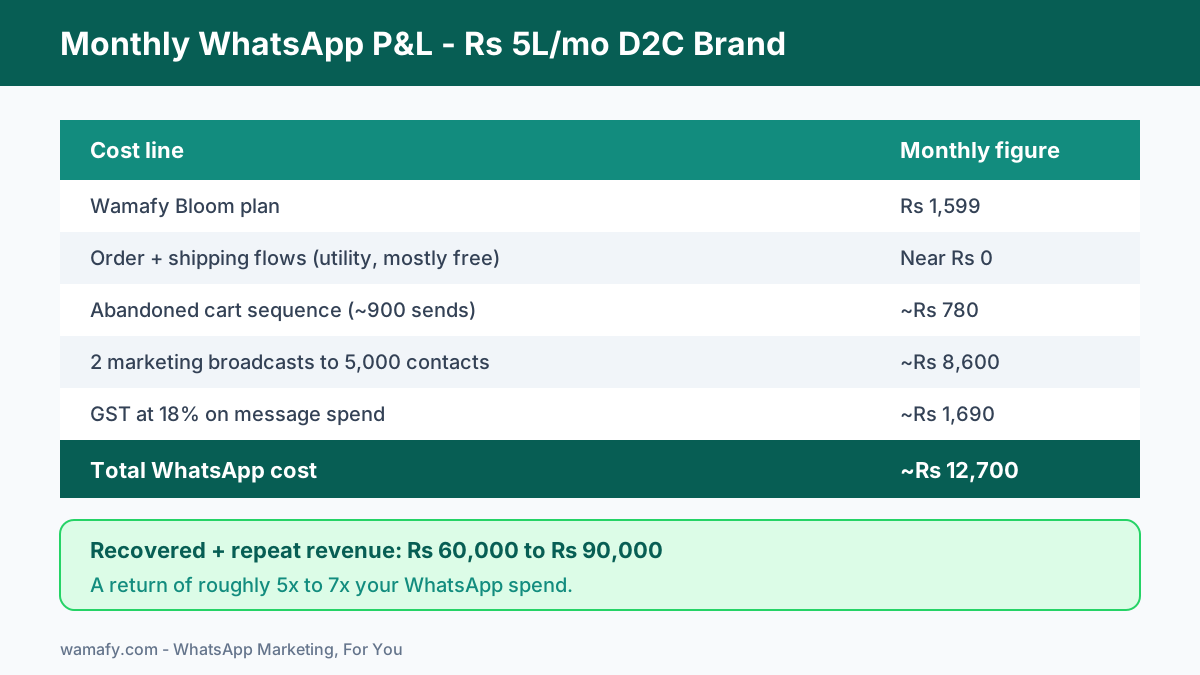
Real INR profit and loss for a Rs 5L per month D2C brand
Numbers make this concrete. Take a brand doing Rs 5 lakh in monthly revenue, roughly 600 orders a month at a Rs 850 average order value, with a 5,000-contact opted-in list.
| Line item | Monthly figure |
|---|---|
| Wamafy Bloom plan | Rs 1,599 |
| Order and shipping flows (utility, mostly free in window) | Near Rs 0 |
| Abandoned cart sequence (about 900 sends) | Around Rs 780 |
| 2 marketing broadcasts to 5,000 contacts | Around Rs 8,600 |
| GST at 18 percent on message spend | Around Rs 1,690 |
| Total WhatsApp cost | Around Rs 12,700 |
Now the return. If your cart sequence recovers even 25 percent of abandoned carts and your broadcasts drive a modest 3 percent conversion, the recovered and repeat revenue easily clears Rs 60,000 to Rs 90,000 in a month. That is a return of roughly five to seven times your WhatsApp spend, before counting the support hours you save.
The Bloom plan at Rs 1,599 covers two numbers and unlimited messages on the plan side, so your only variable cost is what Meta charges per message. With no per-conversation markup added, that bill stays predictable as you scale. To dig deeper into recovery flows, read our breakdown of WhatsApp abandoned cart recovery for Shopify in India .
Frequently Asked Questions
What is the best average order value for WhatsApp marketing?
Any AOV above Rs 500 works well, because a recovered order easily covers the message cost. Higher AOV brands see the best returns, since one saved cart pays for thousands of messages. Even low-AOV brands profit when they lean on the free utility flows.
How do I connect WhatsApp to my Shopify store with Wamafy?
You connect with the native Shopify integration. After you link your store, a Shopify event like a new order or an abandoned checkout triggers the matching WhatsApp flow automatically, with multi-stage cadences and auto-cancel when the customer pays. For other platforms like WooCommerce and Razorpay stores, the REST API gives you the same webhook-driven flows as an advanced, headless option.
How many WhatsApp broadcasts should a D2C brand send per month?
Two to three marketing broadcasts a month is the sweet spot. Pair them with always-on utility flows for orders and shipping. More than that risks block reports and a lower quality rating, which cuts your daily send limit.
Does Wamafy charge a markup on WhatsApp message fees?
No. Wamafy is an official Meta Tech Provider, so you pay Meta directly for messages with no per-conversation markup on top. Your plan fee is flat, and your message bill matches Meta's published rates plus GST.
What repeat purchase rate should I expect from WhatsApp?
A well-run post-purchase WhatsApp flow lifts repeat purchase rate past 35 percent within 90 days. That compares to 18 to 22 percent for brands that rely on email alone. The gain comes from timely, personalized nudges in a channel people actually read.
Do I own my WhatsApp Business Account on Wamafy?
Yes. You keep full ownership of your WhatsApp Business Account, your templates, and your message history. If you ever leave, your number and assets go with you, so there is no lock-in.
Start building your WhatsApp revenue base
WhatsApp rewards brands that treat it as a long game. Build a clean opted-in list, automate the boring flows, segment as you grow, and defend your revenue per send. Do that and your first 100 customers quietly become your first 10,000.
Start a 14-day free Wamafy trial. Card authorized during trial activation, charged only on day 15. Connect your Shopify store with the native integration, turn on your first cart recovery flow, and watch the recovered orders roll in.