Why Renewals Belong on WhatsApp, Not in a Spreadsheet
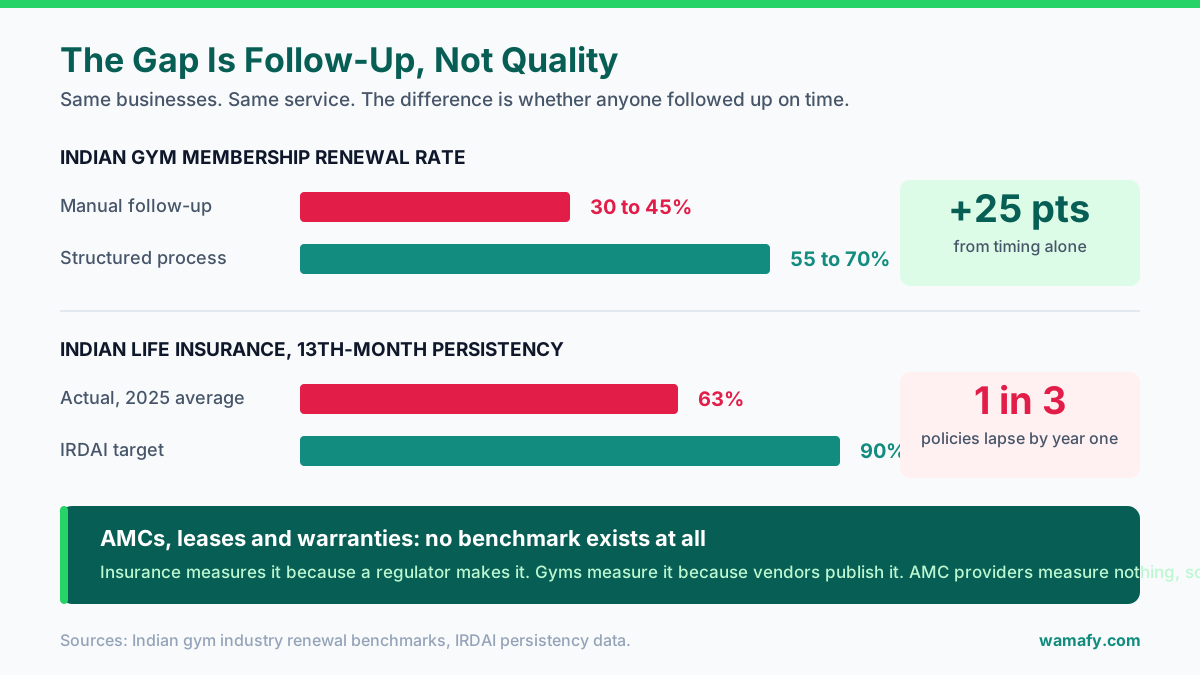
The short version: across insurance, gyms, AMCs, leases and warranties, Indian SMBs run renewals from a spreadsheet and a memory. The leak is enormous and almost invisible, because nobody sends you an invoice for revenue you did not collect. One number settled the argument for us while we were building the renewals modules. Gyms doing manual follow-up renew 30 to 45 percent of members. Gyms with a structured process renew 55 to 70 percent. Same gyms. Same workouts. Different follow-up.
The same pattern shows up in every vertical
We kept meeting the same shape of problem under different names.
There is a fixed date in the future. A policy expires. A membership runs out. An AMC ends. A warranty closes. A lease comes up. On that date, money either arrives or it does not.
There is a customer who has genuinely forgotten. Not a customer who is unhappy, not one who found something cheaper. One who simply did not have the date in front of them on the day it mattered.
And there is an owner who finds out late. Usually a month or two after, while doing the books, when the pattern is already set and the customer has moved on.
What struck us is that this is not a loyalty problem, and businesses keep treating it like one. The usual response to renewals falling is to improve the product or offer a discount. The data suggests the gap is somewhere else entirely.
The numbers that ended the debate for us
Two sets of data made this obvious.
Gyms. Indian gyms with a structured renewal process land between 55 and 70 percent. Gyms relying on manual follow-up land between 30 and 45 percent. Industry analysis attributes that gap almost entirely to the consistency and timing of the outreach, not to how members felt about the gym.
Insurance. Thirteenth-month persistency for Indian life insurers averaged around 63 percent in 2025. So more than a third of new policies do not survive their first renewal. IRDAI has asked insurers to target 90 percent. The distance between 63 and 90 is not a product gap. Somebody has to remind the policyholder, and at the agent level that job usually sits with one person and a diary.
The renewal gap is an operations problem wearing the costume of a loyalty problem. That reframe changed what we built.
Why spreadsheets fail at this
Almost every SMB we looked at runs renewals from a spreadsheet. It is a reasonable place to start. It then fails for reasons that have nothing to do with the spreadsheet.
- It does not open itself. The dates are correct and nobody looks at them on the right morning.
- It does not send anything. Knowing a policy expires on the 14th does not tell the customer.
- It goes stale quietly. One person updates it, then that person is on leave, and two weeks of renewals pass unnoticed.
- It scales the wrong way. At 50 customers it works. At 500 it needs a full-time person, and that person is expensive relative to what they recover.
The spreadsheet is not the failure. The failure is that a renewal needs something to happen on a specific day, and a file cannot do anything on a specific day.
Why email and phone calls fail too
The two usual upgrades from a spreadsheet do not fix much.
Email gets opened by a minority of Indian SMB customers. Renewal emails also compete with everything else in an inbox people already ignore. A reminder that is not read is not a reminder.
Calls work better, and that is the trouble. They work well enough that businesses keep doing them, which hides the real cost. Someone spends hours a week dialling. Most calls go unanswered. The ones that connect happen at a moment the caller chose, not one the customer can act on. Calling is also the first thing dropped in a busy week, which is exactly when renewals pile up.
What a renewal actually needs
Stripping it back, we ended up with four things. Everything else is decoration.
- An expiry date the system knows. Not a date somebody remembers.
- A staged ladder of reminders. Not one message on the last day.
- The amount, stated plainly. A reminder without a number just creates a phone call.
- One tap to pay. If renewing means calling the office during working hours, a good share of people will not do it.
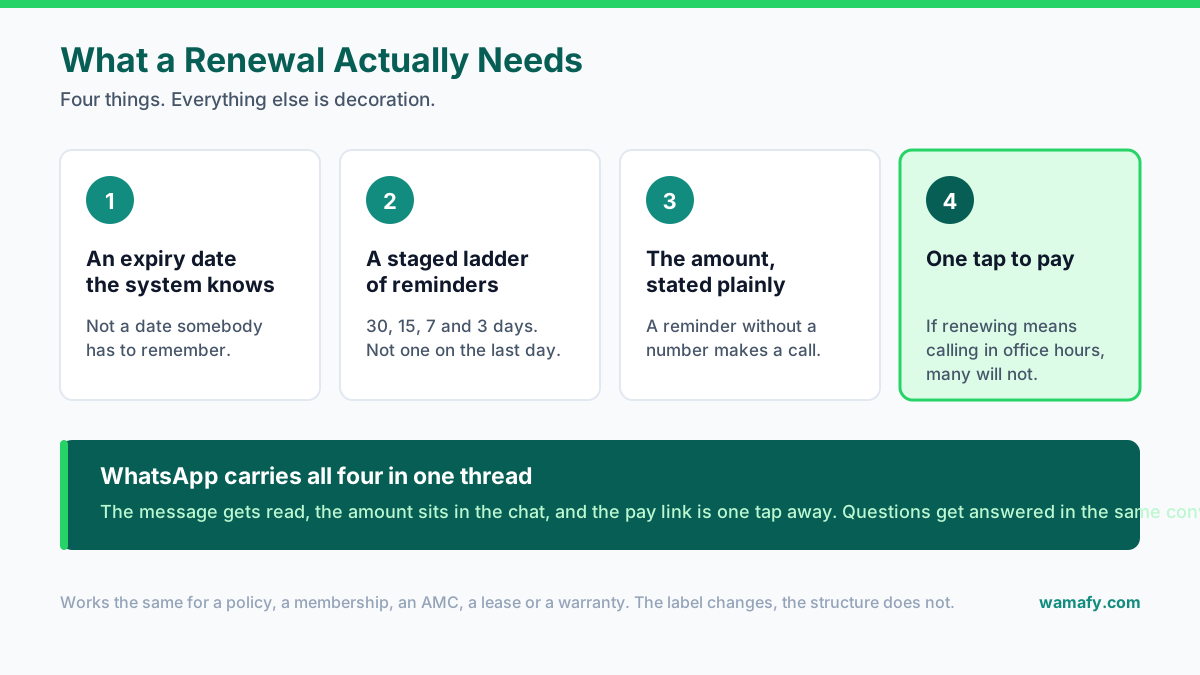
WhatsApp does all four in one place. That is the whole reason these modules live there rather than in an email tool. The message gets read, the amount sits in the thread, and the pay link is one tap away. If the customer has a question, they reply in the same chat instead of starting a new process.
AMCs, leases and warranties: the least served of all
Insurance has IRDAI-mandated persistency disclosure. Gyms have industry benchmarks. Both categories at least know their number.
Then there is everything else. Annual maintenance contracts, equipment servicing, rentals, leases, extended warranties, software subscriptions. We went looking for renewal-rate benchmarks for Indian SMB AMCs while researching this, and could not find them. The data does not appear to exist.
That absence is the point. Insurance measures persistency because a regulator makes it. Gyms measure it because software vendors publish benchmarks. AMC providers measure nothing, so the leak is invisible, so it never gets fixed.
These businesses also share a structure, which is why one module can serve them all. There is a customer, an asset or a service, a start date, an end date and an amount. Whether you call that field a policy, a membership, a contract or a warranty is a labelling question, not a product one. That is why Contract Renewals has relabelable fields instead of five near-identical modules.
What building it taught us
Three things surprised us enough to change the design.
The cadence that works is earlier than you think
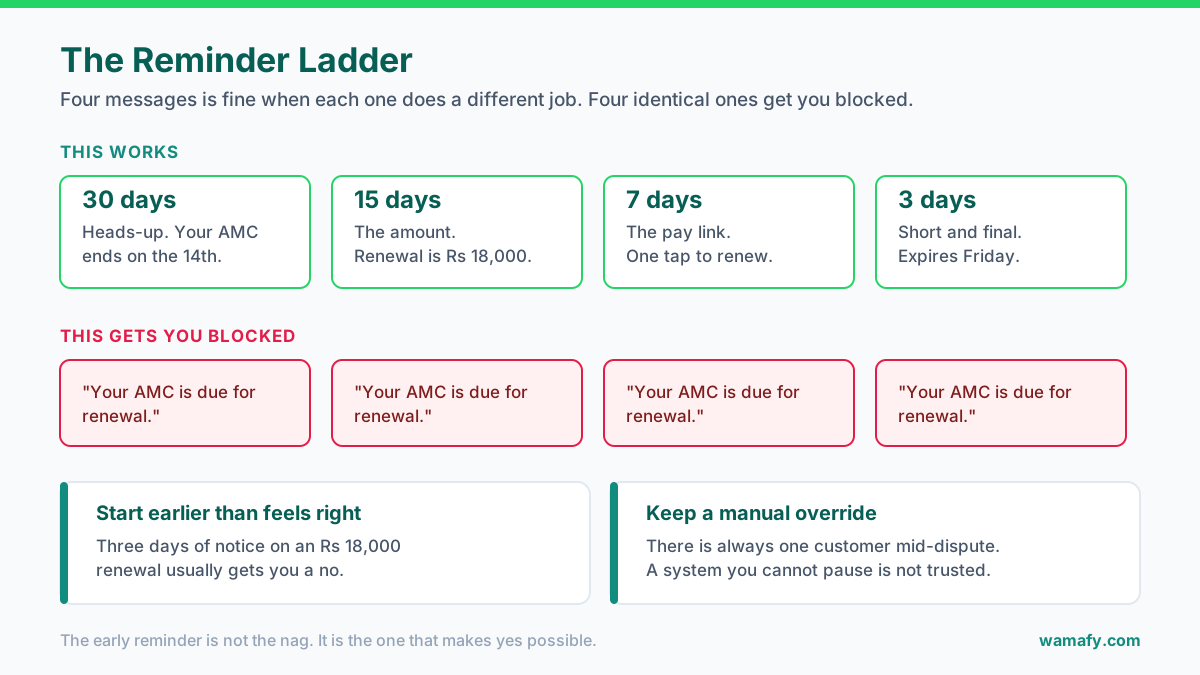
Our first instinct was to remind close to the date, because that felt most relevant. It is wrong for anything with a real cost. Give a customer three days of notice on a Rs 18,000 renewal and they have to find the money fast. Often the answer is no. Reminding at 30 days, then 15, then 7, then 3 gives them time to plan. The early reminder is not the nag. It is the one that makes yes possible.
The cadence that irritates is the one that repeats itself
Four reminders is fine when each one says something different. Four identical messages is harassment, and people block you for it. So each step does a different job. The first is a heads-up. The second carries the amount. The third carries the pay link. The last is short and final. Same customer, four messages, no annoyance.
Owners want a manual override more than they want automation
This one we did not expect. Every business we described it to asked the same thing in the end. Can I stop it for one customer? There is always someone mid-dispute, a friend of the family, or a person who paid in cash last week. A system that cannot be paused for one person does not get trusted with the whole list. So marking a renewal as handled matters more than any clever feature.
The honest limits
Two things this is not, and it is worth being straight about both.
It is not accounting. These modules chase engagement and collect payment. They do not replace your books, your GST filing or your accountant. If your renewal data is a mess today, automating it will send messages faster to the wrong people.
It will not save a customer who wants to leave. A reminder recovers the person who forgot. It does nothing for the one who found a better price or had a bad experience. If your renewals are falling because of the product, this fixes the wrong end of the problem.
We would rather say that now than have someone buy it expecting a retention miracle.
Where kCube stands on this
Wamafy is built and operated by kCube Consultancy Services Pvt. Ltd., and our position on renewals follows the same rules as the rest of the platform.
Flat monthly pricing, with Meta's rates passed through and no per-message markup. So a renewal ladder costs what the messages cost. The modules are paid add-ons you buy only if you need them. They work on any plan, including Seed at Rs 799 a month. We do not gate them behind an enterprise tier, because the businesses with the worst renewal leak are usually the smallest ones.
If you want the vertical detail, we have written separately about renewal reminders for insurance agents and about gyms and fitness studios. For how staged sequences are built in general, see the WhatsApp drip campaign guide.
Frequently Asked Questions
What is renewal reminder software?
It stores an expiry date for each customer. Before that date it sends a staged series of reminders carrying the amount due and a way to pay. The point is that it acts on the date by itself, instead of depending on somebody remembering to look.
Why send renewal reminders on WhatsApp instead of email?
WhatsApp messages get read at far higher rates than email in India, and the reply, the amount and the payment link all sit in one thread. A customer with a question answers in the same chat instead of starting a separate process.
When should renewal reminders be sent?
For anything with a meaningful cost, start about 30 days out, then 15, 7 and 3. Reminding only in the last few days forces a customer to find money at short notice, and the answer is often no. Give them time to plan.
Does this work for AMCs, leases and warranties?
Yes. They share the same structure as insurance and memberships: a customer, an end date and an amount. The Contract Renewals module uses relabelable fields so the same flow covers AMCs, rentals, leases, warranties and subscriptions.
Can I stop reminders for one customer?
Yes, and this matters more than it sounds. There is always a customer mid-dispute or one who paid offline. You can mark a renewal as handled or pause an individual ladder without switching anything off for everyone else.
Which plan do I need for the renewal modules?
Any of them. They are paid add-ons and they are not tier-gated, so a business on Seed at Rs 799 a month can buy the same module as one on Forest. Add-on pricing is listed under Settings and on the add-ons page.
The leak nobody invoices you for
Most business problems announce themselves. A renewal that did not happen does not. There is no complaint, no refund and no angry review. There is just a number that is slightly lower than it should be, every month, for years.
That is why it stays unfixed, and it is why we think it is one of the highest-return things a small Indian business can automate. Start a 14-day free trial to set up a renewal ladder on your own list and see what comes back. A card is authorized when the trial begins and charged only on day 15.