WhatsApp for Insurance Agents: Stop Policy Lapses
A lapsed policy is not a lost sale. It is a customer you already paid to win, walking away quietly. Usually because nobody reminded them in time.
The scale of it is easy to miss. Across Indian life insurers, 13th-month persistency sits around 65 percent measured by policy count. Roughly one policy in three does not survive its first renewal.
Those policies were sold. The commission was earned once. The renewal, which costs almost nothing to secure, never happens.
This is a practical guide to using WhatsApp for insurance agents in India. It covers the reminder ladder, what the message should say, where the rules sit, and what it costs to run.
Why renewals leak
Almost no policy lapses because the customer decided to cancel. It lapses because of drift.
- The renewal notice arrives by post or email and is never opened.
- The customer means to pay, then forgets, and the grace period runs out.
- The agent who sold it has moved on to chasing new business.
- Nobody knows the policy lapsed until the customer calls with a claim.
Every one of those is a reminder problem, not a product problem. Which is why the fix is dull, and cheap.
The channel is shifting, and not by choice
Phone calls used to carry renewals. That is getting harder.
TRAI now requires the 1600-number series for service and sales calls by insurance firms, phased in through early 2026. The intent is good, but the practical effect is that an unfamiliar number is easier for a customer to ignore.
WhatsApp does not have that problem. Your message lands in the app they use for family. It shows your business name. In India, most messages are read within minutes.
The reminder ladder that works
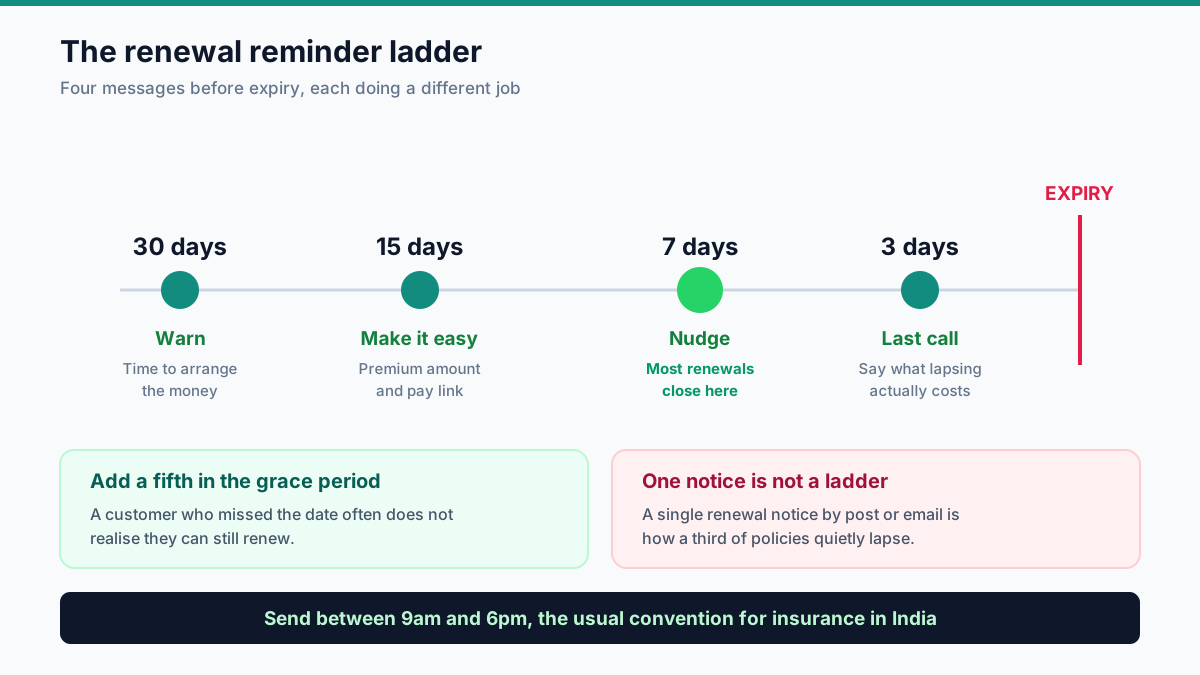
One reminder is too few. Ten is too many. Four, spaced properly, is the pattern agents report the best results from.
| When | Job | Tone |
|---|---|---|
| 30 days before | Warn. Give them time to arrange money. | Plain. No rush yet. |
| 15 days before | Make it easy. Premium amount and payment link. | Helpful. One tap to act. |
| 7 days before | Nudge. Most renewals close here. | Direct, still friendly. |
| 3 days before | Last call. State what lapsing costs them. | Clear about consequences. |
Add a fifth inside the grace period if the policy has one. A customer who has missed the date often does not realise they still can renew.
Agents who run a staged ladder report far fewer lapses than those sending one notice. The gain usually shows in three to six months, once a full renewal cycle has passed.
What a good renewal message says
Most renewal messages assume the customer remembers the policy. Often they do not.
Include five things:
- Their name and yours. They bought from a person.
- Which policy. Insurer, type, and the last four digits of the number.
- The exact premium. Not "your renewal is due". The number.
- The expiry date. Specific, not "soon".
- One way to pay. A link, not instructions.
Hi Mr Sharma, your HDFC Ergo health policy ending 4471 expires on 12 September. The renewal premium is Rs 14,320. You can pay here: [link]. Any questions, just reply to this message. - Ramesh, your advisor
Note what is missing. No greeting paragraph, no product pitch, no upsell. A reminder that tries to sell something else does worse, and annoys more.
For wording that clears Meta's template review the first time, see these WhatsApp template message examples.
The cost mistake that doubles your bill
This one is worth more than it looks.
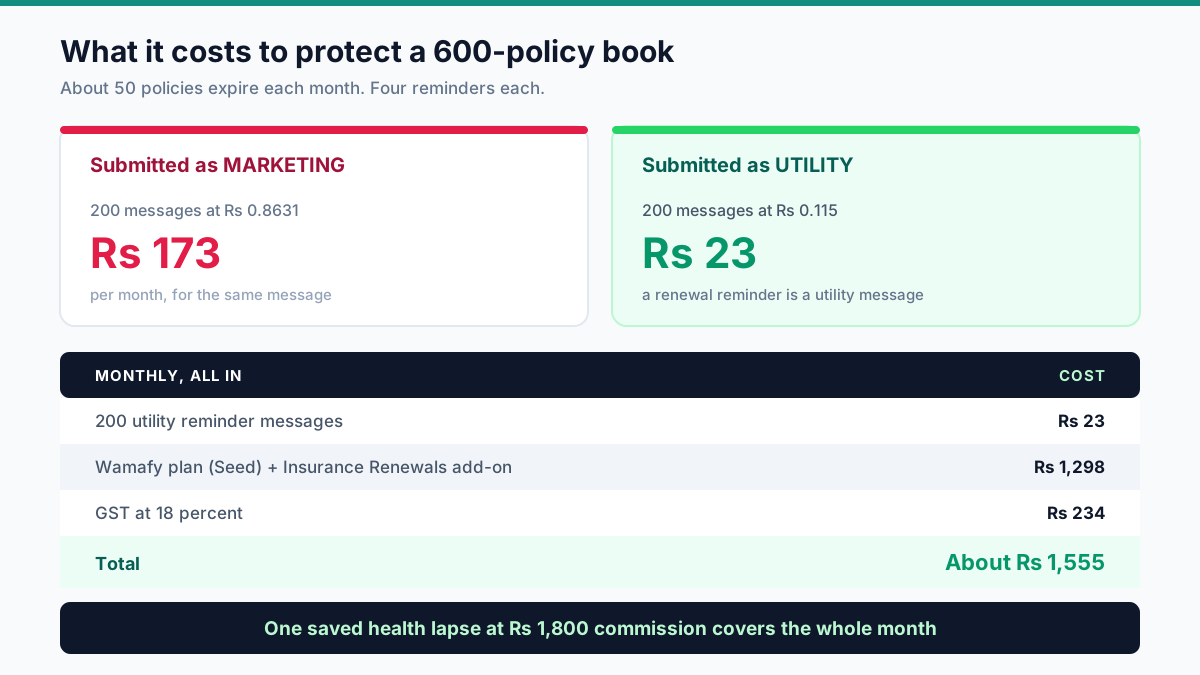
Meta prices template messages by category. A marketing template costs about Rs 0.8631 in India. A utility template costs roughly Rs 0.115.
A renewal reminder for an existing policy is a utility message. It is about a policy they already hold. Submitted correctly, it costs about one eighth of a marketing template.
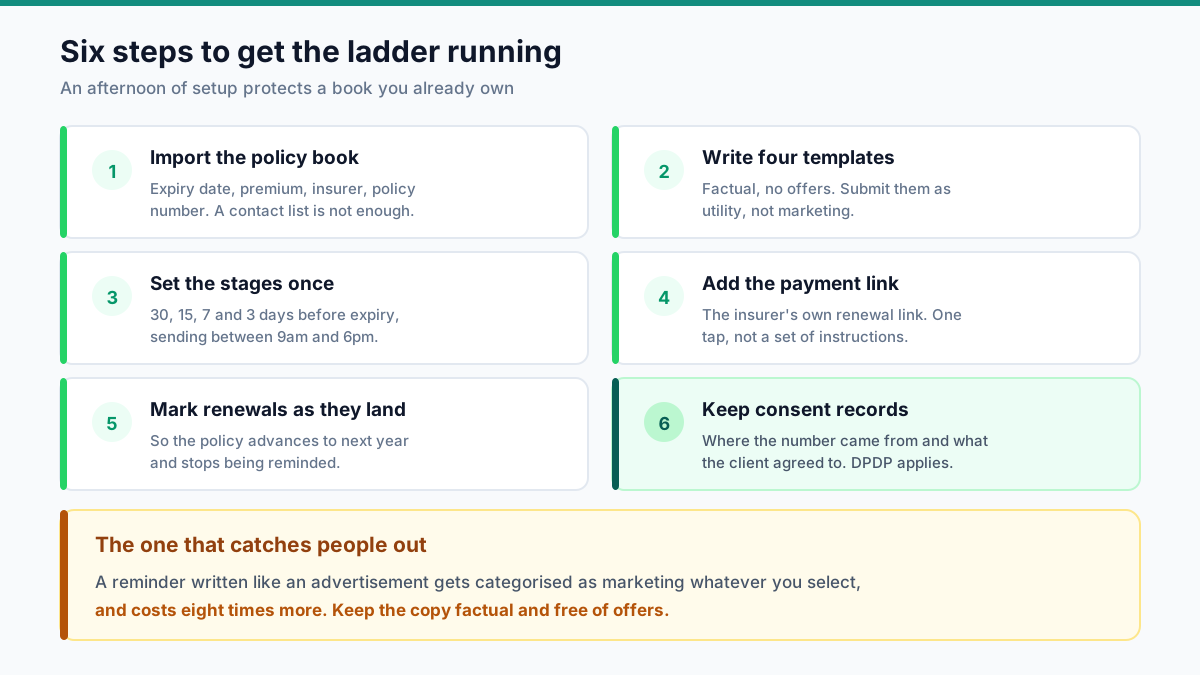
Plenty of agents submit renewal reminders as marketing, because that is the default. They pay eight times more for the same message. And a reminder written like an ad gets treated as marketing whatever you pick, so keep the copy plain.
What this actually costs
Take an agent with 600 policies on the books. Policies renew annually, so about 50 expire each month. Four reminders each is 200 messages a month.
| Line | Monthly cost |
|---|---|
| 200 utility messages at Rs 0.115 | Rs 23 |
| Wamafy plan (Seed) | Rs 799 |
| Insurance Renewals add-on | Rs 499 |
| GST at 18 percent | Rs 234 |
| All in | About Rs 1,555 |
Now the other side. A health policy at Rs 12,000 with 15 percent renewal commission is Rs 1,800 to you.
One saved lapse a month more than covers the whole thing. Everything after that is margin on a book you already own.
The message cost is the striking part. Rs 23 a month is what it takes to remind an entire 600-policy book four times each. Most agents assume sending at that scale is costly. It is not, if you pick the right category.
Staying on the right side of the rules
Renewal reminders to your own policyholders sit on safe ground. The customer already holds the policy, so this is service, not a cold pitch. Messaging a bought list is a very different thing.
Sensible practice for Indian agents:
- Identify yourself immediately. IRDAI guidance expects the customer to know who is writing, and why, from the first line.
- Keep an opt-out available. Honour it the same day. An opt-out is far cheaper than a block.
- Stay inside 9am to 6pm. The common convention for insurance communication in India. It also keeps you clear of the late-night sends that attract blocks.
- Do not exceed about two messages a week to the same client, across everything you send.
- Keep consent records. Under the DPDP Act you must be able to show where the number came from, and what the client agreed to.
- Never send policy documents to a public link. Send the file itself in the chat.
More on the general rules in this guide to WhatsApp marketing compliance in India.
Beyond renewals
Once the reminder ladder runs itself, the same channel handles the rest of the relationship.
- Claim status updates. When a customer is most worried is when a fast reply is worth most.
- Document collection. KYC papers, reports and vehicle photos arrive faster here than by email.
- Policy document delivery. Send the PDF in the chat, where they can find it a year later.
- Cross-sell, carefully. Someone who already holds a motor policy is an easier ask than a stranger. Once or twice a year, and never inside a renewal reminder.
Run a policy book, not a contact list
Most agents never build this because a contact list holds no expiry dates. Reminders only work if something knows when each policy ends.
What you need is small:
- Every policy with its expiry date, premium and insurer.
- A schedule that fires at 30, 15, 7 and 3 days on its own.
- A way to mark a policy renewed, so the cycle moves to next year.
- A view of what is expiring in the next 30 days.
Wamafy's Insurance Renewals add-on does this. Import your book, set the stages once, and mark policies renewed as they come in. It is Rs 499 a month on any plan, or Rs 399 if you pay yearly.
If you would rather build it yourself, the same staged pattern is covered in the WhatsApp drip campaign guide.
Frequently Asked Questions
Can insurance agents in India send renewal reminders on WhatsApp?
Yes, to your own existing policyholders. These are service messages about a policy the customer already holds, not cold marketing. Identify yourself clearly, offer an opt-out, and keep a record of how you obtained the number.
How much does it cost to send WhatsApp renewal reminders?
Renewal reminders qualify as utility templates, which cost about Rs 0.115 each in India. An agent with 600 policies sending four reminders per expiring policy spends roughly Rs 23 a month on messages.
When should renewal reminders be sent?
Thirty, fifteen, seven and three days before expiry works well. Add a fifth in the grace period if the policy has one. Send between 9am and 6pm, which is the usual convention for insurance communication in India.
Why do my WhatsApp templates cost so much?
Most likely they are submitted as marketing rather than utility. A marketing template is about Rs 0.8631 against roughly Rs 0.115 for utility. Keep renewal copy factual with no offers, or it will be treated as marketing regardless of the category you pick.
Will reminders really reduce lapses?
Agents who run a staged ladder report fewer lapses than those sending one notice. It usually shows within three to six months. Around a third of policies do not survive the first renewal. There is a lot of room to win back.
Can I send policy documents over WhatsApp?
Yes, and it is better than email for retrieval later. Send the file itself in the chat rather than a public download link, so the document stays inside a private conversation.
The book you already have
New business gets the attention. The renewals book quietly decides what the practice is worth.
Four messages per policy, sent on a schedule, in the app your customers actually read, for about Rs 23 a month. Few things an agent can do are cheaper.
Wamafy is an official Meta Tech Provider with no markup on Meta's message rates. Plans start at Rs 799 a month and the Insurance Renewals add-on is Rs 499. Start a 14-day free trial and import your policy book this week. The card is authorised when the trial begins and charged only on day 15.