The WhatsApp Service Message Change on October 1: The Final Checklist
Four working days. That is what is left before the WhatsApp service message change on October 1 lands. Most of the advice being written about it points at the wrong risk.
Almost every article is about the money. The money is real, but for a typical Indian SMB it is small. The thing that can break your business next Thursday is a payment method, not a price. Get that one right and the rest of this page is tuning.
This is the short version for anyone who did not run a four-week plan. It is ordered by what saves the most per minute spent.
What actually changes on October 1
Two things stop being free inside the 24-hour customer service window:
- Service messages. The plain replies your team or chatbot sends after a customer writes in. Free since November 2024.
- Utility templates sent inside the window. Free since July 2025.
Meta's developer docs are clear on one point that matters for planning: there are no volume tiers for service messages. Sending more does not earn a lower rate. The price in your market stays flat however much you send.
Nothing else changes. Marketing, auth and utility templates sent outside the window were already billed, and they are billed the same way on October 1.
Do this first: the September 30 payment method deadline
This is the item worth acting on today, and it is not a pricing question.
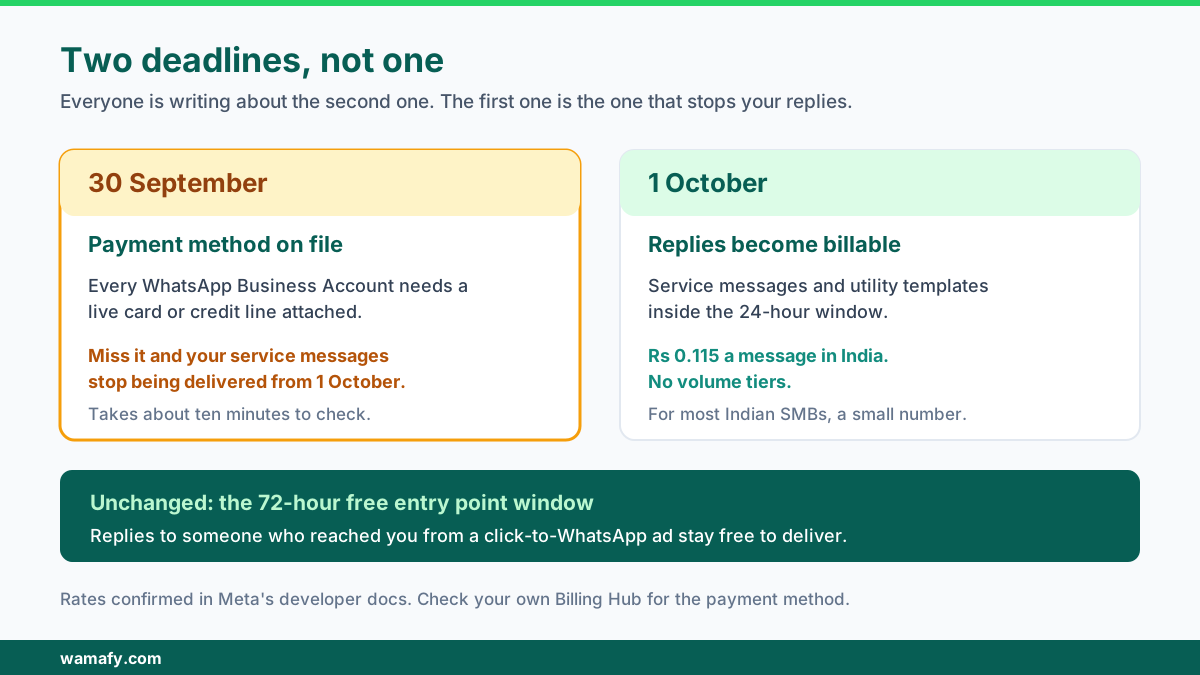
Meta's providers have all been telling customers the same thing: a WhatsApp Business Account with no valid payment method on file by 30 September 2026 stops having its service messages delivered from 1 October. Customers can still message you, but your replies simply do not go out.
Picture that on a Thursday morning. Enquiries arrive as normal. Your team answers as normal. Nothing reaches anyone. There is no bounce and no error in the inbox, so you could lose a day of chats before anyone notices.
What to do, in about ten minutes:
- Open Billing Hub at business.facebook.com/billing_hub.
- Switch to each business portfolio you own, not just the main one. Payment methods sit per portfolio, and a WABA takes its one from the portfolio that owns it.
- Check that every WABA you send from has a live card or credit line attached, and that the card has not expired.
- If you run several brands or numbers, check each one. This is where most gaps turn up.
One honest caveat. Providers all report this deadline and what happens if you miss it, but the public developer page on the October change does not spell it out. So do not take it on trust from this post or any other: open your own Billing Hub and see what is attached. Ten minutes now is cheap cover against a silent outage.
The rates, and the allowance nobody can fully confirm
Meta said it would publish the new rates by September 1, and it did. For India:
| Message type | Rate per message (INR, ex GST) | Changed on 1 October? |
|---|---|---|
| Marketing template | 0.8631 | No |
| Utility template | 0.115 | Only in-window ones, which were free |
| Auth template | 0.115 | No |
| Service message (free-form reply) | 0.115 | Yes, newly billable |
Service messages cost the same as utility and auth in every market. So the Rs 0.115 planning figure used all year turned out to be right.
On the free allowance, be careful. Providers report 1,000 free service messages a month per business phone number, after which the Rs 0.115 rate applies and nothing rolls over. Many providers give the same figure, but it does not appear on the public developer page about the change.
Treat it as likely but not certain: budget as though it exists, then check your first bill. Two things hold either way. The allowance is per phone number, not per account, so more numbers means more free messages, and it covers service messages only. Utility templates get no free allowance at all.
Who this actually hurts
Do the maths before you panic, because the answer is not the same for every business.
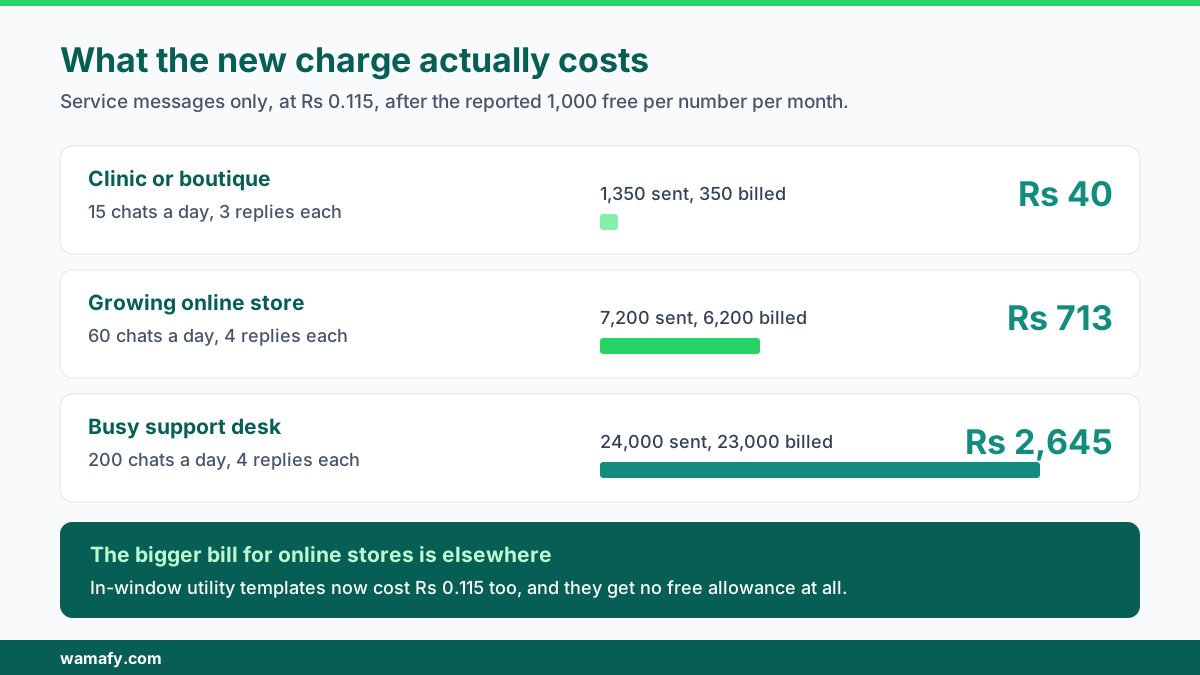
A clinic taking 15 chats a day, three replies each, sends about 1,350 service messages a month. Take off the 1,000 free and you are billed for 350. That is Rs 40 a month. Rounding error.
A growing store taking 60 chats a day, four replies each, sends about 7,200 a month. Billed for 6,200. That is Rs 713 a month: noticeable, not painful.
A busy support desk taking 200 chats a day, four replies each, sends about 24,000 a month. Billed for 23,000. That is Rs 2,645 a month, and worth an afternoon of work to cut.
Here is the part most coverage misses. If you run an online store, your bigger new cost is probably not service messages. It is utility templates inside the window, which get no allowance. Every order update, shipping alert and delivery note that used to ride free in an open chat now costs Rs 0.115. A store sending 5,000 of those a month has picked up Rs 575, and no free tier soaks up any of it.
Thirty minutes: collapse the chatbot greeting
The best return per minute you can get, and you can get it today.
Most rule-based chatbots greet in three or four separate messages: a hello, then a line on what the bot can do, then the menu. Each one is billable once the allowance runs out.
Before: "Hi there!" then "Welcome to [business]. I can help with orders, bookings and returns." then "Please choose an option below."
After: one message with the greeting, the scope and the menu together.
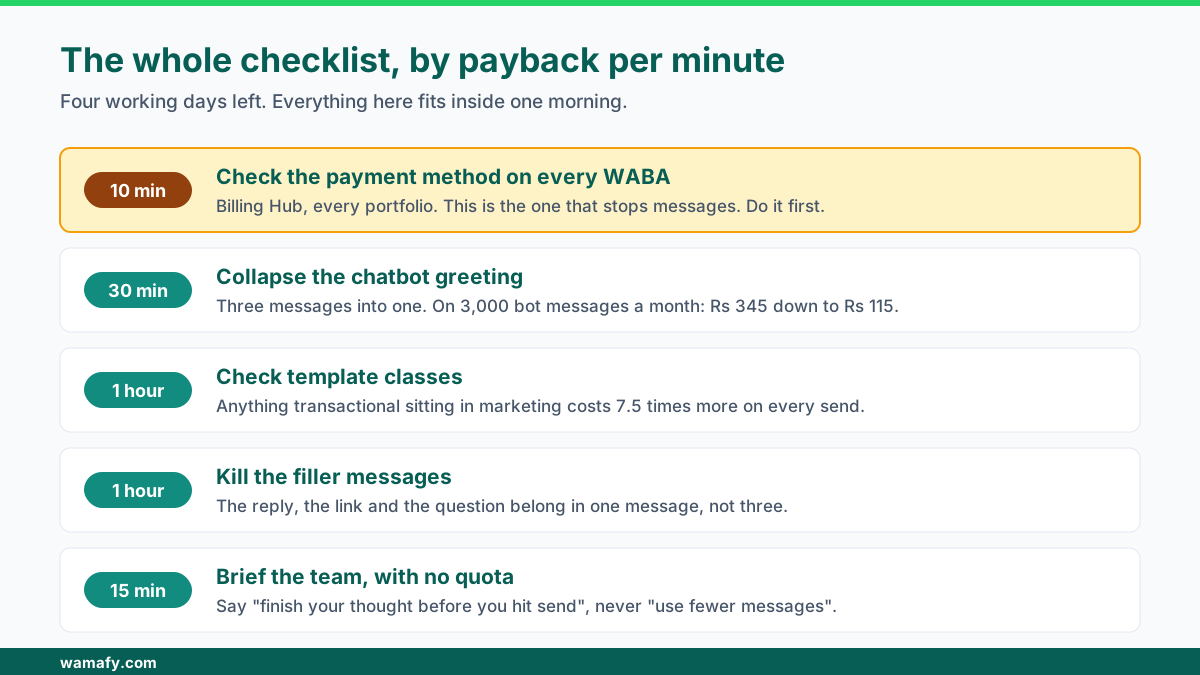
That is three messages down to one. On 3,000 bot messages a month, the bot line drops from Rs 345 to Rs 115. Billing is per message, not per character, so a long message costs the same as a short one.
Do the same on every flow in your chatbot, not just the greeting. Confirm steps and sign-offs are the usual culprits.
One hour: kill the filler messages
Open your inbox and read yesterday's chats as a stranger. Look for messages that carried nothing:
- "Sure, let me check."
- "Thank you for contacting us."
- "Is there anything else?"
- The reply, then the link, then the question, sent as three separate messages.
That last habit is the costly one. Agents type the way they text friends. One thought per message feels natural and triples the count. Put the reply, the link and the question in one message and you drop two billable messages per chat. Customers tend to prefer it that way.
One hour: check your template categories
Open your template list and read the class on each one. Anything transactional sitting in the marketing class costs you Rs 0.8631 instead of Rs 0.115. That is 7.5 times more on every send.
The usual cause is a discount code or an offer line inside an order update. Meta re-grades the template, and it stays that way until you fix it and send it back.
This has nothing to do with the October change. It is just the cheapest mistake to find while you are already looking. On 2,000 order updates a month, a wrongly graded template costs Rs 1,726 instead of Rs 230.
Fifteen minutes: brief whoever answers messages
Tell the team what changed and why. Then be careful about what you ask for.
Do not set a message quota. "Use fewer messages per customer" sounds smart and gives worse service. Agents start rushing, skipping the question that would have pinned down the problem and closing chats that were not resolved. A customer who writes in twice costs more than the message you saved, and costs you goodwill too.
The right instruction is about form, not volume: finish your thought before you hit send. That is a typing habit, easy to follow, and it cuts the count without anyone watching a meter.
What you cannot fix in four days
Be honest about the limits. Two things are real projects, not quick wins:
Cutting inbound volume. Answering questions before they are asked is the only lasting way to cut replies, and it means rewriting your order updates, your FAQ flow and your product pages. Worth doing in October, not this week.
Rebuilding a long chatbot. If your flow has fifteen steps, collapsing it properly needs a redesign and new templates, so do the greeting now and book the rest in.
For everything you cannot fix, just budget it. Work out your monthly figure from the sums above and put it in next month's costs. A number you chose to accept is very different from a surprise on a bill.
The window that stays free
One piece of good news, confirmed in Meta's own docs: messages sent inside the 72-hour free entry point window stay free.
That window opens when someone taps a click-to-WhatsApp ad and messages you. For three days after that first message, your replies cost nothing to deliver. The October change does not touch it.
The result is worth sitting with. Chats that start from an ad are now much cheaper to serve than chats that start from your website or a printed QR code. That is a real argument for routing more entry points through click-to-WhatsApp ads rather than plain links. Meta has clearly designed that nudge on purpose.
What to check on your first October invoice
Set a reminder for the first week of November and check four things:
- A service message line exists. If your platform does not show one, ask where those messages are being billed.
- The free allowance was applied, and at what number. This is how you learn whether the 1,000 figure was right.
- The rate is Rs 0.115. Not Rs 0.13, not Rs 0.14.
- Your platform is not taking a cut. Many Indian platforms add 10 to 30 percent on top of Meta's rate. That markup now lands on a whole new class of message that used to be free. It is a quiet raise for your provider. Ask them straight out what they charge on service messages.
That last one is worth asking this week, not in November. Wamafy adds no markup on any message fee, so the rate on your bill is Meta's rate. Whatever platform you use, get the answer in writing before the first billing cycle closes.
Frequently Asked Questions
Does this affect the free WhatsApp Business app?
No. These charges apply to the WhatsApp Business Platform, the API used to send at scale. If you reply from the free WhatsApp Business app on a phone, nothing changes for you on October 1.
Are undelivered messages charged?
No. Billing is on delivery, so a message that fails to deliver is not billed. A message that lands and is then ignored or blocked has still been delivered, and is billed.
Does the chatbot count as service messages?
Yes. A free-form message sent inside the 24-hour window is a service message, whether a person typed it or a rule-based flow sent it. That is why collapsing a multi-step greeting pays back the most.
Is there a free allowance for service messages?
Providers report 1,000 free service messages per business phone number each month, with no rollover and no volume tiers beyond it. That figure is not on the public developer page about the change. Treat it as likely rather than certain, and check it against your first October bill.
What happens if there is no payment method on the account?
Providers report that service messages stop being delivered from October 1 for accounts with no valid payment method on file by September 30. Customers could still reach you, but your replies would not go out. Check Billing Hub for every portfolio you own rather than relying on this.
Do click-to-WhatsApp conversations still get free replies?
Yes. Meta's docs confirm the 72-hour free entry point window is unchanged. Replies sent inside it stay free to deliver, which makes ad-sourced chats cheaper to serve than any other kind.
Where to start this morning
If you do one thing today, open Billing Hub and check that every WhatsApp Business Account you own has a live payment method. The pricing you can absorb; a week of undelivered replies you cannot.
After that, collapse your chatbot greeting. Fix any transactional template sitting in the marketing class. Tell your team to finish the thought before hitting send. That is most of the saving on offer, and it fits in one working morning.
If you would rather see Meta's rate on your bill with no platform cut on top, you can test that in a 14-day free Wamafy trial. The card is authorised when the trial starts and charged on day 15, which is long enough to run a real October week and read the bill.