Inside Wamafy's Chatbot Builder: Automate Replies Without Code
Count how many times you typed the same answer on WhatsApp last week. Opening hours. Where the shop is. Whether that item is in stock. What the price is. For most Indian small businesses, the same six or seven questions make up the bulk of every day's messages.
A rule-based chatbot handles all of them. No code, no AI, no monthly surprise. You write the answers once, pick the words that trigger them, and the bot replies in seconds while you get on with the work.
This is a look at how Wamafy's chatbot builder works, which WhatsApp automation rules examples are worth setting up first, and one change coming on October 1 that should shape how you build it.
What rule-based actually means
A rule-based bot follows instructions you wrote. Someone sends a word you chose, or taps a button you made, and the bot sends the reply you approved.
That is the whole model. Three things follow from it.
- It never invents an answer. If a customer asks something you have not covered, the bot hands over rather than guessing. An AI bot can confidently quote a price you never set.
- You can predict every reply. Useful when the answer involves money, stock or a delivery promise.
- You can build it in an afternoon. No training data, no prompt tuning, no testing what it says when someone is rude to it.
The trade-off is real. A rule-based bot cannot handle a question phrased in a way you did not expect. The fix is not more rules. It is a clean handover to a human, which is covered further down.
The six auto-replies worth building first
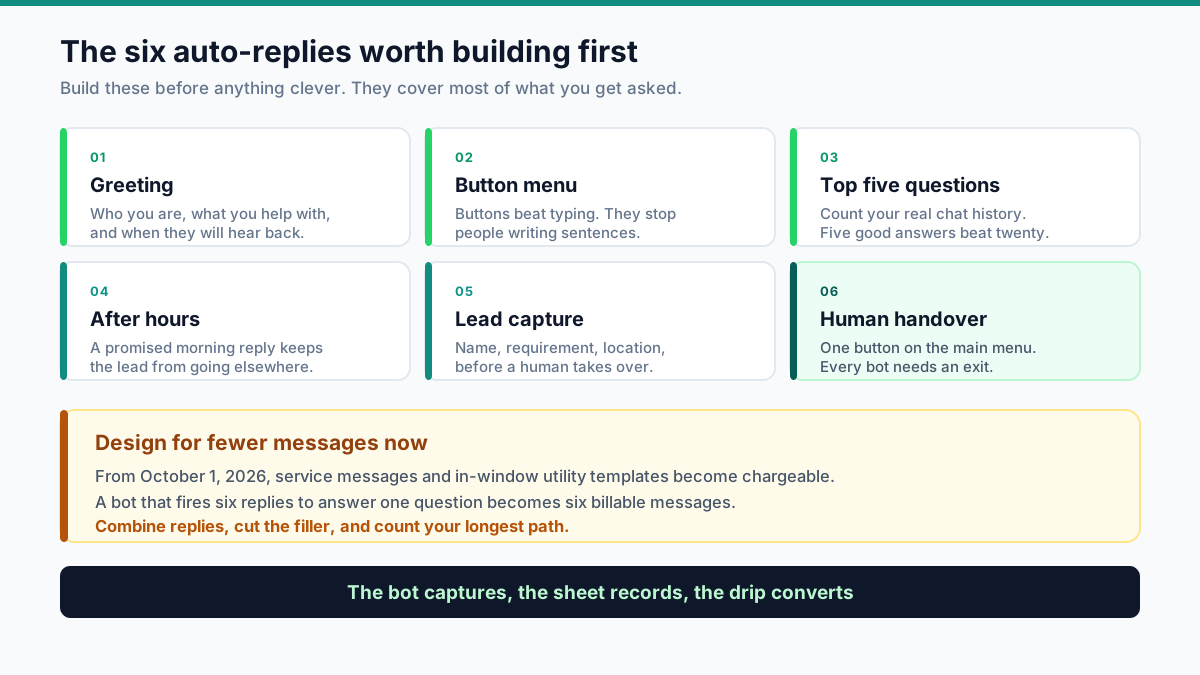
Most businesses try to automate everything and finish nothing. Build these six, in this order, and you will cover the majority of incoming messages.
1. The greeting
Fires on the first message from a new contact. Say who you are, what you can help with, and set a reply-time expectation. Keep it to three lines.
2. The menu
Buttons beat typing. Offer four or five choices: prices, order status, book a visit, talk to a person, location. Buttons stop people writing sentences your bot cannot read.
3. The frequent questions
Take your actual chat history and count. The top five questions will cover more than half of everything you get asked. Write those five answers properly rather than twenty answers badly.
4. Business hours
A different reply after closing time. Say when you open and what happens next. An after-hours message that promises a morning reply keeps the lead warm instead of losing it to whoever answers first.
5. Lead capture
When someone shows real interest, collect name, requirement and location before handing over. Your team then opens a conversation that already has the details in it.
6. Human handover
Every bot needs an exit. Make it one button, visible on the menu, that stops automation and alerts a person.
Building your first rule
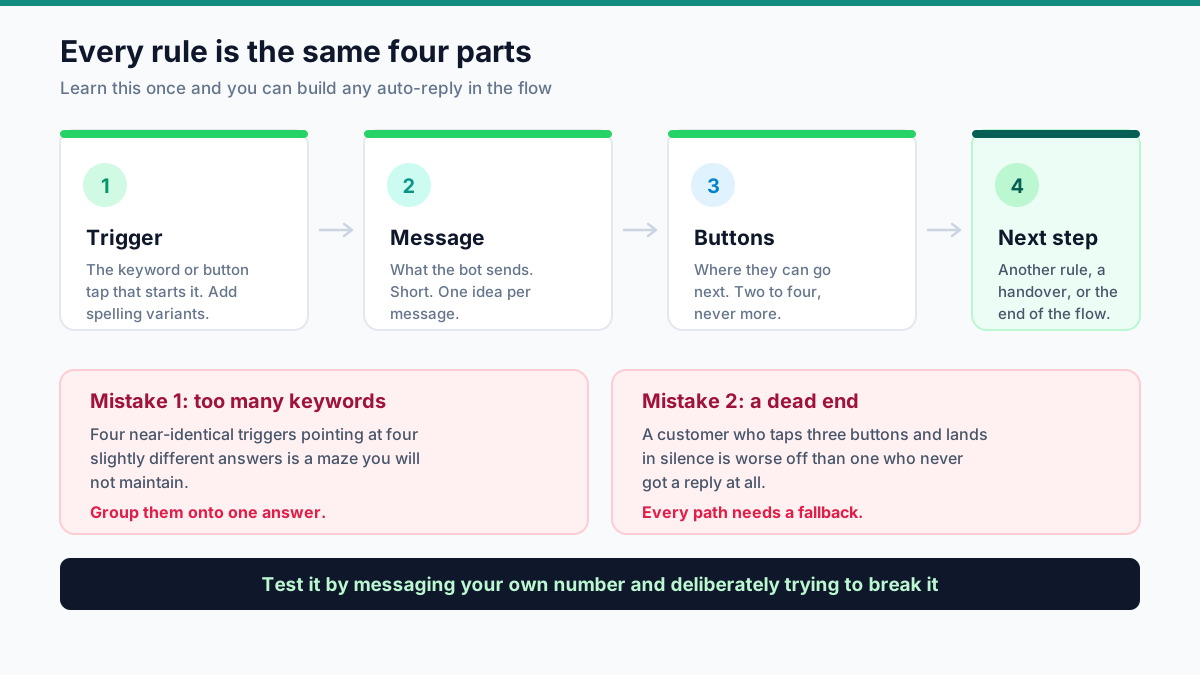
Every rule in the builder has the same four parts.
| Part | What it does |
|---|---|
| Trigger | The keyword or button tap that starts the rule. Add spelling variants and the local-language word your customers actually use. |
| Message | What the bot sends. Short. One idea per message. |
| Buttons | Where the customer can go next. Two to four options, never more. |
| Next step | Another rule, a hand-off to a person, or the end of the flow. |
Two mistakes show up in almost every first build.
Too many keywords per rule. If "price", "cost", "rate" and "how much" all point at the same answer, that is fine. If they point at four slightly different answers, you have built a maze you will not maintain.
No dead end. Every path must finish somewhere. A customer who taps three buttons and lands in silence is worse off than one who never got a reply at all.
Test it by messaging your own number and deliberately trying to break it. Send a word you never configured. See what happens. If the answer is nothing, add a fallback.
Send every lead straight to a Google Sheet
A bot that answers questions is useful. A bot that answers questions and files the lead is a system.
Wamafy's chatbot builder has a dedicated Google Sheets node. Drop it into a flow and every captured lead lands in your sheet in real time, with the fields you collected. It generates the required Apps Script for you, so there is no developer step.
This matters more than it sounds. Most small teams lose leads not because the bot failed but because the details stayed in a chat thread nobody exported. A live sheet means your sales list is built while you sleep.
Handing over to a human, cleanly
The handover is where most bots annoy people. Three rules keep it civil.
- Make it obvious. A "talk to a person" button on the main menu, not buried three taps deep.
- Stop the bot completely. Once a human takes over, automation should go quiet. A bot that keeps interrupting a live conversation reads as broken.
- Be honest about timing. If nobody is available until 10am, say so. People wait happily when they know how long.
Route the handover into a shared inbox rather than one person's phone. Assign, snooze and tag so nothing sits unanswered while everyone assumes someone else replied.
Rule-based or AI: which one you actually need
AI chatbots get the attention. For most Indian small businesses today, rules still win, for four unglamorous reasons.
| Rule-based | AI | |
|---|---|---|
| Answers | Exactly what you wrote | Generated, sometimes wrong |
| Setup | An afternoon | Content, testing, tuning |
| Cost | Part of your plan | Often billed per token |
| Unexpected questions | Hands over | Attempts an answer |
That cost row is not theoretical. From August 1, 2026, messages sent through Meta Business Agent are billed per token. A rule-based bot has no such meter running.
Wamafy's chatbot builder is rule-based today. There is no AI reply generation, and this post is not going to pretend otherwise. If your business genuinely needs open-ended conversation across thousands of unpredictable questions, rules will frustrate you. If it needs the same seven answers sent quickly and correctly, rules are the better tool.
For the fundamentals of building one, see this guide to building a no-code WhatsApp chatbot.
What changes on October 1
This is the part worth planning around now.
Today, replies your bot sends inside the 24-hour customer service window are free. From October 1, 2026, service messages and in-window utility templates become chargeable.
A chatbot that fires six replies to answer one question has been costing you nothing. After October 1, it is six billable messages. Nothing about the bot changes. The bill does.
So design for fewer, better messages now:
- Combine replies. One clear message with four buttons beats four short messages.
- Cut the filler. "Sure!" and "One moment..." are separate billable messages after October.
- Count your longest path. Walk your busiest flow and count the messages. That is your future per-conversation cost.
Building the bot tight now costs nothing extra and saves you a rebuild in September.
Where the bot fits with everything else
The chatbot is one part of three, and they do different jobs.
- The chatbot answers and routes. It is the front desk.
- Flows collect structured information in-chat, with dropdowns and date pickers, when a conversation is not the right shape for the task. Read more on WhatsApp Flows and in-chat forms.
- Drips follow up over days once you have the lead. See the WhatsApp drip campaign guide.
The pattern that works: the bot captures, the sheet records, the drip converts. Most businesses build only the first and wonder why the leads go cold.
Frequently Asked Questions
What are good WhatsApp automation rules to start with?
Start with six: a greeting, a button menu, your top five frequent questions, an after-hours reply, lead capture, and a human handover. These cover most incoming messages for a typical small business.
Can a rule-based chatbot take orders?
It can collect what someone wants and pass it to a person. For a full catalogue, order form and payment link in chat, that is the Sell on WhatsApp add-on rather than the chatbot alone.
Does the chatbot work in Hindi or regional languages?
Yes. You write the messages, so they can be in any language. Add the local-language words your customers actually type as extra triggers alongside the English ones.
What happens if someone asks something the bot does not understand?
A well-built bot sends a fallback message and offers a human handover. It does not guess. That predictability is the main advantage of rules over an AI bot when money or stock is involved.
Will my chatbot start costing money in October 2026?
From October 1, 2026, service messages and in-window utility templates become chargeable, so bot replies that are free today will be billed. Combining replies and cutting filler messages now reduces that cost before it starts.
Do I need a developer to connect a Google Sheet?
No. The Google Sheets node in the chatbot builder generates the required Apps Script for you, and captured leads appear in the sheet in real time.
Build the boring six first
The temptation is to build something clever. The version that actually saves you time is the boring one: six rules, clear buttons, one obvious way to reach a person, and every lead landing in a sheet.
Set it up once, keep the paths short, and it will handle the questions you are tired of answering while you do the work only you can do.
Wamafy's chatbot builder is included in the plans, with no code and no per-message markup on Meta's rates. Plans start at Rs 799 a month plus GST. Start a 14-day free trial and build your first six rules this week. The card is authorised when the trial begins and charged only on day 15.