WhatsApp Abandoned Cart Recovery for Shopify Stores in India
Picture a Shopify store in India doing 700 checkouts a month. Around 490 of them never finish. The shopper adds a kurta or a supplement tub to the cart, reaches the payment step, and vanishes. That is not a broken store. That is the normal Indian checkout, where roughly 70 percent of carts are abandoned and the number climbs past 80 percent on mobile.
Most brands try to win those buyers back with an email no one opens. This guide lays out a better path: WhatsApp abandoned cart recovery built for the way Indian shoppers actually buy. You will get the full playbook, the message templates, the real ROI math in rupees, the trade-offs nobody mentions, and the setup steps. By the end you will know exactly what to build and what it will earn.
What this guide covers
- Why Indian cart abandonment is its own problem
- Why email and SMS fall short here
- The WhatsApp-native approach
- The step-by-step recovery playbook
- Templates that get approved
- The ROI math, in rupees
- What it actually costs
- Trade-offs and common mistakes
- Opt-in, compliance, and quality rating
- WhatsApp vs email vs SMS vs retargeting
- How to set it up
- Frequently asked questions
- Related Wamafy resources
Why Indian cart abandonment is its own problem
Global cart-recovery advice assumes a card-first, desktop-first shopper. India is neither. Over 70 percent of Shopify traffic for most D2C brands is mobile, and mobile is exactly where carts leak fastest. A shopper on a patchy 4G connection in a Tier 2 city behaves nothing like one on office wifi in London.
The reasons Indians abandon are specific. Many want cash on delivery, and a store that hides COD until the last screen loses them. Many start a UPI payment, get a network timeout, and give up. Some are simply comparing prices across three tabs. India now runs more than 16 billion UPI transactions a month, so the payment rail is not the problem. The drop-off happens in the gap between intent and a confirmed order.
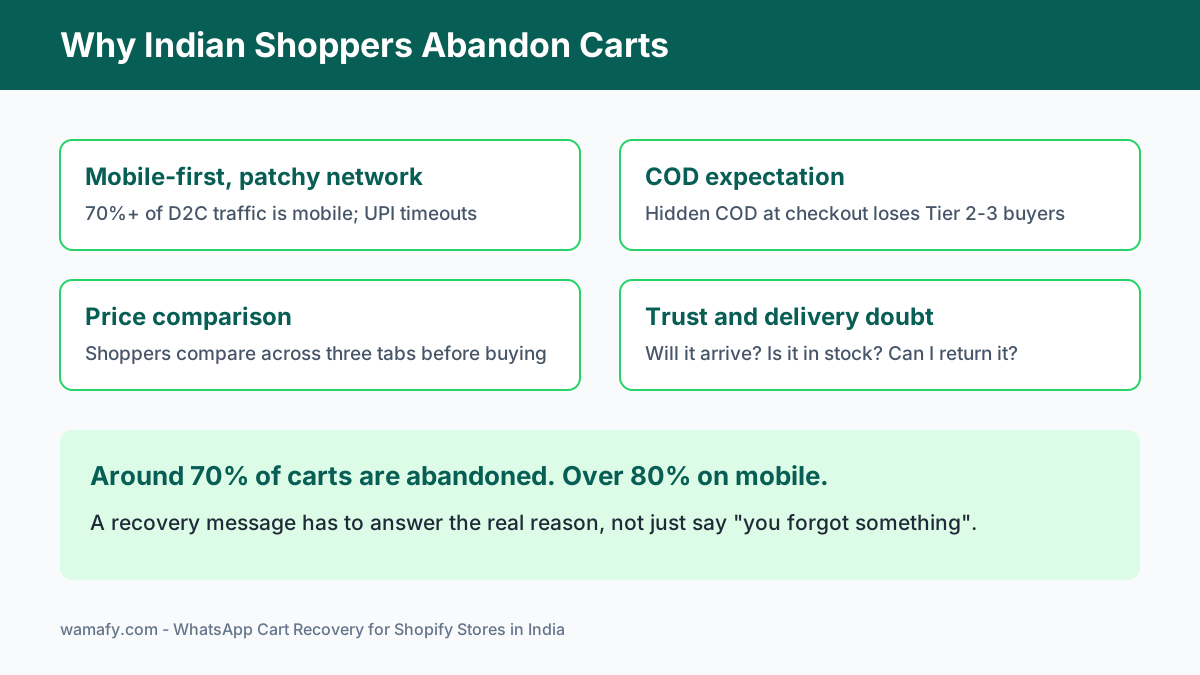
This matters for recovery because the message has to address the real reason. A flat "you left something behind" does little. A message that confirms COD is available, or that the price is held for 24 hours, speaks to why the shopper actually paused. WhatsApp lets you say that in a channel they already live in.
Why email and SMS fall short here
Email is the default recovery tool, and in India it barely works. Indian cart-recovery emails see open rates of roughly 5 to 8 percent. If only 1 in 15 people open the message, the recovery rate is capped before you write a single word. Promotional email also lands in the Promotions tab, which most Indian shoppers never check on mobile.
SMS is faster to read but blunt. It carries no product image, no button, and no way to reply. It also sits under DLT registration rules in India, which add friction and template lag. WhatsApp business messaging on opt-in works differently and avoids that particular bottleneck.
The contrast is stark. WhatsApp messages are opened around 98 percent of the time, usually within minutes. You can attach the exact product image, add a "Complete your order" button, and let the shopper reply with a question. That combination is why a channel switch alone, with the same offer, often lifts recovery several times over.
The WhatsApp-native approach
WhatsApp recovery is not "email, but on WhatsApp." It is a short, conversational sequence that treats the shopper like a person who got interrupted, because usually they did. Three things make it work.
First, it is conversational. A shopper can reply "is COD available" and get an answer, which removes the exact doubt that stalled them. Second, it is rich. The product image and a one-tap button cut the path back to checkout from many steps to one. Third, it is timed to intent. The first nudge goes out within an hour, while the shopper still remembers the product.
Wamafy is built around this model as an official Meta Tech Provider, so you send through the WhatsApp Business API on opt-in contacts, not through a personal phone that risks a ban. For the deeper mechanics of clean sending at scale, the broadcast guide covers list hygiene and pacing that protect your number.
The step-by-step recovery playbook
Here is the full flow, in the order you should build it. Each step maps to a real setting in your store and your messaging platform.
Step 1: Capture opt-in at checkout
You can only message a shopper who agreed to hear from you. Add a checkbox at checkout that reads "Send me order updates and offers on WhatsApp." Pre-checked is not allowed under good practice, so keep it opt-in. In practice, 60 to 80 percent of Indian shoppers tick it, because they expect order updates on WhatsApp anyway. That single checkbox is what makes the rest of the flow legal and effective.
Step 2: Catch the abandonment event
Your store fires an "abandoned checkout" event when a shopper enters the checkout and does not complete it. On Shopify, this event is available through the platform webhook. Wamafy has a native Shopify integration: in your Wamafy dashboard, connect your Shopify store and Wamafy listens to that webhook directly, so the recovery message triggers automatically with no extra glue. The native Shopify integration is available on the Wamafy Forest plan. The same integration also fires order confirmations and fulfillment alerts on their own webhooks, and recovery cadences auto-cancel the moment the customer pays. For headless or custom stacks, the REST API is available as an advanced option, but the native integration is all most stores need.
Step 3: Send the three-message sequence
The proven structure is three messages, each with a different job. Do not send more. A fourth message rarely recovers and often earns a block.
- Message 1, about 1 hour after abandonment. A gentle reminder with the product image and a "Complete your order" button. No discount yet. Many carts come back here on convenience alone.
- Message 2, about 24 hours later. Add reassurance, not just a nudge. Confirm COD is available, or that the item is still in stock, or that delivery is quick. This answers the real doubt.
- Message 3, about 48 hours later. Now add a small, honest reason to act, such as a limited-time discount code or a low-stock note. This is your last touch.
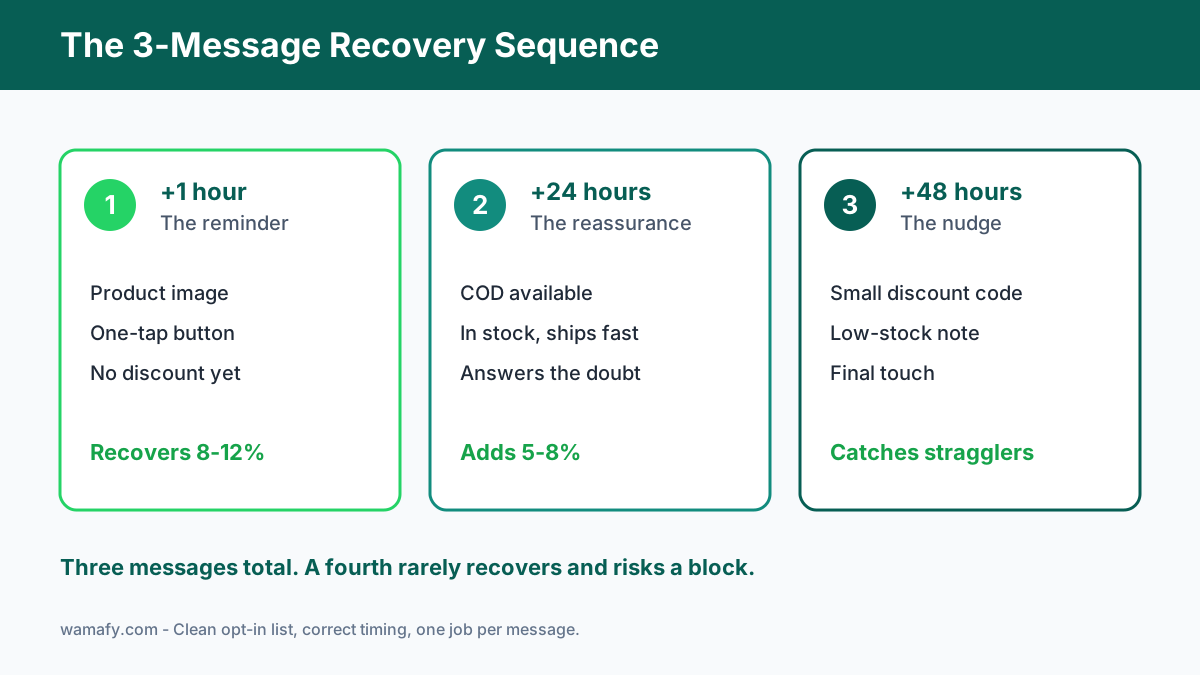
The recovery is front-loaded. The first message typically brings back 8 to 12 percent of abandoned carts on its own. The second adds another 5 to 8 percent. The third catches the price-sensitive stragglers. That is how stores reach the 12 to 18 percent range, and the strongest ones go higher.
Time the flow to the Indian sale calendar, too. During Diwali, the End of Season Sale, and the Republic Day and Independence Day sale weekends, both your cart volume and your abandonment rate spike. So does competition in the inbox. Tighten the first message to 30 minutes in these windows, while intent is hottest. Keep your stock counts live, so message two never promises an item you cannot ship.
Step 4: Make the payment path one tap
Every message button should land the shopper on the exact cart, not the homepage. If you use a checkout layer like Razorpay Magic Checkout, the return path can pre-fill address and payment. That removes the friction that caused the drop in the first place. The less the shopper has to retype, the more you recover.
Step 5: Handle replies
Some shoppers will reply with a real question. Route those to a shared inbox so a teammate can answer fast. A reply is a strong buying signal, and a quick human answer often closes the sale. For the playbook in blog form, see the WhatsApp cart recovery post.
Templates that get approved
Cart recovery templates usually fall under Meta's marketing category, so they must pass review. Keep them clear, skip all-caps and exaggerated claims, and use variables for names and products. Here are three you can adapt. Replace the bracketed parts.
Message 1, the reminder: Hi {{1}}, you left {{2}} in your cart. It is still saved for you. Tap below to complete your order in a minute. [Complete your order]
Message 2, the reassurance: Hi {{1}}, your {{2}} is still in stock and ready to ship. Cash on delivery is available, and most orders reach you in 3 to 5 days. Want to finish up? [Complete your order]
Message 3, the nudge: Hi {{1}}, last reminder for your {{2}}. Use code SAVE10 in the next 24 hours for 10 percent off. Only a few left in stock. [Claim my offer]
Notice each message has one job, one button, and a clear next step. Templates fail review when they cram in several offers, use banned words, or read like spam. To get your first set approved without rejections, the in-app template approval walkthrough shows the common traps.
The ROI math, in rupees
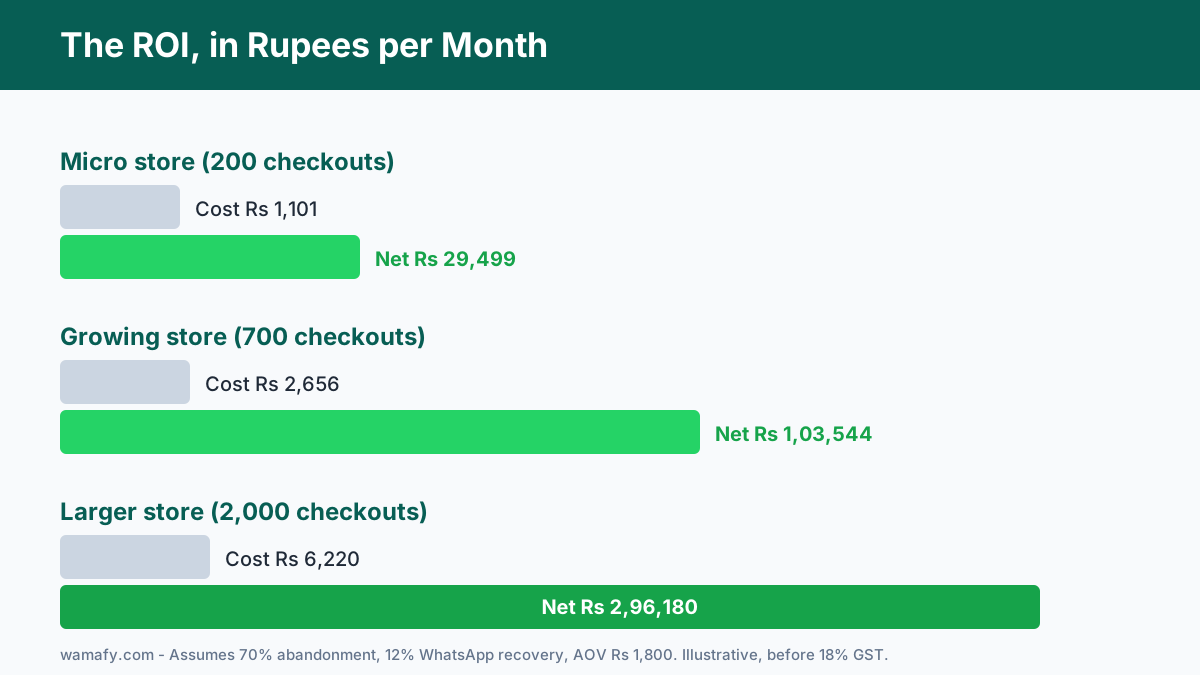
Most guides hand-wave the numbers. Here they are, in full, for three store sizes. The assumptions are deliberately conservative: a 70 percent abandonment rate, a 12 percent WhatsApp recovery rate, an average order value of Rs 1,800, and an average of 2.5 messages sent per abandoned cart at the Rs 0.8631 marketing rate.
| Metric | Micro store | Growing store | Larger store |
|---|---|---|---|
| Checkouts started / month | 200 | 700 | 2,000 |
| Carts abandoned (70%) | 140 | 490 | 1,400 |
| Carts recovered (12%) | 17 | 59 | 168 |
| Revenue recovered (AOV Rs 1,800) | Rs 30,600 | Rs 1,06,200 | Rs 3,02,400 |
| Message cost (2.5 per cart) | Rs 302 | Rs 1,057 | Rs 3,021 |
| Wamafy plan | Rs 799 | Rs 1,599 | Rs 3,199 |
| Net monthly gain | Rs 29,499 | Rs 1,03,544 | Rs 2,96,180 |
Even the micro store nets close to Rs 30,000 a month from carts it was already losing. The growing store nets over a lakh. These figures exclude 18 percent GST, which applies to both the platform fee and Meta's charges, so add that to the cost side. The point holds: the cost of recovery is tiny next to the revenue it returns, because you are selling to people who already wanted to buy.
One honest caveat. The 12 percent recovery rate assumes a clean opt-in list and relevant messages. A bought list or a generic blast will not hit these numbers, and may get your number flagged. The math works only when the basics are right.
If you want to sanity-check your own per-message cost before you model this, the real cost of WhatsApp marketing in India breakdown shows the full fee stack and how to spot a markup.
What it actually costs
There are three cost lines, and only three. First, Meta's per-message rate. A marketing template in India is Rs 0.8631 per message in 2026. Utility messages, such as a pure order update, are far cheaper at roughly Rs 0.12. Second, your platform subscription. With Wamafy that is a flat monthly fee with no per-message markup, so you pay Meta's rate directly. Third, GST at 18 percent on top.
That is the whole bill. The trap to watch is the second line. Many providers add a markup of 10 to 60 percent on every message, on top of Meta's rate. On a high-volume recovery flow, that quietly inflates the bill. A flat, no-markup model keeps the ROI math above predictable as you scale. This is the core difference covered in the Wamafy vs Interakt comparison.
Trade-offs and common mistakes
WhatsApp recovery is strong, but it is not free of trade-offs. Name them so you set it up with eyes open.
- The catalog UX is weaker than your website. WhatsApp is great for the nudge and the reply, but the actual browsing and checkout still happen on your store. Do not try to run the whole purchase inside chat.
- Over-messaging burns your number. Sending four or five recovery messages, or daily promos on top, raises block rates and drops your quality rating. Stick to the three-message flow.
- Wrong template category gets you rejected. A discount message is marketing, not utility. Label it correctly or Meta will reject it.
- Discount-first training. Put a coupon in message one and your keenest buyers soon abandon on purpose just to farm it. Lead with a reminder and reassurance. Hold any discount back for the third message.
- Ignoring replies. A recovery message that earns a reply and then goes silent wastes the warmest lead you have. Staff the inbox.
The biggest mistake is treating recovery as a one-time setup. Quality rating, template performance, and stock accuracy all drift. Check them monthly.
Opt-in, compliance, and quality rating
Three rules keep a recovery flow both legal and deliverable in India.
First, opt-in is non-negotiable. You may only message shoppers who agreed, which is why the checkout checkbox matters. Second, make opt-out easy. Honor a "stop" reply quickly. Privacy-aware Indian buyers judge brands hard on this. Third, protect your quality rating. Meta scores your number on block and report rates over a rolling window. A clean list and a capped message frequency keep you in the green, where your sending limits stay high.
One useful contrast with SMS. SMS marketing in India sits under DLT registration, with its own template approval chain. WhatsApp business messaging on opt-in contacts does not use DLT, which removes one layer of friction. You still follow Meta's template rules, but the path is cleaner for conversational recovery.
WhatsApp vs email vs SMS vs retargeting
WhatsApp is not the only recovery channel. It is the strongest primary channel for India, with the others as support. Here is the honest comparison.
| Channel | Open / view rate | Rich media | Two-way | Best role |
|---|---|---|---|---|
| Around 98% | Yes | Yes | Primary recovery channel | |
| 5 to 8% in India | Yes | No | Cheap secondary fallback | |
| SMS | Higher than email, no media | No | No | Plain OTP-style backup |
| Retargeting ads | Impression-based, costly | Yes | No | Top-of-funnel, not recovery |
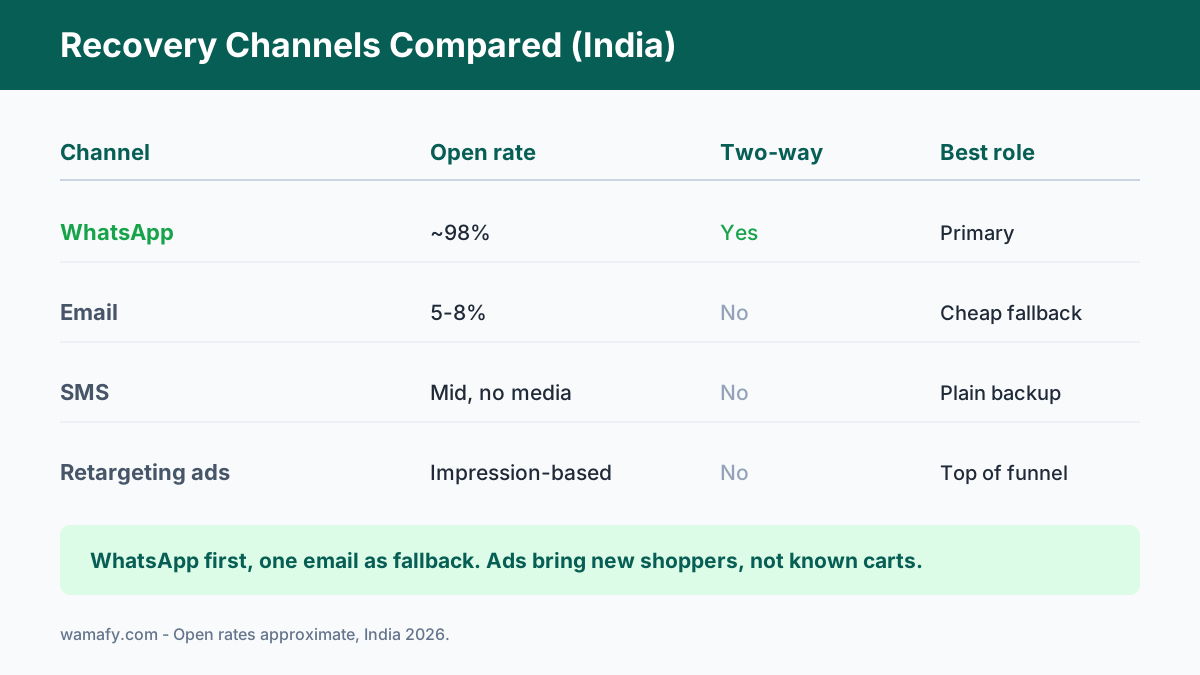
The smart setup is WhatsApp first, with a single follow-up email a day later for the shoppers who did not opt in to WhatsApp. Retargeting ads cost far more per recovered order and are better used to bring new shoppers in, not to chase a known cart.
How to set it up
You can have this running in an afternoon. The path is the same whether you are a single founder or a 15-person team.
- Get on the WhatsApp Business API. Connect your number through a Meta Tech Provider. With Wamafy this uses Embedded Signup, so you are live in minutes and you keep ownership of your WhatsApp Business Account.
- Get your templates approved. Submit the three recovery templates early, since approval takes time.
- Connect the abandoned-checkout event. In your Wamafy dashboard, connect your Shopify store so the native integration fires recovery messages automatically on the abandoned-checkout webhook (the REST API is there as an advanced option for headless stacks).
- Build your opt-in list. Turn on the checkout checkbox and let your consenting list grow from day one.
- Launch and watch the numbers. Track recovered carts, reply rate, and quality rating, then tune the timing and the message-three offer.
Each of those steps maps to a Help guide inside Wamafy, linked at the bottom of this page. Start with connecting your number, then templates, then your first campaign, then managing the contact list.
Related Wamafy resources
- Grow your business on WhatsApp Your end-to-end guide to getting and keeping customers on WhatsApp.
- Sell on WhatsApp without Shopify Take orders and collect payments directly in WhatsApp, no Shopify store required.
- Send WhatsApp leads to Google Sheets Send every lead your chatbot captures straight into a Google Sheet.
Frequently Asked Questions
What recovery rate should a Shopify store in India expect from WhatsApp?
A clean three-message WhatsApp sequence typically recovers 12 to 18 percent of abandoned carts in India. Email on the same carts usually recovers 2 to 4 percent. The gap comes mostly from WhatsApp's far higher open rate.
Is WhatsApp cart recovery better than email for Indian D2C?
Yes, as the primary channel. Indian email open rates sit at 5 to 8 percent, while WhatsApp opens near 98 percent. The best setup uses WhatsApp first and a single email as a fallback for shoppers who did not opt in to WhatsApp.
How many recovery messages should I send?
Three, spaced about 1 hour, 24 hours, and 48 hours after abandonment. A fourth message rarely recovers more and raises your block rate, which hurts your quality rating.
Do I need the WhatsApp Business API, or will the WhatsApp Business app work?
You need the Business API through a Meta Tech Provider. The free Business app cannot trigger automated recovery messages or use approved templates, and bulk-sending from it risks a ban.
Does Wamafy have a Shopify app for this?
Yes. Wamafy has a native Shopify integration. In your Wamafy dashboard, connect your Shopify store and Wamafy fires WhatsApp templates on every webhook: abandoned-cart recovery, order confirmations, and fulfillment alerts. The recovery cadence is multi-stage and auto-cancels the moment the customer pays. A REST API is also available for headless or custom setups, but it is not required.
What does WhatsApp cart recovery cost in India?
Three lines only: Meta's marketing rate of Rs 0.8631 per message, your platform subscription, and 18 percent GST. With a no-markup provider you pay Meta's rate directly, so a typical small store spends a few hundred rupees a month on messages.
Will recovery messages get my number banned?
Not if you message only opted-in shoppers, keep to the three-message flow, and label templates correctly. Bans come from bought lists, spammy copy, and over-messaging, all of which you control.
Do WhatsApp recovery messages need DLT registration like SMS?
No. DLT registration applies to SMS in India. WhatsApp business messaging to opt-in contacts follows Meta's template rules instead, which is a cleaner path for conversational recovery.
What is the single biggest mistake brands make?
Leading every message with a discount. Do that and your keenest buyers learn to abandon deliberately, just to farm the coupon. Lead with a reminder and reassurance, then hold any discount for the third and final message.
Put this to work
Recovered carts are some of the lowest-cost revenue a store can earn, because the shopper had already chosen to buy and only got interrupted. A clean WhatsApp flow, on an opt-in list, with three well-timed messages, turns a 70 percent leak into a measurable monthly gain. The math holds at every store size. It only improves as your list grows.
Wamafy gives you the API, the templates, the shared inbox, and flat no-markup pricing to run this without per-message surprises. Start a 14-day free trial, where your card is authorized during trial activation and charged only on day 15. Then use the guides below to connect your number, get your templates approved, and launch your first recovery flow this week.
Now wire it up →
Step-by-step Help guides for the moves above.