How to Reduce Your WhatsApp Marketing Costs in India: A Complete Cost-Optimization Playbook
WhatsApp used to be the cheap channel. It still can be, but only if you know where the money leaks. From October 1, 2026, message types that were free become billable. Marketing rates rose about 10 percent in January 2026. And 18 percent GST sits on top of everything. For a business sending thousands of messages a month, a sloppy setup quietly burns tens of thousands of rupees a year. This is the complete playbook to reduce your WhatsApp marketing costs in India without cutting a single customer from your reach.
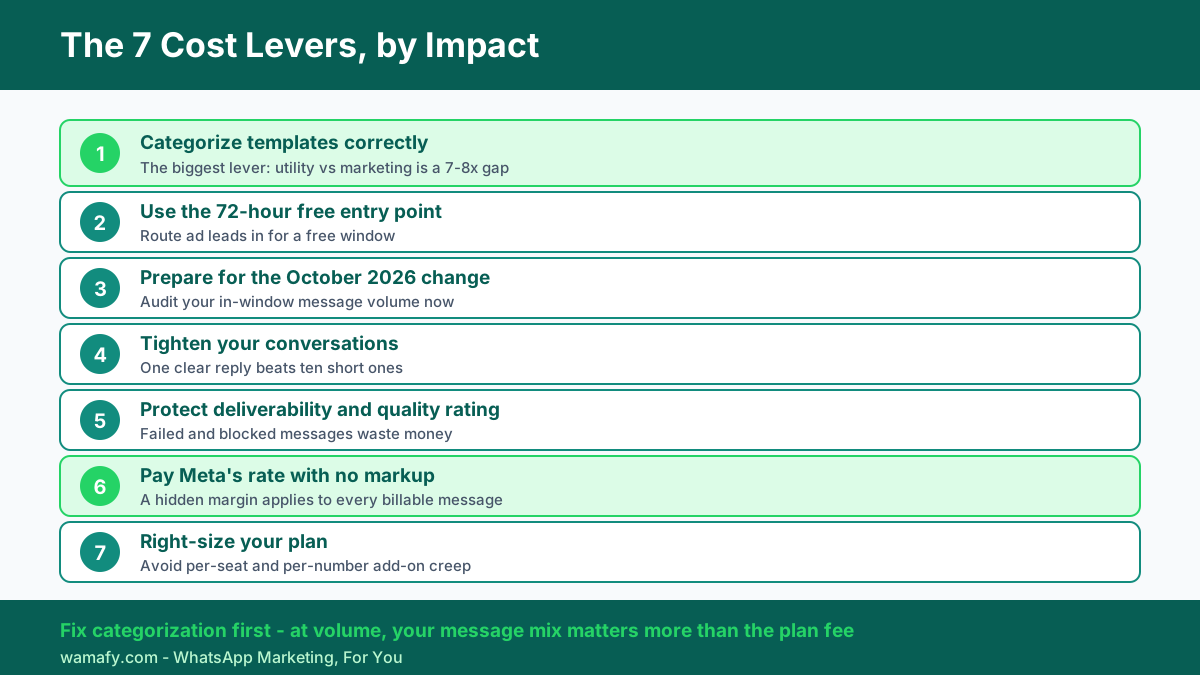
The good news: most WhatsApp overspend is self-inflicted and fixable. Miscategorized templates, ignored free windows, hidden provider markups, and messy conversations are the usual culprits. Fix those, and the same campaigns cost far less. Here are the seven levers that matter, in order of impact, with the rupee math to prove each one.
What this guide covers
- First, understand your WhatsApp cost stack
- Lever 1: Categorize every template correctly
- Lever 2: Use the 72-hour free entry point
- Lever 3: Prepare for the October 2026 service-message change
- Lever 4: Tighten your conversations
- Lever 5: Protect deliverability and quality rating
- Lever 6: Pay Meta's rate with no markup
- Lever 7: Right-size your plan
- A worked example: cutting a store's bill by 40 percent
- Common mistakes that inflate your bill
- Frequently asked questions
First, understand your WhatsApp cost stack
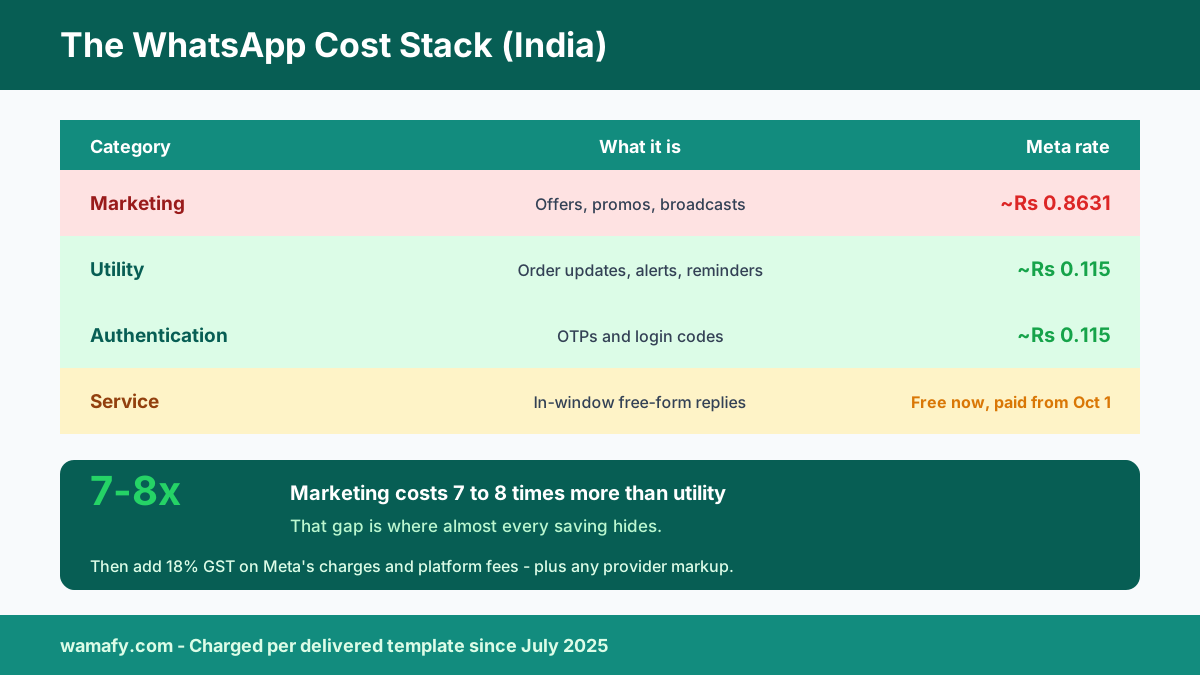
You cannot cut a cost you do not understand. WhatsApp charges you per delivered template message. The price depends on the message category. Since July 2025, Meta bills each delivered template, not each 24-hour conversation. Here is the stack for an Indian number, at Meta's rates.
| Category | What it is | Meta rate (India) |
|---|---|---|
| Marketing | Offers, promotions, newsletters, broadcasts | ~Rs 0.8631 |
| Utility | Order updates, alerts, reminders, receipts | ~Rs 0.115 |
| Authentication | OTPs and login codes | ~Rs 0.115 |
| Service | Free-form replies inside the 24-hour window | Free today, chargeable from Oct 1, 2026 |
Two multipliers sit on top. First, 18 percent GST applies to Meta's charges and your platform fees. Second, some providers add a per-message markup on top of Meta's rate. It does not show as a line item. For the full breakdown, see our guide to the real cost of WhatsApp marketing in India. For the October change, see our post on WhatsApp service message pricing in 2026.
To put real numbers on your own volume, our free WhatsApp message cost calculator totals any category and monthly volume on live Meta India rates. Keep it open as you work through the levers below.
The single most important number here is the gap between marketing and utility. Marketing costs roughly seven to eight times more than utility. Almost every cost-cutting move below comes back to that gap.
Lever 1: Categorize every template correctly
This is the biggest lever by far, and the one most businesses get wrong. Every template you submit is assigned a category. A transactional message, like an order confirmation or a shipping update, belongs in utility. If it ends up in marketing, you pay the marketing rate for a message that should have cost a fraction of it.
The math is stark. Send 5,000 order updates a month as marketing templates and you pay about Rs 4,316. Send the same 5,000 as utility and you pay about Rs 575. That is a saving of roughly Rs 3,741 a month, or about Rs 45,000 a year, for filing the same message under the right category.
Two rules keep you on the cheap side:
- Keep transactional messages purely transactional. An order update that also pushes a discount can be recategorized as marketing by Meta. That raises the price. Keep the utility message clean.
- Check the category on every template. Categories can shift on review, so confirm each one before you rely on it. Our template message examples show clean, correctly categorized formats.
Lever 2: Use the 72-hour free entry point
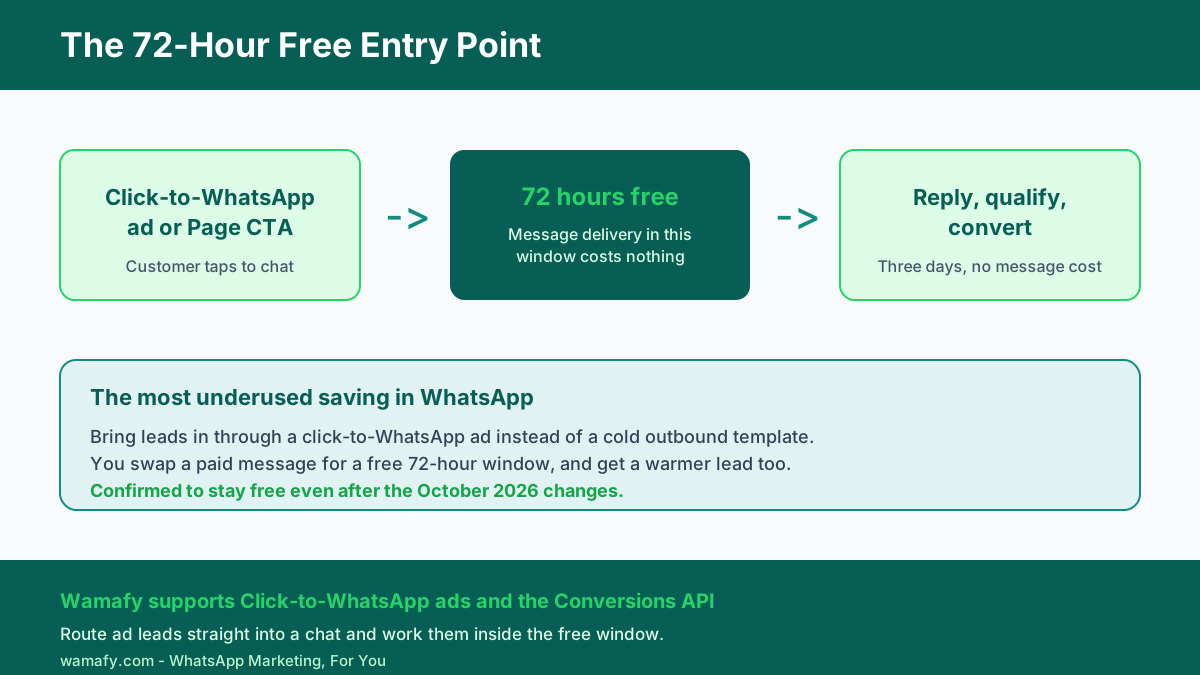
This is the most underused saving in WhatsApp, and it is about to matter more. A customer can start a chat by clicking a Click-to-WhatsApp ad, or a call-to-action button on your Facebook or Instagram page. That opens a 72-hour free entry point window. Message delivery inside that window is free, and Meta has confirmed this stays free even after the October changes.
Think about what that means. A lead who arrives from a paid ad gives you three full days to reply, qualify, and convert, at no message cost. If paid social is already part of your funnel, you are likely sitting on this free window without using it well. Wamafy now supports Click-to-WhatsApp ads and the Conversions API. So you can route ad leads straight into a chat and work them inside the free window.
The practical move: where it makes sense, bring people into WhatsApp through a click-to-WhatsApp ad rather than a cold outbound template. You swap a paid message for a free window, and you get a warmer lead in the bargain.
Lever 3: Prepare for the October 2026 service-message change
Until October 1, 2026, the free-form replies you send inside the 24-hour customer service window are free. So are utility templates sent inside that window. From that date, both become chargeable per message, at rates aligned with utility and authentication. There is no free tier for them.
This does not mean stop talking to customers. It means know your volume before the price arrives. Two steps prepare you:
- Audit your in-window volume now. Count how many service and in-window utility messages you send a month. That number becomes billable in October, so it is your new cost to plan for. Wamafy's Send origin analytics makes this easy. It breaks your outbound messages down by source, from campaigns and staff replies to chatbots and Shopify triggers. Now you can see your real message mix at a glance.
- Shift what you can to the free entry point. Conversations opened from a click-to-WhatsApp ad stay free for 72 hours, which is the cleanest way to keep high-touch chats cheap.
Lever 4: Tighten your conversations
When every message can carry a price, sloppy conversations cost money. Take a support thread that needs ten short back-and-forth messages. One clear message could have handled the same thing. That is now ten times the cost, not one.
A few habits keep threads lean:
- Answer completely the first time. A full, clear reply beats a trickle of one-line messages. It costs less and serves the customer better.
- Use buttons and quick replies. A rule-based chatbot that offers clear options resolves common questions in one exchange instead of a long chat.
- Batch your updates. One "your order is packed and ships tomorrow" beats two separate messages a few hours apart.
None of this means being terse. It means being clear, which is cheaper and better at the same time.
Lever 5: Protect deliverability and quality rating
A message that fails, or gets a customer to block you, is money spent for nothing. It also drags down your quality rating. A low rating caps how many messages you can send. That forces you into workarounds that cost more. Protecting deliverability is quietly a cost lever.
- Message only opted-in contacts. Sending to a bought or stale list burns money on undelivered messages and blocks.
- Clean your list. Remove dead numbers and duplicates so you are not paying to send into the void.
- Keep messages wanted. Relevant, well-paced messages get read, not reported. Blocks are what hurt your rating, and your rating protects your reach.
For how the rating works and how to recover it, see our explainer on the WhatsApp quality rating.
Lever 6: Pay Meta's rate with no markup
Meta sets the per-message rate. Your provider can pass it through untouched, or add a margin on top. That markup is rarely a visible line item. It is usually baked into the per-message rate you are quoted. So the number you pay is higher than the number Meta publishes.
The impact is real. A markup of about Rs 0.227 on each marketing message is roughly Rs 2,270 on a 10,000-message month, every month, for nothing you can see. As more message types become billable in October, every markup applies to more of your traffic. A no-markup provider removes that entire layer. Wamafy passes Meta's rate through directly, which our founder explains in why Wamafy charges no per-conversation markup. When you compare providers, compare the rate you actually pay against Meta's published rate, not the sticker price of the plan.
Lever 7: Right-size your plan
Platform fees are usually the smallest part of a high-volume bill, but they still leak money when a plan does not fit. Two things to watch:
- Per-seat and per-number add-ons. Some providers charge for each agent login or each connected number. If your plan already includes the teammates and numbers you need, you avoid that creep. Wamafy folds teammate counts into each plan tier.
- Do not overbuy capacity. Match the plan to your real volume and feature needs. Moving up a tier for one feature you rarely use is a slow, steady overspend.
The rule of thumb is simple. At high volume, your message mix matters more than your plan fee. Fix categorization first, then right-size the plan. To see the whole picture end to end, our resource on growing your business on WhatsApp ties cost to the full customer journey.
A worked example: cutting a store's bill by 40 percent
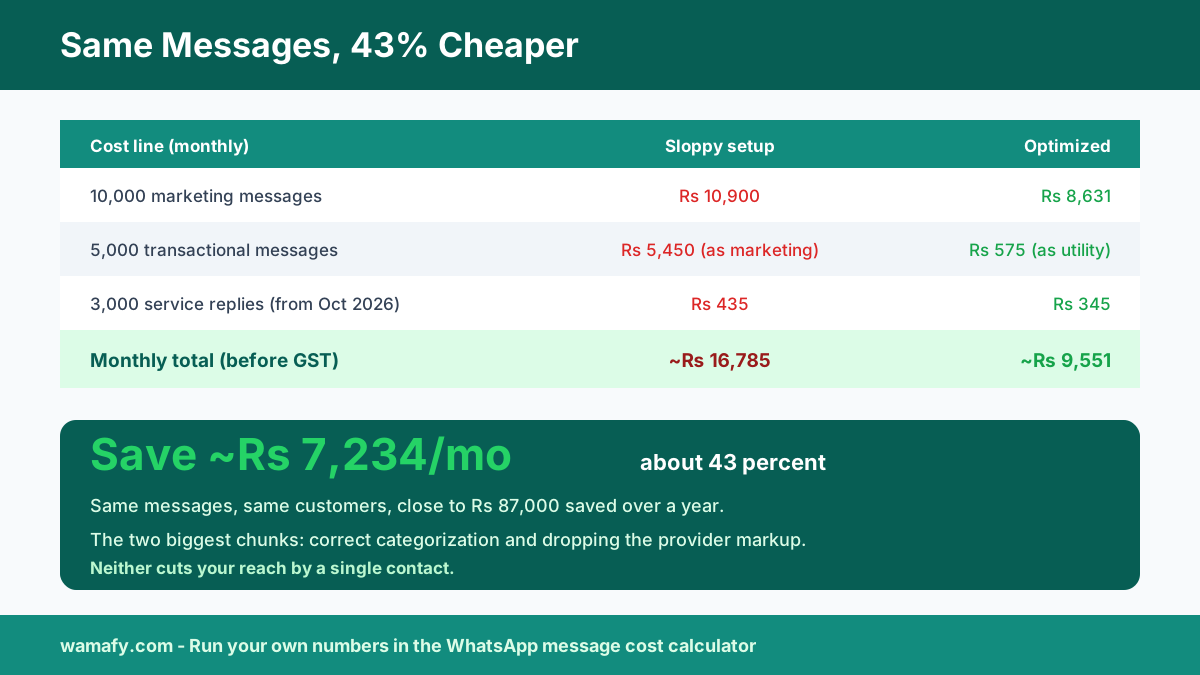
Numbers make it real. Take a D2C store in India with a typical monthly mix: 10,000 marketing broadcast messages, 5,000 transactional messages, and about 3,000 service replies. Here is the same store on a sloppy setup versus an optimized one, before GST.
| Cost line | Sloppy setup | Optimized setup |
|---|---|---|
| 10,000 marketing messages | Rs 10,900 (with markup) | Rs 8,631 (Meta rate) |
| 5,000 transactional messages | Rs 5,450 (filed as marketing) | Rs 575 (filed as utility) |
| 3,000 service replies (from Oct 2026) | Rs 435 (with markup) | Rs 345 (Meta rate) |
| Monthly total (before GST) | ~Rs 16,785 | ~Rs 9,551 |
That is a saving of about Rs 7,234 a month, roughly 43 percent, for the exact same messages to the exact same customers. Over a year, that is close to Rs 87,000. The two biggest chunks come from categorizing transactional messages as utility and from dropping the provider markup. Neither reduces your reach by a single contact. Run your own volumes through the message cost calculator to see where your bill lands.
Common mistakes that inflate your bill
Avoid these and you avoid most WhatsApp overspend.
- Filing transactional messages as marketing. The single most expensive mistake. Keep order updates and alerts as utility.
- Slipping an offer into a utility template. A promo line can bump a utility message into the marketing rate on review. Keep them separate.
- Ignoring the free entry point. Cold outbound templates when a click-to-WhatsApp ad would open a 72-hour free window.
- Not knowing your markup. Paying a rate above Meta's without realizing it. Always compare against Meta's published rate.
- Sending to a stale list. Paying to deliver into dead numbers and blocks, and hurting your quality rating in the process.
- Over-messaging. More sends do not mean more sales. They mean a bigger bill and more opt-outs.
Frequently asked questions
What is the single biggest way to cut WhatsApp costs?
Categorize your templates correctly. Marketing messages cost roughly seven to eight times more than utility. File transactional messages like order updates as utility, not marketing. That can cut those message costs by about 85 percent, with no loss of reach.
How much cheaper is a utility message than a marketing message in India?
A lot. A marketing message costs about Rs 0.8631 at Meta's rate, while a utility message costs about Rs 0.115. That is roughly a seven to eight times difference. It is why sending transactional messages as utility is the highest-impact saving available.
Is the 72-hour free window really free?
Yes. When a conversation starts from a Click-to-WhatsApp ad or a Facebook Page call-to-action button, message delivery is free for 72 hours. Meta has confirmed this free entry point stays free even after the October 2026 changes. That makes it more valuable, not less.
What changes on October 1, 2026, and how do I prepare?
Service messages, your free-form replies inside the 24-hour window, and utility templates sent inside that window become chargeable per message. There is no free tier. Audit your in-window volume now, and shift high-touch chats to the free entry point where you can.
How do I know if my provider is adding a markup?
Compare the per-message rate you actually pay against Meta's published rate for your country. If your marketing rate is above about Rs 0.8631 in India, the difference is markup. A no-markup provider passes Meta's rate through with nothing added.
Does GST apply to WhatsApp message costs?
Yes. 18 percent GST applies to Meta's charges and to your platform fees. Factor it into every estimate. With local INR billing you get a proper invoice. That makes recording, and where eligible claiming input credit, cleaner.
Will cutting costs reduce my reach or results?
No, if you do it right. Categorization, using the free window, dropping markup, and cleaning your list all cut cost without removing a single customer. The only thing you cut is waste, not reach.
Do authentication messages cost the same as utility?
In India they sit at a similar low rate, about Rs 0.115 each, far below marketing. Use them for OTPs and login codes as intended. Keep any promotional content out of them, so they are not recategorized.
Get started
WhatsApp is still the cheapest high-intent channel in India, if you run it well. Categorize your templates, use the free entry point, keep your conversations clean, protect your quality rating, and pay Meta's rate with no markup. Do those, and the same reach costs you far less, before and after the October 2026 changes.
Want a platform that passes Meta's rate through with zero markup and makes the right categories easy? Start a 14-day free Wamafy trial. Your card is authorized during trial activation and charged only on day 15. Connect your number, get your templates categorized correctly, and start paying only for what you actually need.
Now wire it up →
Step-by-step Help guides for the moves above.