Wamafy vs AiSensy: An Honest 2026 Comparison for Indian Businesses
Looking for AiSensy alternatives in 2026? You are likely comparing two things at once: the monthly plan price and the per-message fee that stacks on top. This Wamafy vs AiSensy guide gives you the 60-second verdict, real INR numbers, and an honest look at where each tool wins. No spin, just the trade-offs a lean Indian business owner actually cares about.
The 60-second verdict
Here is the short answer. AiSensy is a big, well-known platform that lets you build ads and write copy inside the tool. Wamafy is a leaner, no-markup option with a flat, simple bill. Wamafy now runs click-to-WhatsApp ads and the Conversions API too, so the ad gap is much smaller than it used to be.
Pick AiSensy if you want to build ad campaigns and write ad or template copy inside one tool, backed by a big brand. Pick Wamafy if you want the lowest entry price, zero per-message markup, and a bill you can predict to the rupee. It still captures click-to-WhatsApp ad leads and sends conversions back to Meta.
Wamafy starts at Rs 799 per month on the Seed plan. AiSensy's paid tier starts higher, and it adds a small markup on every marketing message you send. Over a busy month, that gap adds up. The rest of this post shows you exactly how much.
Pricing compared: the real numbers
WhatsApp cost has two parts. First, the platform's monthly plan. Second, the per-message fee you pay for each marketing template that gets delivered. Meta sets a base rate. Your provider can add a markup on top, or not.
As of January 2026, Meta's base rate for a marketing message to an Indian number is Rs 0.8631 per delivered message. Utility and authentication messages cost about Rs 0.115 each. Service replies inside the 24-hour window are free. On top of all of this, 18% GST applies in India.
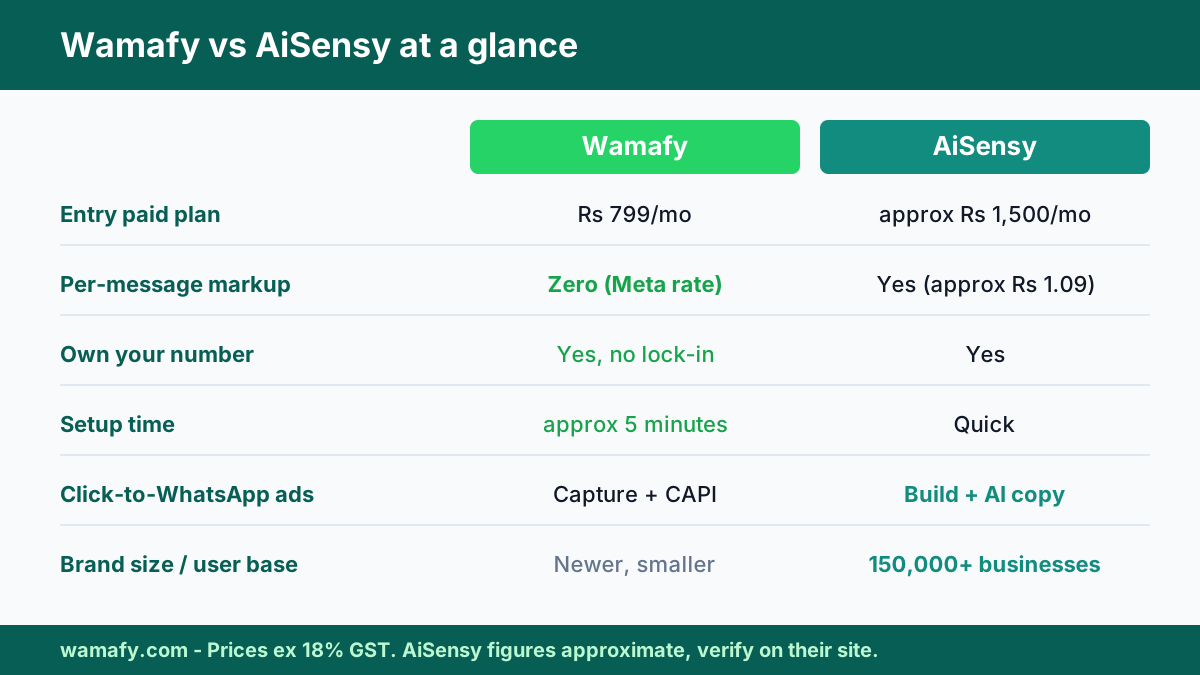
Here is how the plans line up. AiSensy prices are its 2026 published tiers (approximate, verify on their site). Wamafy prices are billed annually and exclude 18% GST.
| Plan level | Wamafy | AiSensy |
|---|---|---|
| Free tier | No free tier; 14-day free trial | Free Forever (limited) |
| Entry paid plan | Seed - Rs 799/mo | Basic - approx Rs 1,500/mo |
| Mid plan | Bloom - Rs 1,599/mo | - |
| Top standard plan | Forest - Rs 3,199/mo | Pro - approx Rs 3,200/mo |
| Per marketing message | Rs 0.8631 (Meta rate, no markup) | approx Rs 1.09 (Meta rate plus markup) |
| Extra agent seat | Included per plan tier | approx Rs 750/mo each |
The plan prices look close at the top. The real difference sits in two places: the entry price and the per-message rate. Wamafy's Seed plan is roughly half the cost of AiSensy's Basic tier. And Wamafy charges you Meta's own rate with no markup, while AiSensy's reported marketing rate of about Rs 1.09 sits above Meta's Rs 0.8631 base.
That markup is small on one message. It is not small across a full campaign. Let us prove it.
The 10,000-message campaign, both platforms
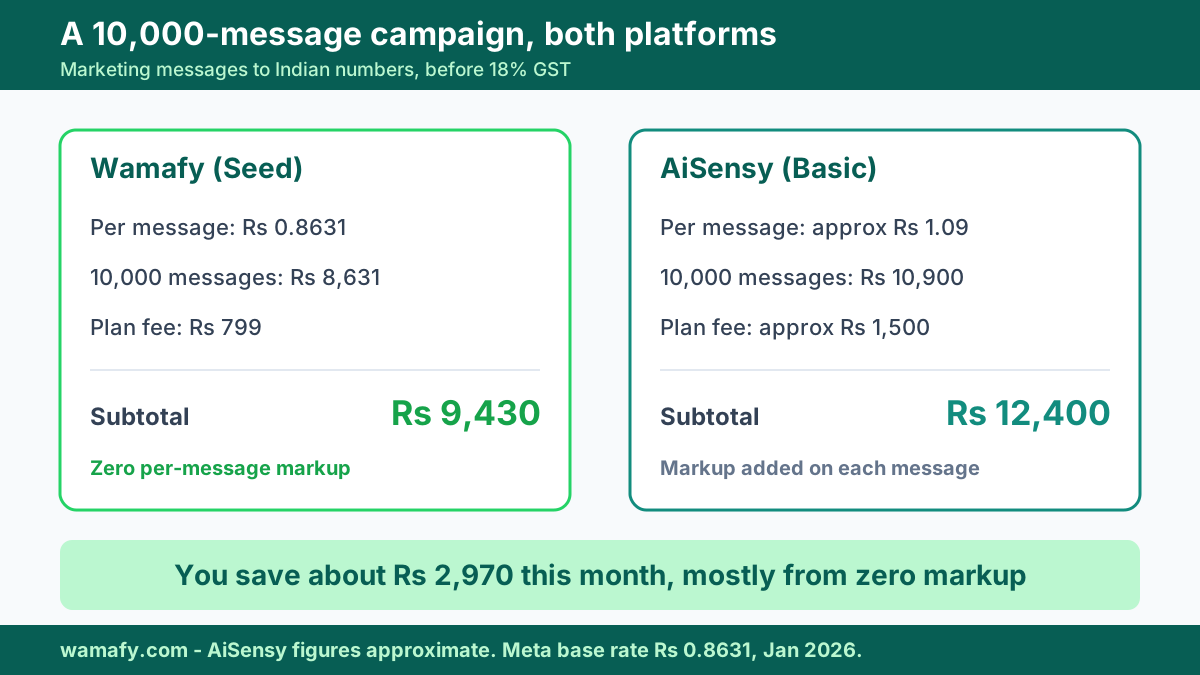
Say you run one broadcast of 10,000 marketing messages in a month. This is a common size for a mid-stage D2C store or a coaching centre doing admissions outreach. Here is the message cost on each platform, before GST.
| Cost line | Wamafy | AiSensy |
|---|---|---|
| Per-message rate | Rs 0.8631 | approx Rs 1.09 |
| 10,000 messages | Rs 8,631 | Rs 10,900 |
| Entry plan (monthly) | Rs 799 (Seed) | Rs 1,500 (Basic) |
| Subtotal (before GST) | Rs 9,430 | Rs 12,400 |
The gap is about Rs 2,970 for a single 10,000-message month. Most of that is the per-message markup, not the plan fee. Run that broadcast every month and you are looking at close to Rs 35,000 a year in extra spend, before GST.
Now scale it up. A store sending 50,000 marketing messages a month pays roughly Rs 11,345 more on the AiSensy rate versus Meta's base rate, every single month. The markup is quiet on your invoice, but it compounds. This is the core reason people search for AiSensy alternatives once their volume grows.
How markup hides inside your bill
The trickiest part of WhatsApp pricing is that the markup does not show up as a line item called "markup." It is baked into the per-message rate. Meta charges your provider Rs 0.8631 for a marketing message. If the provider bills you Rs 1.09, the extra Rs 0.227 is margin you may never notice on a single send.
Multiply that by volume and the picture changes. Here is the yearly extra spend from a roughly Rs 0.227 markup, at three common monthly volumes for Indian SMBs.
| Monthly marketing messages | Extra per month (markup) | Extra per year |
|---|---|---|
| 5,000 | approx Rs 1,135 | approx Rs 13,620 |
| 10,000 | approx Rs 2,269 | approx Rs 27,228 |
| 50,000 | approx Rs 11,345 | approx Rs 136,140 |
These figures are message markup only. They sit on top of the plan fee and 18% GST. For a growing store, the yearly markup can quietly exceed the cost of the subscription itself. That is the real reason volume-heavy senders start hunting for a flat, no-markup option.
One more cost to watch on any platform is per-agent pricing. AiSensy's Basic and Pro plans include a set number of agent logins, then charge roughly Rs 750 per extra agent each month. If your support team grows, count those seats into your total. Wamafy folds its teammate count into each plan tier instead.
Where AiSensy clearly leads
A fair comparison names the other tool's real strengths. AiSensy has several, and they are genuine reasons to choose it.
- Brand and scale. AiSensy reports 150,000+ businesses across 60+ countries, with names like PhysicsWallah and Wipro on the list. That track record buys trust, and it means plenty of tutorials, community answers, and case studies exist.
- Ad creation and AI copy inside the tool. This is AiSensy's real standout. You can build click-to-WhatsApp ad campaigns and draft ad and template copy with AI, all in one place. Wamafy captures and routes the leads from those ads and tracks conversions. But you still build the ads and write the copy in Meta Ads Manager. For a marketer who wants it all in one tool, AiSensy wins here.
- Marketer-friendly campaign UI. The broadcast and campaign screens are built for marketers, not developers. Many users praise how quick it is to launch a blast.
- Large integration ecosystem. AiSensy lists 2,000+ integrations, covering common stacks like HubSpot, WooCommerce, and Razorpay out of the box.
- Official Meta partner. Like Wamafy, AiSensy is a sanctioned provider, not a grey-market relay.
If your growth engine is paid social and you want ad building and AI copy in one place, AiSensy has a strong case. Be aware, though, that its Basic plan does not include everything; some features sit on Pro, and extra agent seats cost roughly Rs 750 each per month.
Where Wamafy clearly leads
Wamafy is built for the owner who wants a simple, predictable bill and a fast start. Its strengths are specific.
- Zero per-message markup. You pay Meta's own rate, full stop. On a 10,000-message month that is roughly Rs 2,269 saved on messages alone versus a Rs 1.09 rate. No hidden margin on delivery.
- Lower entry price. The Seed plan is Rs 799 per month, well under AiSensy's paid entry tier. That matters when you are testing WhatsApp for the first time.
- You keep your own number and account. Your WhatsApp Business Account, templates, and message history stay yours. No lock-in, so switching later is painless.
- Fast 5-minute setup. One-click embedded signup handles the token work, so you can launch a first campaign the same day.
- Click-to-WhatsApp ads and Conversions API. Wamafy now captures leads from your Meta click-to-WhatsApp ads and routes them into a chatbot or Flow. It also sends conversion events back to Meta through the Conversions API. That closes the loop so Meta can optimize your ad spend, with no markup on the follow-up messages.
Wamafy also carries a strong feature set for a lean tool. You get a visual WhatsApp Flow Builder for in-chat forms (on the Bloom and Forest plans), a Google Sheet chatbot node that pushes each new lead into a sheet in real time, and Sell on WhatsApp, which pairs a product catalog with an auto-built order Flow and optional Razorpay payment links.
On the top tier, Forest adds A/B testing and a native Shopify integration. That integration fires WhatsApp templates on Shopify webhooks for abandoned-cart recovery, order confirmations, and fulfillment alerts, and the recovery cadence auto-cancels the moment a customer pays. There is also a rule-based chatbot builder on every plan for greetings, menus, and FAQ replies.
Where Wamafy is honestly behind
No tool wins on everything, and pretending otherwise helps nobody. Wamafy has two honest gaps against AiSensy today.
First, brand and size. AiSensy is bigger and better known, with a longer public track record and far more third-party reviews. If you weigh a large existing user base heavily, AiSensy leads here.
Second, building ads and copy inside the tool. Wamafy captures and tracks click-to-WhatsApp ad leads, but it does not build the ad campaigns for you, and it has no AI copy generator. AiSensy lets a marketer create ads and draft copy with AI in one place. It also lists more pre-built integrations. If you want your whole ad and copy workflow in a single tool, AiSensy is ahead today.
That is the honest picture. Wamafy trades a bigger brand, an in-tool ad builder, and AI copy for a lower, markup-free bill and full ownership of your account.
A worked example: a 300-order Shopify store
Numbers on their own can feel abstract, so put them on a real business. Imagine a D2C store on Shopify doing about 300 orders a month. It sends order confirmations and fulfillment alerts as utility messages, plus two marketing broadcasts a month to a list of 8,000, so roughly 16,000 marketing messages monthly.
On Wamafy's Forest plan, the native Shopify integration fires those order and fulfillment templates automatically, and the marketing messages bill at Meta's Rs 0.8631 rate. On a per-message-markup platform charging about Rs 1.09, the same 16,000 marketing messages cost around Rs 3,630 more every month, before GST. That is roughly Rs 43,000 a year, purely from the markup on marketing sends.
For this store, the markup saving alone more than covers a year of the subscription. The lesson holds across verticals: once your monthly volume climbs past a few thousand marketing messages, the per-message rate matters far more than the plan sticker price. If abandoned-cart recovery is your goal, our guide on WhatsApp abandoned-cart flows for Shopify in India walks through the full setup.
Who should pick which
Match the tool to how you actually get customers.
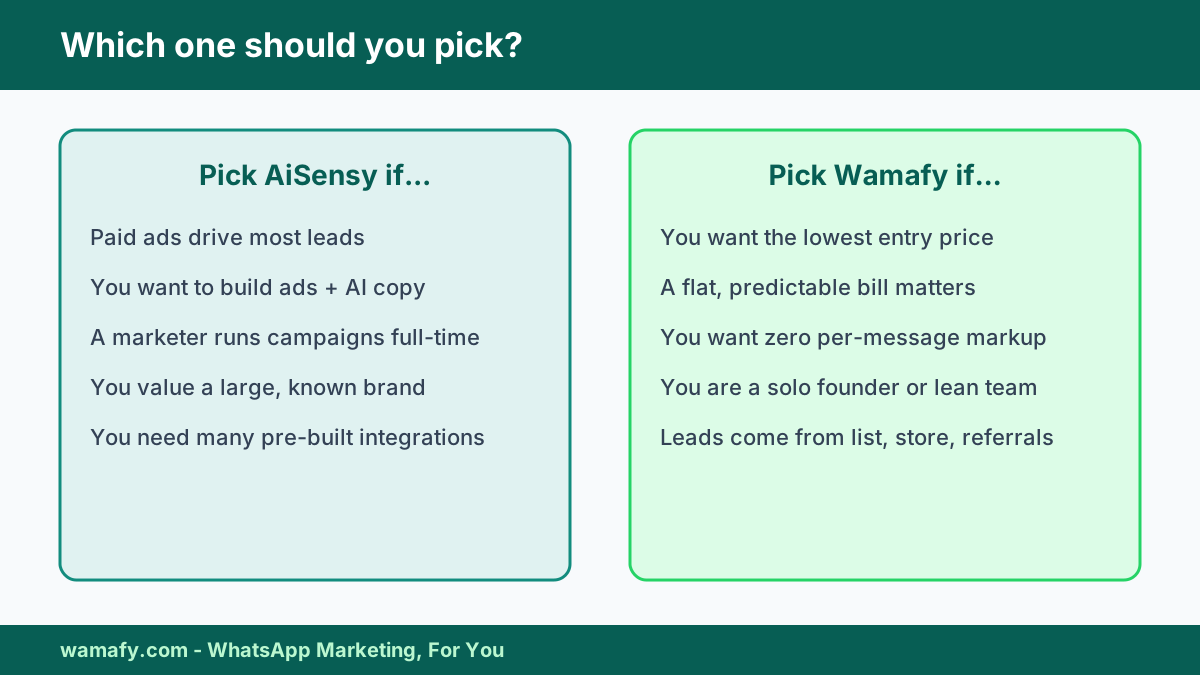
Pick AiSensy if paid ads drive most of your leads, you have a marketer running campaigns full-time, and you value a large brand with a deep integration list. The ad-native tooling can justify the higher rate if it fills your pipeline.
Pick Wamafy if you are a solo founder or a lean team, you want the lowest entry cost, and a predictable bill matters more than a giant integration catalog. If your leads come from your store, your list, and word of mouth rather than ads, the no-markup model saves you real money every month.
For a wider view of the market, our guide to the real cost of WhatsApp marketing in India breaks down how markup hides inside your monthly invoice.
What to test during a free trial
Do not decide on a spec sheet. Wamafy offers a 14-day free trial, so run three quick checks before you commit.
- Send a real broadcast. Import a small list, send an approved template, and watch the delivery report. Confirm the per-message cost you were quoted is the cost you actually see.
- Build one automation. Set up a greeting reply or a simple order Flow. See how long it takes and whether the builder makes sense without a manual.
- Check the total bill. Add the plan fee, the message cost, and 18% GST for your expected monthly volume. Compare that full number, not the sticker price.
If you are also weighing other tools, see how Wamafy stacks up against a close rival in our Wamafy vs Interakt comparison. And for the widest price sweep, the best WATI alternatives in India guide covers the full field.
Frequently Asked Questions
Can I move my number from AiSensy to Wamafy?
Yes. Because you own your WhatsApp Business Account, you can move it to a new provider. The exact steps depend on how your account is set up, but the number and account stay yours, so there is no forced lock-in.
Do I lose my approved templates if I switch?
Your approved templates live on your WhatsApp Business Account, not on the provider. Wamafy syncs Meta-approved templates automatically, so your existing ones should appear once your account is connected.
Is AiSensy more expensive than Wamafy?
For most volumes, yes. AiSensy's paid entry plan costs more than Wamafy's Seed plan, and its reported marketing rate of about Rs 1.09 sits above Meta's Rs 0.8631 base rate. Wamafy passes Meta's rate through with no markup.
Does AiSensy have a free plan?
AiSensy offers a limited Free Forever tier with a small conversation credit. You still pay Meta's per-message fees on top. Wamafy has no free tier but offers a 14-day free trial on every plan.
Which platform is better for running ads?
It is closer than it used to be. Both tools now run click-to-WhatsApp ads. Wamafy captures those leads, routes them in chat, and sends conversions back to Meta through the Conversions API. AiSensy still leads if you want to build the ad campaigns and write copy with AI inside one tool.
Do both platforms use the official WhatsApp Cloud API?
Yes. Both Wamafy and AiSensy are official Meta providers built on the Cloud API, not grey-market relays. The main difference is the pricing model and the feature mix, not the underlying API.
The bottom line
AiSensy is a solid, well-known platform that lets you build ads and write copy with AI in one place, backed by a huge user base. Wamafy is the leaner, honest-pricing choice: a lower entry cost, zero per-message markup, full ownership of your account, and a fast setup. It now handles click-to-WhatsApp ad leads and Conversions API tracking too. If you want an all-in-one ad and copy tool, AiSensy earns a look. If you want a flat, predictable bill and no markup on every message, Wamafy is built for you.
Want to see the difference on your own numbers? Start a 14-day free Wamafy trial. Card authorized during trial activation, charged only on day 15.