WhatsApp for Clinics and Hospitals in India: The Complete Playbook
Picture a busy specialist clinic in a Tier-2 city. Thirty patients booked today. By evening, seven never showed up. The front desk spent the morning taking booking calls and writing tokens on a notepad. The doctor handed out paper prescriptions that patients lost by the weekend. And nobody followed up with the twelve patients due for a six-month recall. That is a normal day. It is also a leaking bucket. Most of the leaks close on the one app every patient already has open: WhatsApp.
This is a complete playbook for running a WhatsApp-first clinic in India. It covers how patients book, how you cut no-shows, how you send prescriptions and invoices securely, how recall brings patients back, and the real rupee math behind each. It is written for clinic owners, hospital administrators, and practice managers who want fewer missed appointments and less front-desk chaos, without buying a heavy hospital software suite.
What this playbook covers
- The real cost of a no-show in India
- Why WhatsApp beats calls and SMS for clinics
- Running the whole clinic on WhatsApp
- The patient journey, end to end
- In-chat booking and the walk-in token queue
- Cutting no-shows with a reminder sequence
- Sending prescriptions and invoices securely
- Recall and preventive care: the retention goldmine
- Patient data and DPDP compliance
- The ROI math, in real rupees
- Work out your cost per patient
- By clinic type: dental, derma, eye, diagnostics
- Common mistakes and honest trade-offs
- Frequently asked questions
The real cost of a no-show in India
No-shows are not a small annoyance. They are one of the biggest silent losses a clinic carries. Outpatient no-show rates in India run between 15 and 30 percent, and busy public hospital OPDs can touch 40 percent. The average Indian specialist clinic loses somewhere around 18 to 24 percent of its booked appointments to patients who simply do not turn up.
Put a number on it. Every missed appointment costs a clinic roughly Rs 800 to Rs 2,500 in lost consultation revenue alone. That figure ignores the follow-up visit that never gets booked, the diagnostics that never get ordered, and the procedure that never happens. A single-doctor clinic seeing 750 patients a month at a 22 percent no-show rate is losing around 165 slots every month. At a Rs 800 consult fee, that is over Rs 1.3 lakh a month walking out the door before you count anything downstream.
The frustrating part is that most of those patients wanted to come. They forgot, or they were not sure of the time, or something came up and they had no easy way to reschedule. A quiet, well-timed WhatsApp nudge fixes most of that. Structured WhatsApp reminders have been shown to cut clinic no-shows by up to 40 percent, with most clinics dropping from a 20 to 25 percent no-show rate to 12 to 15 percent inside the first month.
Why WhatsApp beats calls and SMS for clinics
Clinics have always chased patients by phone. It does not scale. Reminder calls eat your front desk's morning, half go unanswered, and a voicemail is not a reminder anyone acts on. SMS is cheap but it gets ignored, buried under OTPs and spam, with no way to reply and reschedule.
WhatsApp is different because it is where patients already live. Around 82 percent of Indian patients say they prefer WhatsApp over a phone call for clinic communication. Messages get read almost every time, with open rates near 98 percent. The patient can reply in the same thread to confirm, reschedule, or ask a question. It turns a one-way blast into a two-way conversation. That is exactly what a booking and a reminder should be.
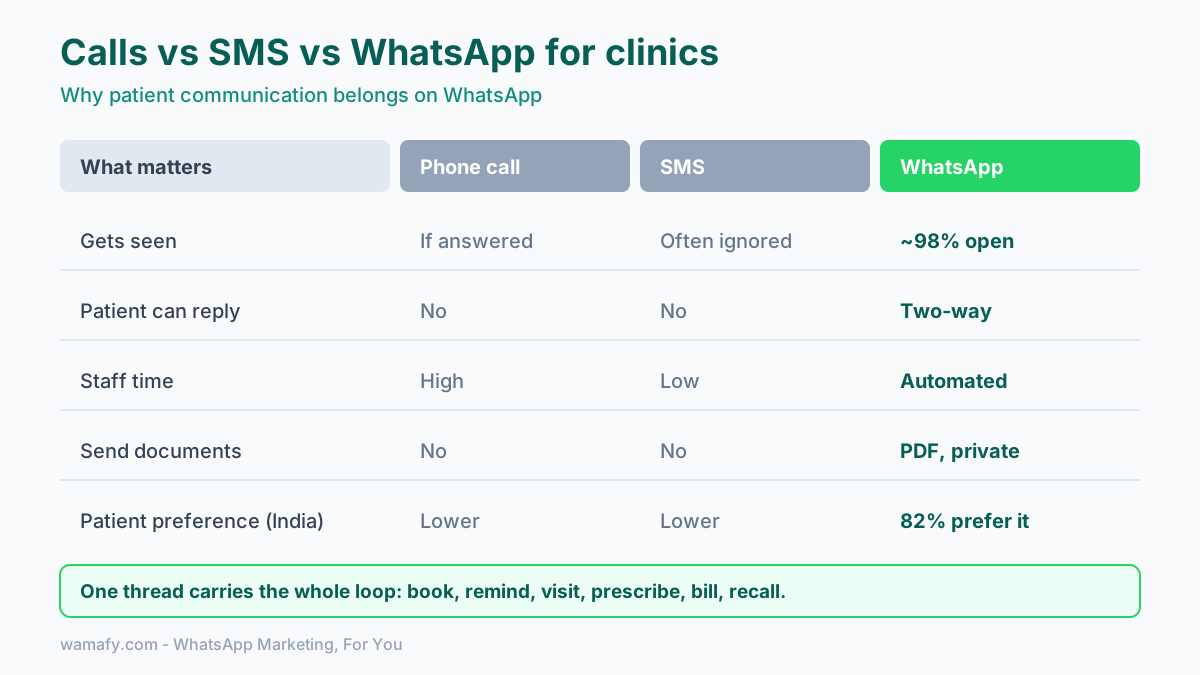
There is a deeper reason too. A phone call and an SMS are single moments. A clinic relationship is a loop: book, remind, visit, prescribe, bill, recall. WhatsApp can carry that whole loop in one thread, on a number the patient already knows. That is the shift this playbook is really about.
Running the whole clinic on WhatsApp
Most clinics use WhatsApp in a scrappy way already: a staff member confirms appointments from a personal number and forwards the odd report. That works until it does not. There is no shared record, no automatic reminder, no clean billing, and the moment that staff member is on leave, the whole thing stops.
The better approach is to run the clinic-facing workflow through a proper system built on the WhatsApp Business API. Wamafy offers this as a Clinics and Hospitals add-on that turns your WhatsApp number into a compact clinic system. It is a paid add-on you enable from the Add-ons settings, and everything sits in one place: an overview cockpit, a patient register, appointments, a walk-in queue, care reminders, and invoices.
One point matters up front, and it is a point of honesty most vendors skip. This is a patient-engagement tool, not a clinical records system. It handles records, reminders, billing, and document delivery. It does not store diagnoses, vitals, or full medical history, and it is not an EMR. That is a feature, not a gap. It keeps the tool light for a busy clinic, and it keeps you clear of the heaviest data-sensitivity rules, which we cover in the compliance section below.
You set it up once, with flexible options for how your clinic actually runs. In Setup you enter your clinic name, logo, address, phone, and GST number. These then print on every prescription and invoice. You define your weekly opening hours and holidays, your OPD departments, your doctors, and your services. Doctors can follow clinic hours or keep their own schedule. So a visiting consultant who is in only on Tuesday mornings is offered for booking only in those windows. You also set your patient-ID and invoice numbering. In short, the tool bends to your clinic, not the other way round.
The patient journey, end to end
Here is the full loop a patient travels, and where each step happens. Everything below runs inside normal WhatsApp chats. The patient installs nothing new.
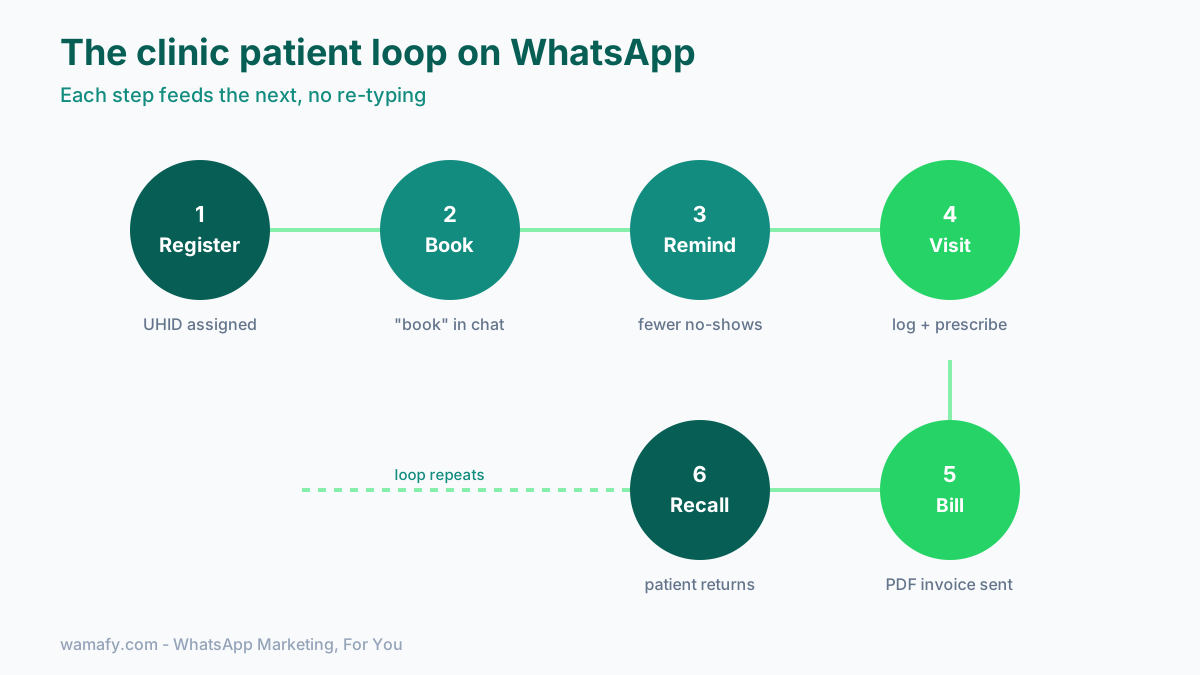
- Register. A new patient is added to the register and gets a unique hospital ID, or UHID, like SUN-1001, that never repeats. If they have messaged your number before, their record links to that chat automatically.
- Book. The patient messages "book" and picks a service, doctor, date, and slot inside WhatsApp. A booking form handles the intake.
- Remind. Automatic reminders go out before the appointment, so fewer people forget.
- Visit and prescribe. You log the visit and compose the prescription. It renders to a branded PDF on your clinic letterhead.
- Deliver and bill. The prescription PDF and the invoice go to the patient on WhatsApp. Paid revenue is tracked as you go.
- Set the next visit. Picking a next-visit date schedules a follow-up reminder automatically.
- Recall. Care reminders bring patients back for follow-ups, refills, and check-ups on their own.
The important idea is that each step feeds the next without re-typing. A completed appointment can open a pre-filled visit form. A logged visit can create the follow-up reminder. That is what turns a pile of separate tasks into one smooth loop.
In-chat booking and the walk-in token queue
Two things clog a clinic front desk: booking calls and the crowd of walk-ins waiting to be seen. WhatsApp handles both.
Self-service booking
Publish a booking form and patients book themselves by messaging "book". They pick a service, a doctor, and an open slot based on the real schedule you set, including each doctor's own hours. The booking bot asks your chosen intake questions, name, sex, date of birth, blood group, address, and creates or links the patient record behind the scenes. You can require approval, run a waitlist, and collect feedback after the visit. This is the same in-chat form approach that lifts completion far above a website form, which we cover in our guide to WhatsApp Flows and in-chat forms.
The walk-in token queue
For walk-ins, the queue replaces the paper token and the crowd at the counter. A patient messages a keyword like "token" or "queue", picks their department, and instantly gets a token such as C-23 plus how many people are ahead of them. Your staff watch a live board, one card per department, showing who is being served and the waiting count. Tap "Call next" and the patient is messaged that it is their turn. Nobody hovers at the desk asking "how long more". That alone changes the feel of a busy OPD morning.
Cutting no-shows with a reminder sequence
The single highest-return thing you can automate is the appointment reminder. It is cheap, it is quiet, and it directly recovers revenue you are already losing.
A good reminder sequence is not one message. It is a short, spaced set:
- Confirmation the moment the booking is made, so the patient has the date and time in writing.
- A reminder 24 hours before, with an easy way to reschedule if they cannot make it. A reschedule is a saved slot, not a lost one.
- A reminder 2 hours before, the final nudge that catches the "I forgot it was today" patient.
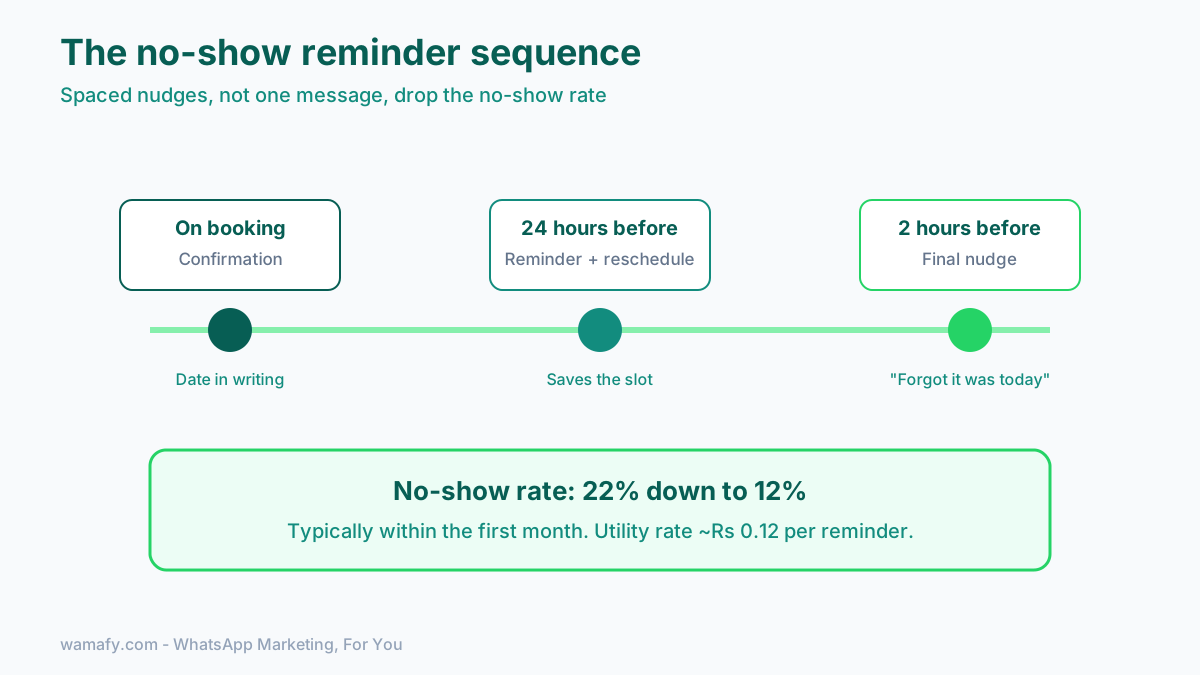
The reminders are sent through Meta-approved templates. Appointment reminders qualify as the utility message category, which is far cheaper than marketing messages, roughly Rs 0.12 each against about Rs 0.86 for a marketing message. So a clinic sending two reminders for every one of 750 monthly appointments spends around Rs 175 a month on reminders. Against the lakh-plus you lose to no-shows, that is not a cost, it is the best-value line in your budget.
Do not overdo it. Two or three well-timed reminders work. A patient buried under five messages for one appointment starts to tune you out, or worse, blocks the number, which hurts your WhatsApp quality rating. Restraint is part of the method.
Sending prescriptions and invoices securely
Paper prescriptions get lost. Photos of prescriptions get forwarded around and end up in random chats. Both are bad for the patient and bad for you. Sending the prescription as a proper document on WhatsApp fixes the first problem, and doing it the right way fixes the second.
Here is how it works with the Clinics and Hospitals add-on. You log the visit and compose the prescription line by line: each medicine with its dosage, a simple morning-afternoon-night frequency, duration, and a before-or-after-food instruction, plus a general advice note. Wamafy renders that to a branded PDF on your clinic letterhead, with your clinic details, the patient's UHID, age and sex, the complaint, the medicines table, and the next-visit line. You can send it automatically the moment you save the visit, or by hand from the visit row. The front desk can also print a paper copy for the patient who wants one.
The security model is the part that matters, and it is worth understanding.
Inside the 24-hour window, when the patient has messaged you recently, the PDF sends free as a normal WhatsApp document. Outside that window, it goes through an approved utility template that carries the PDF, so it still reaches the patient any time. Either way, the file travels server to server by its WhatsApp media id. It is never posted to a public or shareable link.
That last line is the whole point. The prescription is not uploaded to some open URL that anyone with the link can open. When your staff re-open it later, it streams through an authenticated, workspace-scoped channel that browsers are told never to cache. The document is only ever seen by the patient in their chat and by your logged-in team. Invoices work exactly the same way: itemised, auto-numbered from your billing sequence, rendered to a branded PDF, and delivered on WhatsApp with paid revenue tracked on a simple dashboard.
Recall and preventive care: the retention goldmine
No-shows are the loss you can see. Recall leakage is the loss you cannot. A patient who came once for a dental cleaning should come back in six months. A diabetic on a review cycle should return in three. Most clinics never systematically bring these patients back, and that lost repeat business dwarfs the odd missed appointment.
Recall is where a WhatsApp clinic system quietly compounds. When you set a next-visit date at the end of a consultation, a follow-up reminder is scheduled automatically. Beyond that, a care-reminder worklist tracks everyone due for a follow-up, vaccination, check-up, or refill.
You can turn recall into a hands-off, multi-stage nudge. Set a schedule with several stages, for example seven days before the due date, then three days, then one day, each sending an approved template. A background process sends each stage on its own, in your clinic's timezone, and it is smart enough to send a single nudge rather than a burst if a reminder was added late. The message can address the patient by name and name the care type and due date, so it reads like a clinic that remembers, not a spam blast.
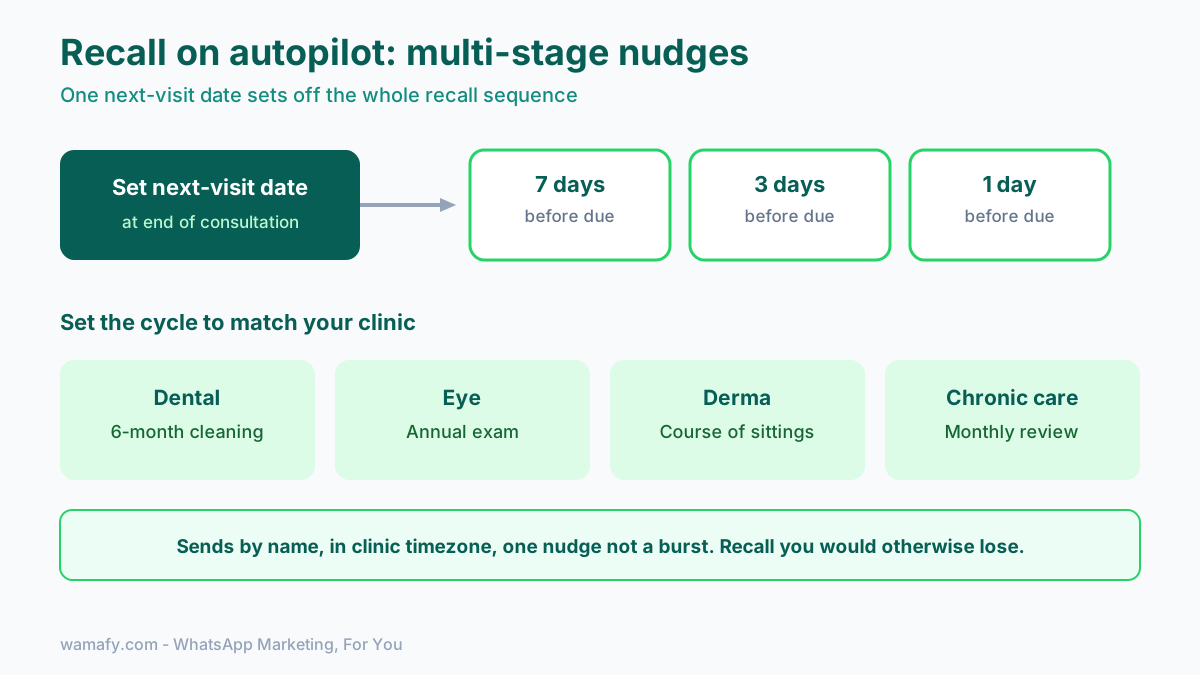
The right recall interval depends on the clinic. A dental practice runs on six-month cleaning cycles. An eye clinic runs on annual exams. A dermatology clinic may run on a course of sittings a few weeks apart. A physician managing chronic care runs on monthly or quarterly reviews. Set the cycle to match, and the system fills future weeks with returning patients you would otherwise have lost. For the broader patient-comms picture, our WhatsApp marketing guide for clinics and healthcare pairs well with this.
Patient data and DPDP compliance
Healthcare data is sensitive, and India's Digital Personal Data Protection Act, 2023, now governs how you handle it. Any clinic that stores patient phone numbers, prescriptions, or appointment data digitally is processing personal data and is covered. This is not a reason to avoid WhatsApp. It is a reason to use it thoughtfully.
A few principles keep you on the right side of the line.
- Get consent, and keep it specific. The DPDP Act asks for consent that is free, specific, informed, and unambiguous. When a patient books or messages you first, you have a clear basis to send appointment and care messages. Keep marketing and health communication separate, and honour opt-outs.
- Use WhatsApp for logistics, not for broadcasting sensitive detail. Appointment times, reminders, "your report is ready" alerts, and a prescription delivered privately are all fine. Broadcasting a diagnosis, or posting a clinical document to a public link, is not. This is exactly why the document delivery above matters. The PDF goes only to the patient, server to server, never to an open URL.
- Keep the engagement tool separate from the medical record. Because the Clinics and Hospitals add-on is a patient-engagement tool and not an EMR, it holds contact and scheduling data, not your full clinical record. That is a cleaner data footprint to manage and reason about.
One helpful contrast: SMS marketing in India needs DLT registration, while opt-in business messaging on the WhatsApp Business API does not carry that same DLT burden. Our WhatsApp compliance guide for India goes deeper on opt-in, opt-out, and message quality. None of this is legal advice, and a hospital handling large volumes of sensitive data should take its own counsel, but the direction is clear: WhatsApp is a safe, patient-friendly channel for clinic logistics when you keep sensitive clinical content private and consented.
The ROI math, in real rupees
Marketing pages love to hand-wave the return. Here is the actual math for a realistic clinic, so you can plug in your own numbers.
The clinic: a single-doctor specialist practice in a Tier-2 city. It books 750 appointments a month. Consult fee is Rs 800. Its no-show rate is 22 percent, so 165 slots are missed each month.
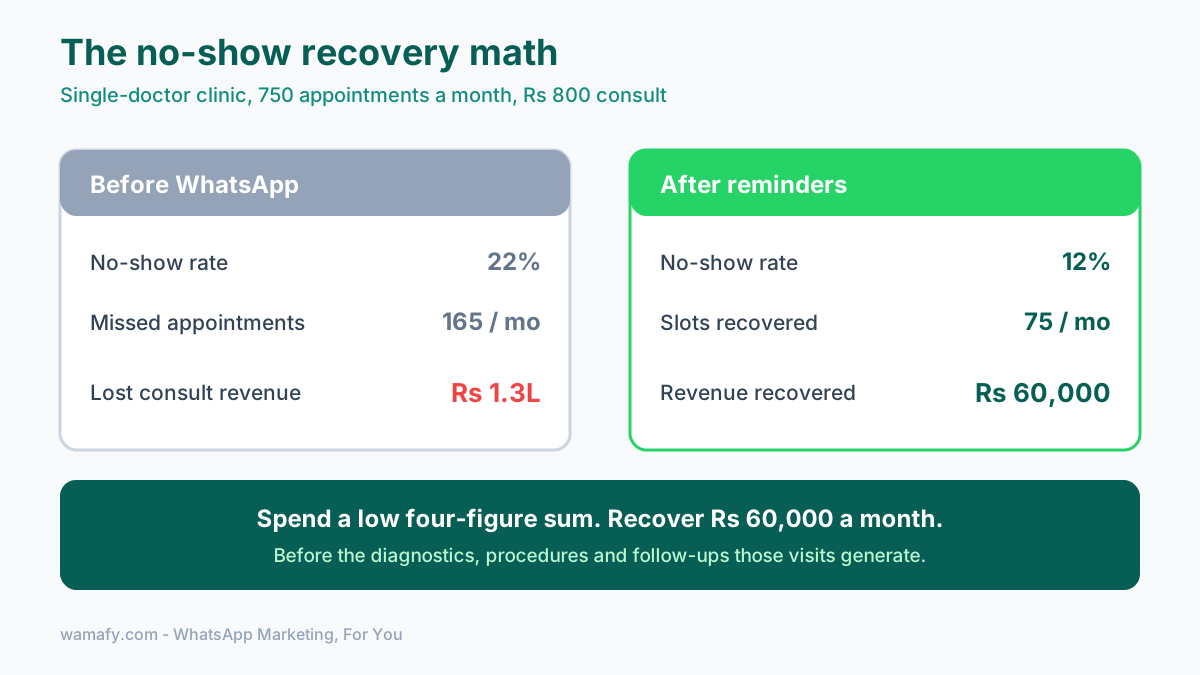
| Line | Before WhatsApp | After a reminder sequence |
|---|---|---|
| Monthly appointments booked | 750 | 750 |
| No-show rate | 22% | 12% |
| Missed appointments | 165 | 90 |
| Slots recovered per month | - | 75 |
| Consult value recovered (at Rs 800) | - | Rs 60,000 |
Dropping the no-show rate from 22 percent to 12 percent, a change well within what clinics report, recovers about 75 appointments a month. At a Rs 800 consult fee, that is Rs 60,000 in recovered consultation revenue every month, and that is before the diagnostics, procedures, and follow-ups those visits generate.
Now the cost side. Two utility reminders per appointment across 750 appointments is about Rs 175 a month in Meta message fees. Add the Wamafy plan, from Rs 799 a month, plus the Clinics and Hospitals add-on. Even generously, you are spending a low four-figure sum to recover a five-figure one. The reminder line alone pays for the whole system many times over, and recall revenue sits on top of that.
This is why clinics tend to adopt WhatsApp first for reminders, see the no-show drop in the first month, and then expand into booking, billing, and recall once the return is obvious.
Work out your cost per patient
The best way to budget is per patient visit, counting every message in the loop. Most clinic messages, the booking chat, appointment reminders, the prescription and invoice, and care-recall nudges, fall in Meta's utility category, about Rs 0.12 per message in India, plus 18 percent GST. Marketing messages cost more, about Rs 0.86 each, but a clinic loop is almost all utility.
One timing point decides how you should budget. From October 1, 2026, Meta starts charging for two things that used to be free: free-form service replies inside the 24-hour window, and utility templates sent inside that window. Both are billed at roughly the same Rs 0.12 utility rate, with no free tier. That change is explained in full in our guide on the 2026 WhatsApp service message pricing change. So the correct way to budget from October 2026 onward is to count every message in the loop, including the booking chat, which is exactly what the tables below do. One thing that does not change: the booking chatbot here is rule-based, so the separate August 2026 shift to per-token pricing for Meta's own AI agent does not apply to it.
The cost of one full patient visit
Walk one patient through a complete visit and add up every message. Here is a realistic full lifecycle, costed at the utility rate.
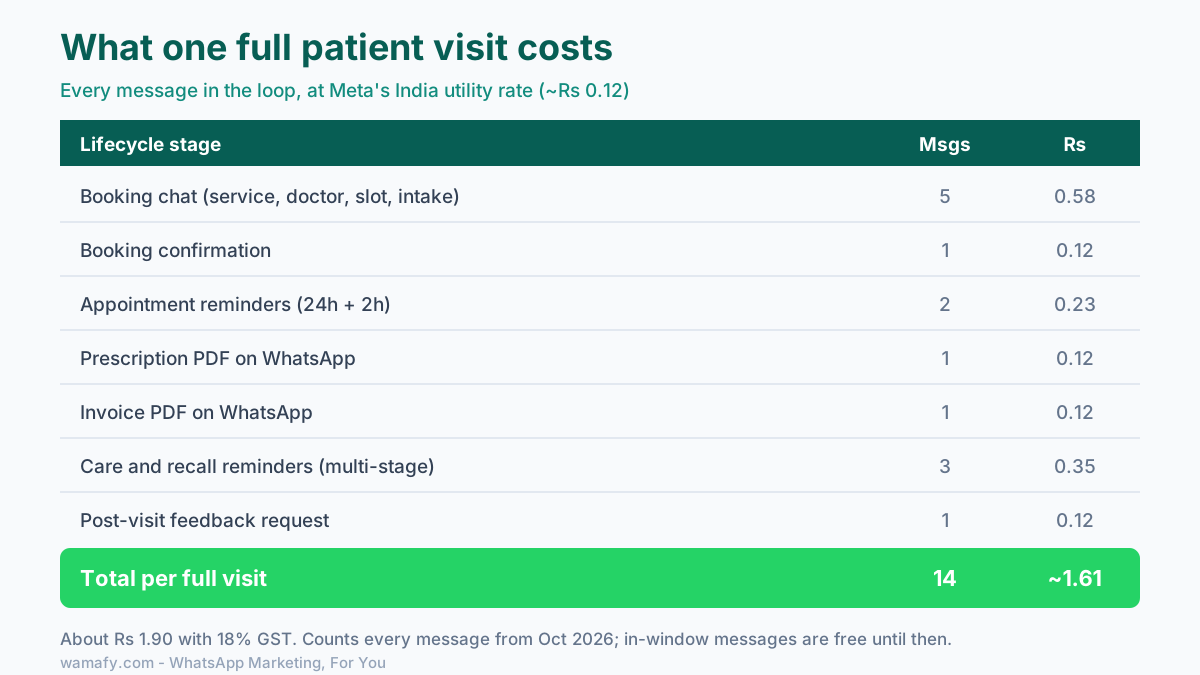
| Lifecycle stage | Messages | Cost (Rs) |
|---|---|---|
| Booking chat (service, doctor, slot, intake questions) | 5 | 0.58 |
| Booking confirmation | 1 | 0.12 |
| Appointment reminders (24 hours and 2 hours before) | 2 | 0.23 |
| Prescription PDF delivered on WhatsApp | 1 | 0.12 |
| Invoice PDF delivered on WhatsApp | 1 | 0.12 |
| Care and recall reminders (multi-stage) | 3 | 0.35 |
| Post-visit feedback request | 1 | 0.12 |
| Total per visit | 14 | ~1.61 |
So a full patient visit, from the first booking message to the recall that brings them back, costs about Rs 1.61 in Meta message fees from October 2026 on, or roughly Rs 1.90 with 18 percent GST. That is under two rupees to run the entire loop for one patient. Until October 1, 2026, the booking chat and other in-window messages are still free, which brings the real cost closer to Rs 1.10 a visit today. Either way, it is a tiny number set against what one recovered no-show is worth.
Cost by number of messages
Clinics differ in how chatty they are. A simple GP visit might use six or seven messages, while a recall-heavy dental case uses more. Use this to price any message count from one to ten.
| Utility messages | Cost (Rs) | With 18% GST (Rs) |
|---|---|---|
| 1 | 0.12 | 0.14 |
| 2 | 0.23 | 0.27 |
| 3 | 0.35 | 0.41 |
| 4 | 0.46 | 0.54 |
| 5 | 0.58 | 0.68 |
| 6 | 0.69 | 0.81 |
| 7 | 0.81 | 0.95 |
| 8 | 0.92 | 1.09 |
| 9 | 1.04 | 1.22 |
| 10 | 1.15 | 1.36 |
Scale it across your monthly volume
Now multiply the full per-visit cost by how many patients you see a month.
| Visits per month | Messages (at 14 each) | Meta cost / month (Rs) | With GST (Rs) |
|---|---|---|---|
| 100 | 1,400 | 161 | 190 |
| 250 | 3,500 | 403 | 475 |
| 500 | 7,000 | 805 | 950 |
| 750 | 10,500 | 1,208 | 1,425 |
| 1,000 | 14,000 | 1,610 | 1,900 |
The pattern is clear. Even a thousand-visit clinic running the full loop spends under Rs 2,000 a month on Meta message fees. On top of that sits your Wamafy plan, from Rs 799 a month, and the Clinics and Hospitals add-on. Compare that whole running cost to the Rs 60,000 a month a mid-size clinic recovers just from fewer no-shows, and the spend is a rounding error. To model your own message mix and volumes, use the WhatsApp message cost calculator.
By clinic type: dental, derma, eye, diagnostics
The loop is the same, but the details change by specialty. A short guide.
Dental clinics
Dentistry lives on recall. The six-month cleaning cycle is the backbone of a healthy practice, and it is the single biggest thing most clinics fail to automate. Set a care-reminder cycle at six months, add course reminders for multi-sitting treatments like root canals or aligners, and the returning-patient calendar fills itself.
Dermatology clinics
Derma often runs on courses: a series of sittings for laser, acne, or pigmentation, spaced a few weeks apart. Missed sittings break the course and the result. Multi-stage reminders keyed to each sitting keep patients on track, and pre-visit prep notes reduce confusion.
Eye clinics
Eye care runs on annual cycles, spectacle reviews, and post-surgery follow-ups. Annual exam recalls and clear post-operative reminders are high value here, since a missed post-op check has real clinical weight.
Diagnostics and labs
For a lab, the wins are logistics: sample-collection confirmation, a "your report is ready" alert, and a prompt to book the next test in a monitoring cycle. Keep the alert about availability, and deliver the actual report as a private document rather than posting details in the open.
Multi-specialty clinics and small hospitals
Here the department-based token queue and per-department chat routing earn their keep. Each OPD department gets its own token series and can route its chats to the right team, so a busy multi-doctor setup stays organised without more front-desk staff.
Common mistakes and honest trade-offs
No tool is all upside. Knowing the limits is how you use it well.
- It is not an EMR. If you need full clinical records, vitals tracking, and diagnosis history, this add-on is not that, by design. Use it for engagement, records of contact, reminders, and billing, and keep your clinical system separate if you have one.
- Over-messaging backfires. More reminders is not better. Past a sensible two or three, patients disengage and your number quality drops. Respect the message allowance and the patient's patience.
- Templates need approval. Reminder and document templates are reviewed by Meta before they can send, usually within minutes to hours. Set them up before your busy week, not during it.
- Consent is not optional. Message patients who booked or opted in. Do not import a random contact list and blast it. That is both a compliance risk and a fast way to get your number flagged.
- Someone must run it. The automation handles the repetitive work, but a person still logs visits, calls the queue, and answers real questions in the inbox. It reduces front-desk load, it does not remove the front desk.
Weighed against a 22 percent no-show rate and a front desk drowning in calls, these are easy trade-offs to accept. But you should accept them with eyes open.
Frequently asked questions
How does WhatsApp reduce no-shows at a clinic?
A spaced reminder sequence, a booking confirmation plus reminders 24 hours and 2 hours before, keeps the appointment top of mind and gives patients an easy way to reschedule instead of just not turning up. Clinics using structured WhatsApp reminders commonly cut no-shows from around 20 to 25 percent down to 12 to 15 percent within the first month.
Can patients book appointments themselves on WhatsApp?
Yes. You publish a booking form and patients book by messaging a keyword like "book". They choose a service, doctor, and open slot based on your real schedule, and a short in-chat form captures their details and creates or links their patient record. No app install is needed.
Is it safe to send prescriptions and reports over WhatsApp?
It is, when done correctly. With Wamafy's Clinics and Hospitals add-on, prescriptions and invoices are delivered as PDFs directly to the patient, server to server, and are never posted to a public or shareable link. For sensitive reports, use WhatsApp to alert that the report is ready and deliver the document privately, rather than putting clinical detail in an open message.
Is this compliant with India's DPDP Act?
Using WhatsApp for consented clinic logistics, appointments, reminders, private document delivery, fits the DPDP Act's requirement for free, specific, and informed consent, which a patient gives by booking or messaging you. Keep marketing separate from care messages, honour opt-outs, and keep sensitive clinical content private. For large-volume or hospital use, take your own legal counsel.
Do I need to be a large hospital to use this?
No. The approach suits a single-doctor clinic just as well as a multi-specialty setup. A small clinic benefits most from reminders and recall, while a larger clinic also uses the department-based token queue and chat routing. You can start with reminders and expand.
What does it cost to run WhatsApp for a clinic in India?
Meta charges per message, roughly Rs 0.12 for a utility message like an appointment reminder and about Rs 0.86 for a marketing message, plus GST. On top sits your Wamafy plan, from Rs 799 a month, and the Clinics and Hospitals add-on. For most clinics the reminder cost is a tiny fraction of the no-show revenue it recovers.
Is this a replacement for my clinic management software?
It is a patient-engagement layer, not a full clinical records system. It handles booking, reminders, patient contact records with a unique ID, document delivery, and billing. It does not store diagnoses, vitals, or full medical history, so it complements rather than replaces a clinical EMR if you use one.
How do care reminders and recall work?
When you set a next-visit date, a follow-up reminder is scheduled automatically. A care-reminder worklist tracks everyone due for a follow-up, vaccination, check-up, or refill, and a multi-stage schedule sends nudges on its own ahead of each due date, addressing the patient by name. You set the interval to match your clinic's cycle, such as six months for a dental recall.
Can I move my existing patient list over?
Yes. You can bulk-import patients from a CSV, mapping your columns to fields like name, phone, and date of birth, and each patient is created with their own unique hospital ID. Duplicate phone numbers are skipped rather than duplicated, and a hospital system can also sync patients through the REST API.
Run your clinic on WhatsApp
A clinic loses money in quiet ways: the no-show nobody reminded, the recall nobody sent, the prescription the patient lost. WhatsApp closes those leaks because it is the one channel your patients actually read. Wamafy's Clinics and Hospitals add-on gives you the whole loop, booking, a walk-in queue, secure prescription and invoice delivery, and automatic recall, on a number your patients already trust. As an official Meta Tech Provider with no per-conversation markup, the running cost stays low and predictable.
Start a 14-day free Wamafy trial and set your clinic up before your next busy week. Your card is authorized when you activate the trial and charged only on day 15. Then wire up each piece with the guides below.
Now wire it up →
Step-by-step Help guides for the moves above.