When to Send WhatsApp Broadcasts in India (Timing Guide)
Almost every guide to the best time to send a WhatsApp broadcast in India is answering the wrong question. They talk about open rates, borrowed from email.
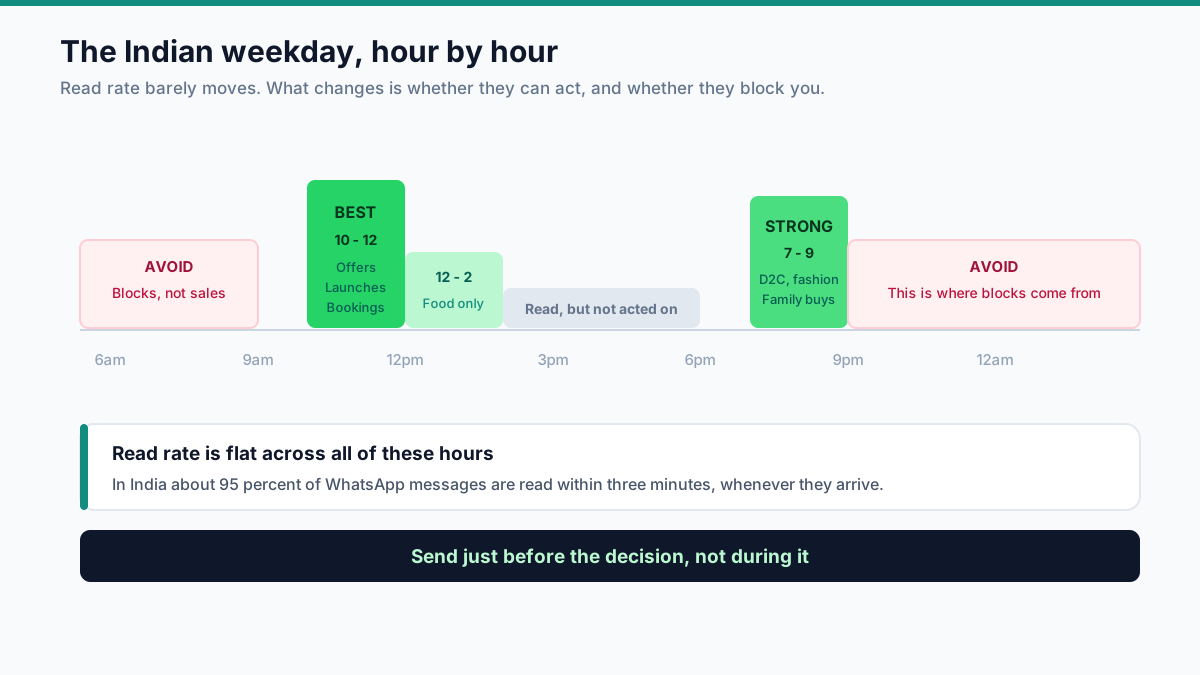
On WhatsApp in India, roughly 95 percent of messages are read within three minutes of arriving. Send at 11am or 11pm and they get read either way. Open rate is not the thing you are optimising.
Two things actually change with send time. Whether the customer is in a position to act, and whether they get annoyed enough to block you. The first decides your sales. The second decides how many people you are allowed to message at all.
This guide covers the windows that work for Indian audiences. It also covers the rules that override them, and how to find your own best hour.
Why WhatsApp timing is not email timing
Email sits in a list. It waits. Someone opens their inbox when it suits them. A badly timed email is mostly just a wasted email.
WhatsApp arrives as a notification, on a lock screen, next to messages from family. It interrupts. That changes the maths in two ways.
- You do not need to fight for attention. You already have it. The question is whether attention is worth anything at that moment.
- A bad moment has a cost. An unwanted email gets ignored. An unwanted WhatsApp message at 10pm gets you blocked. Blocks are far more expensive than most businesses realise.
The windows that work in India
Across Indian consumer audiences, two windows repeat.
| Window | Why it works | Best for |
|---|---|---|
| 10am to 12pm | The strongest weekday slot. The morning rush is over, people are settled, and there is time to tap through to a store. | Offers, launches, most retail |
| 7pm to 9pm | The second peak. Work is done, the phone is in hand, and decisions that involve a spouse actually get made. | Higher-value items, family purchases |
| 12pm to 2pm | Lunch. Good for food and quick impulse buys, weaker for anything needing thought. | Restaurants, cloud kitchens, snacks |
| Weekend mornings | Slower, but people browse for longer once they engage. | Jewellery, ethnic wear, big-ticket |
Treat these as your starting point, not your answer. They are averages across a whole country and a hundred kinds of business.
The rules that override the averages
Category beats the general window every time. If your customer cannot act on your message at that hour, the hour is wrong no matter what any benchmark says.
| Business | Send | Reason |
|---|---|---|
| Restaurants, tiffin, cloud kitchens | 11am to 12pm, 6pm to 7pm | Just before people decide what to eat, not while they are already eating |
| Clinics and salons | 10am to 12pm | Booking needs a moment of planning. Nobody books a dental appointment at 9pm. |
| D2C and fashion | 7pm to 9pm | Browsing is a leisure activity. Give them time to scroll. |
| Groceries and daily needs | 7am to 9am | The list gets decided early. Reach them before the day starts. |
| B2B and SaaS | 11am to 1pm, Tue to Thu | Working hours, mid-week. Monday is firefighting and Friday is checked out. |
| Coaching and education | 6pm to 8pm | After school and work, when parents are actually free to read. |
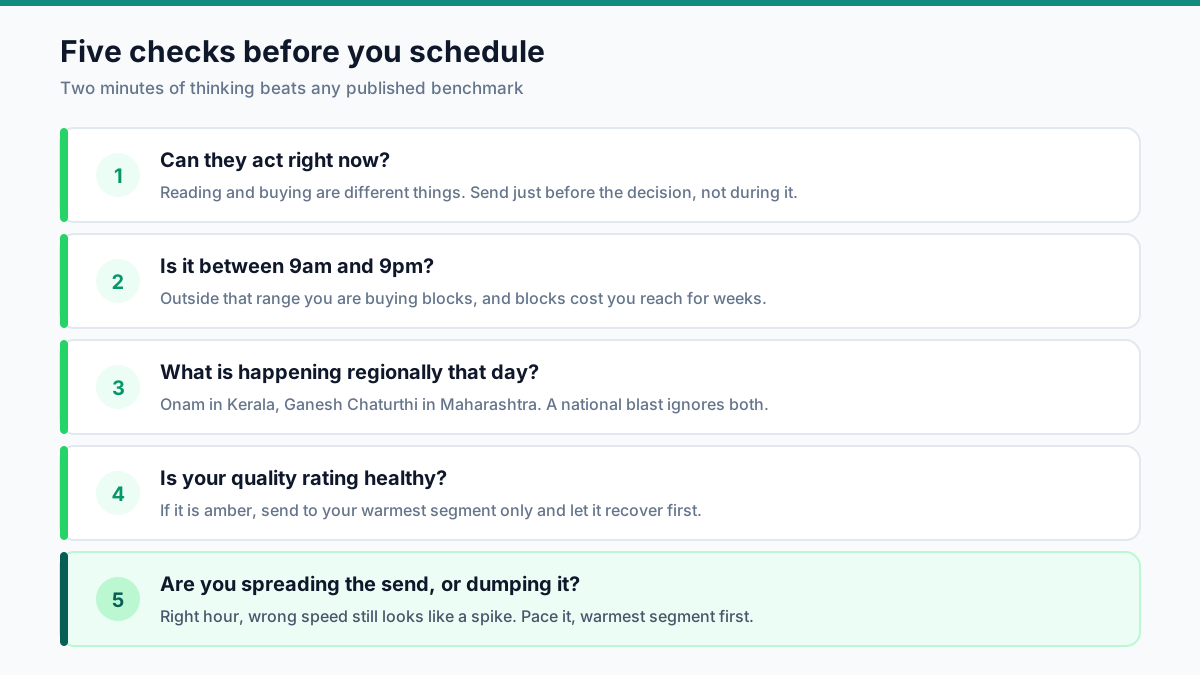
One rule cuts across all of them: send just before the decision, not during it. A restaurant message at 1pm reaches someone who has already ordered.
The hours that cost you more than a weak response
This is the part most timing advice leaves out.
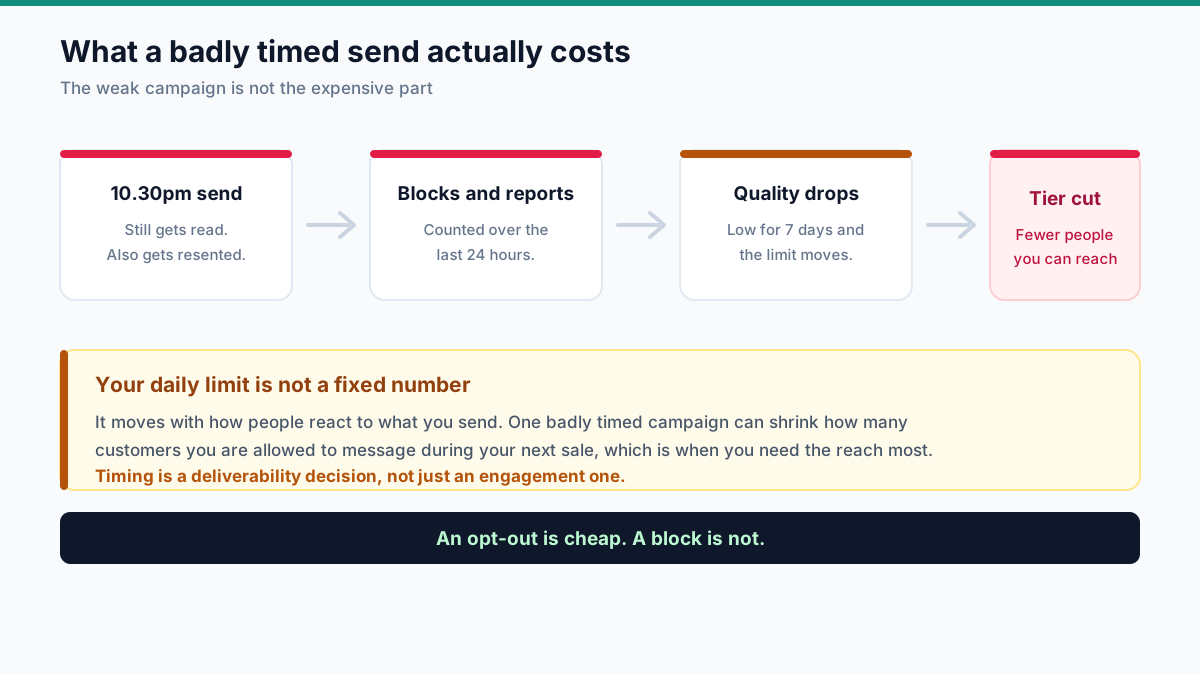
Your WhatsApp number carries a quality rating, and Meta calculates it from how people reacted to your template messages in the last 24 hours. Blocks and spam reports push it down. If it stays low for seven days, your daily messaging limit drops to the tier below.
So a late-night send does not just perform badly. It can cut how many people you are allowed to reach next week.
Hours to avoid:
- Before 9am and after 9pm. This is where blocks come from. One irritated customer at 10.30pm costs you more than the sale was worth.
- Sunday mornings. Response is fine, irritation is higher. People guard their weekend.
- During a major festival moment. A promotional blast during Onam lunch or Diwali puja reads as tone-deaf.
Regulated sectors have tighter conventions. Insurance communication in India generally stays inside 9am to 6pm, and it is sensible to hold to that even where nothing formally requires it.
If your quality rating is already amber, the safest move is to send only to your warmest segment for a few days and let it recover. The mechanics are covered in this guide to the WhatsApp quality rating.
A national blast is a regional mistake
India does not have one calendar. Sending the same message to everyone at the same hour ignores that.
- Onam runs 25 to 28 August 2026 in Kerala. A generic offer landing on Thiruvonam morning competes with a family lunch.
- Ganesh Chaturthi on 14 September matters in Maharashtra and Karnataka and barely registers elsewhere.
- Regional working hours differ. Business in smaller towns starts and finishes earlier than in Mumbai or Bengaluru.
Fixing this is simple. Split one send into two by state. That also lets you change the greeting to match the festival people are actually celebrating.
How often matters as much as when
The right hour will not save you if you send too often. Frequency is the other half of the same problem.
For most Indian consumer businesses, two to four marketing messages a month is the range that works. Weekly is fine if every message carries a real offer. Twice a week and the blocks start.
Order updates are different. Confirmations, dispatch notes and delivery alerts can go out as often as needed. Nobody blocks a business for telling them where their parcel is. Those are utility templates, and they cost about one eighth of a marketing message.
A simple test: if you would not send this message to a customer you know personally, do not send it to five thousand people.
Find your own hour with one clean test
Everything above is a starting hypothesis. Your list is the only real evidence.
- Pick one message you send regularly. Not a launch. Something ordinary, so the offer does not distort the result.
- Split the list in half at random. Not by city, not by recency. Random, or you are testing the segment rather than the hour.
- Send at 11am and 8pm on the same day. Same copy, same offer, same everything.
- Measure replies and orders, not reads. Reads will be almost identical. That is the point.
- Repeat it three times before you believe it. One test is a coincidence.
Once you have a winner, test the winning hour against a neighbouring one. More on running these properly in the guide to A/B testing WhatsApp campaigns.
Sending time and sending speed are different problems
Picking the right hour does not mean firing everything at once in that hour.
A sudden spike of thousands of messages from a number that normally sends hundreds looks like exactly what Meta screens for. Spread a large send across the window rather than dropping it in one burst, and start with the segment most likely to reply well.
The full mechanics are in this guide to sending a WhatsApp broadcast to 1,000 contacts without getting flagged.
One thing that changes on October 1
There is a wrinkle coming that will make timing a cost question too.
Right now, when someone replies to you, a 24-hour service window opens and your replies inside it are free. From 1 October 2026, service messages and in-window utility templates become chargeable.
This matters for timing because your best-performing hour is usually the hour that generates the most replies. After October, those replies cost money to answer. That does not make evening sends wrong. It does mean you should count the cost of the replies too, not just the order value.
Frequently Asked Questions
What is the best time to send a WhatsApp broadcast in India?
For most consumer businesses, 10am to 12pm on weekdays performs best, with 7pm to 9pm as a strong second. Your category matters more than the average though: groceries do better early morning, D2C and fashion do better in the evening.
Does send time affect WhatsApp open rates?
Barely. In India around 95 percent of WhatsApp messages are read within three minutes at almost any hour. Send time affects whether the customer can act on the message and whether they block you, not whether they see it.
Can sending at the wrong time get my number restricted?
Indirectly, yes. Late-night messages attract blocks and spam reports, which lower your quality rating. If it stays low for seven days, your daily limit drops to the tier below. A badly timed send can shrink your reach for weeks.
Should I send WhatsApp broadcasts on weekends?
Weekend mornings work well for browsing categories like jewellery and ethnic wear, where people spend longer looking. Sunday mornings attract more irritation than weekdays, so keep those sends to people who have bought from you before.
How do I find the best send time for my own customers?
Split your list in half at random. Send the same ordinary message at 11am and 8pm on the same day. Compare replies and orders, not reads. Repeat it three times before trusting the result.
Is it safe to send to my whole list at once in the best hour?
No. A sudden spike from a number that normally sends far less is exactly the pattern Meta screens for. Spread a large send across the window and start with your warmest segment.
Start with the customer's day, not the benchmark
The question worth asking is not what hour has the highest open rate. It is what your customer is doing at the moment your message lands, and whether they can act on it right then.
Answer that honestly for your own business and you will beat any published benchmark, because the benchmark was averaged across businesses that are nothing like yours.
Wamafy lets you schedule broadcasts, pace large sends and split-test send times. Plans are flat and start at Rs 799, with no markup on Meta's rates. Start a 14-day free trial and test your first two windows this week. The card is authorised when the trial begins and charged only on day 15.