A/B Testing WhatsApp Campaigns: Find the Message That Sells
You are about to send one message to your whole list, and you have a hunch it will work. But a hunch is not a plan, and once a broadcast goes out, you cannot take it back. This is exactly the gap that WhatsApp A/B testing closes. You send two versions to a small slice of your list first, see which one wins, then roll out the winner to everyone. Small changes in wording, offer, or timing move real sales, and testing tells you which change actually works before you spend on the full send.
A/B testing is available on the Wamafy Forest plan. This guide shows you what to test, how to run a clean test, how to read the result, and the mistakes that quietly waste your sends.
What to test on a WhatsApp campaign
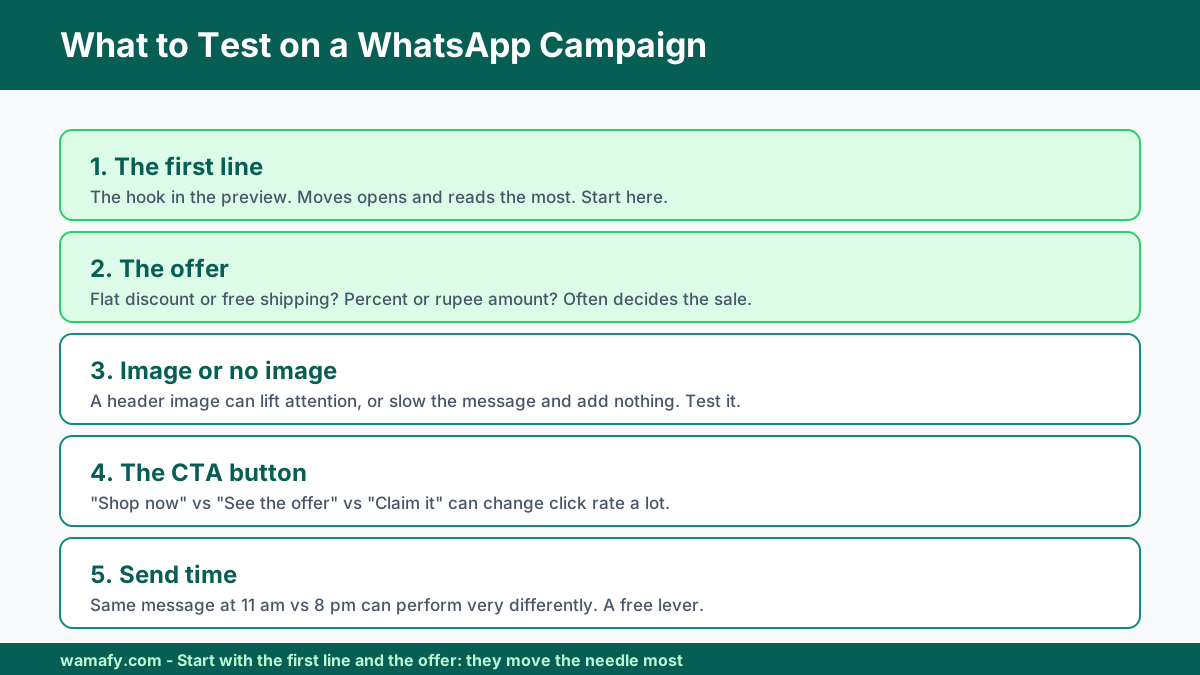
Do not test everything at once; test only the things that actually move the needle. On WhatsApp, five elements are worth your time, and the rest is usually noise that will not change your results enough to matter.
- The first line. The opening is what a reader sees in the preview. A sharper hook lifts opens and reads more than anything else.
- The offer. Flat discount or free shipping? 10 percent or a fixed rupee amount? The offer often decides the sale.
- Image or no image. A header image can lift attention, or it can slow the message and add nothing. Test it for your audience.
- The call-to-action button. "Shop now" versus "See the offer" versus "Claim it" can change click rate a lot.
- Send time. The same message at 11 am and at 8 pm can get very different results. Timing is a free lever.
Start with the first line and the offer, because those two usually produce the biggest swings and are the best place to begin before you move on to the smaller levers.
How a clean A/B test works
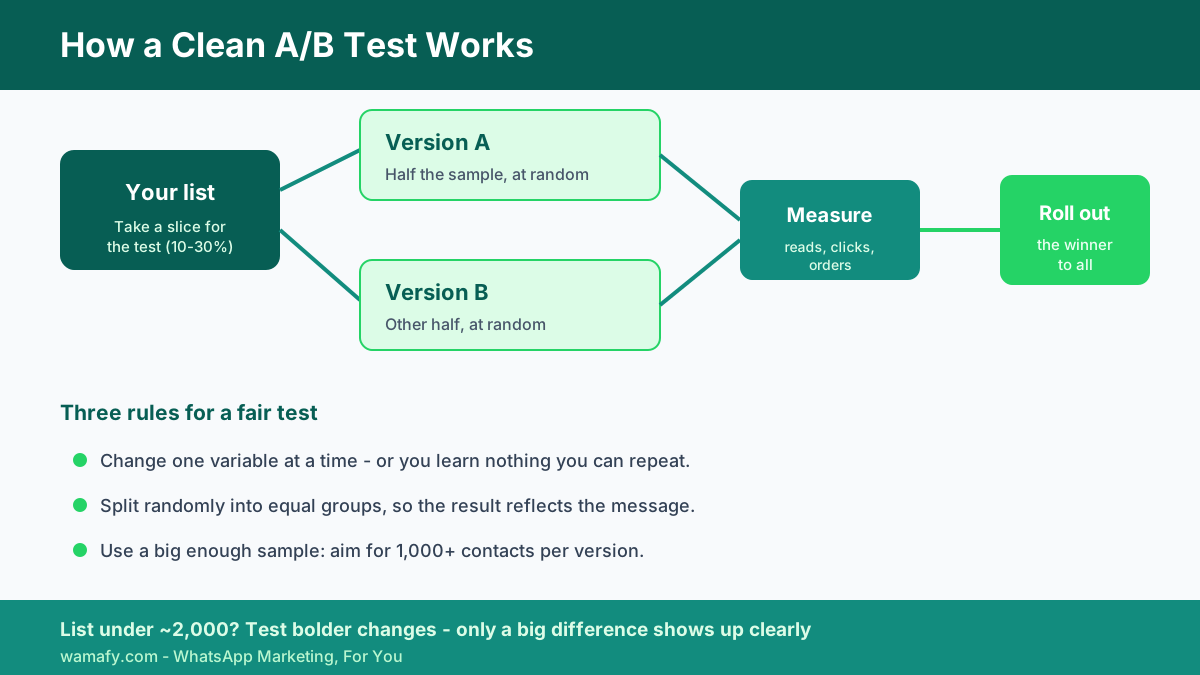
A test is only useful if it is fair, which means changing one thing, splitting your audience randomly, and using a big enough sample to trust the outcome. Get any of those wrong and the result will mislead you, so here is the method that keeps a test honest.
Change one variable at a time
If you change the headline and the offer and the image all at once, and version B wins, you have no idea which change did it. Test one variable per test. It feels slower, but it is the only way to learn something you can reuse.
Split randomly, into equal groups
Take a slice of your list and split it at random into two equal groups. Group A gets version one, group B gets version two. A random split keeps the two groups comparable, so the result reflects the message, not the audience.
Use a big enough sample
This is where small lists struggle. For a reliable result, aim for at least 1,000 contacts in each version, or 10 to 30 percent of your list for the test overall. If your list is small, say under 2,000, a normal A/B test will not give you a trustworthy answer. In that case, test bigger, bolder changes rather than a one-word tweak, since only a large difference will show up clearly.
Once you have a winner, send it to the rest of your list. If you are new to running broadcasts at this size, our guide on sending a WhatsApp broadcast to 1,000 contacts covers the setup and pacing.
Reading the result: judge on the metric closest to money
WhatsApp gives you a chain of metrics for every send: delivered, read, clicked, replied, and ordered. Each tells you something, but they are not equal, so judge your test on the metric that sits closest to the money.
- Delivered tells you your list and number are healthy, not whether the message worked.
- Read shows if the first line and timing pulled people in.
- Clicked or replied shows if the offer and CTA landed.
- Ordered is the one that pays. If you can track it, this is your judge.
A version can win on reads but lose on orders. That happens when a flashy hook pulls attention but the offer does not deliver. Always pick the winner on the deepest metric you can measure, ideally orders or replies, not just opens. For the delivery side of these numbers, our explainer on the WhatsApp quality rating shows how healthy sending protects your reach.
A worked example
Numbers make this concrete, so picture a D2C store with a list of 8,000 opted-in customers running a weekend sale. Instead of guessing the opening line, the store sets aside 2,000 contacts for a test, split into 1,000 per version. Version A opens with "Your favourites are back in stock." Version B opens with "Only 48 hours: 20 percent off everything." Everything else about the two messages stays identical, so the opening line is the only difference being measured.
After a few hours the results are clear. Version A earns a 62 percent read rate and 40 orders, while version B earns a slightly lower 58 percent read rate but 71 orders. Version B was read a little less, yet it nearly doubled the orders, because the urgency and the offer did the real selling. The store rolls version B out to the remaining 6,000 contacts, and it also saves that urgency-plus-discount pattern as a template for the next campaign. One small test just turned a hunch into a repeatable, revenue-tested decision.
Common A/B testing mistakes
Most failed tests fail for the same few reasons, so avoid these and your tests will teach you something useful every time.
- Testing too many things at once. Change one variable, or you learn nothing you can repeat.
- Calling it too early. A lead after 20 sends is noise. Wait for the full sample and a clear gap before you decide.
- Testing on a tiny list. With too few contacts, random luck looks like a winner. Respect the sample size.
- Testing trivial changes. A single comma will not move sales. Test things a customer would actually notice.
- Ignoring send time. Running version A in the morning and version B at night is not a fair test. Send both at the same time, unless time itself is what you are testing.
The theme is patience and fairness. A test rushed or muddled is worse than no test, because it points you in the wrong direction with false confidence.
Turn a winner into a reusable template
A single winning message is nice, but a library of winning patterns is a genuine growth engine. Every test should leave you with a lesson you bank and reuse.
When a version wins, write down why you think it won, then save the message as a template. Over a few months you build a set of proven templates: the hook that gets reads, the offer that converts, the CTA that gets clicks. New campaigns then start from what already works, not a blank page. For a starting set of proven formats, see our WhatsApp template message examples.
This is the real payoff of testing. You are not just winning one campaign. You are learning your own audience, one clean test at a time, and that knowledge compounds.
Frequently Asked Questions
How big does my list need to be to A/B test?
Aim for at least 1,000 contacts in each version, or 10 to 30 percent of your list for the test. If your list is under about 2,000, a normal split test will not give a reliable answer. Test bolder changes instead, since only a large difference shows up clearly on a small list.
How long should I run a WhatsApp A/B test?
Run it until the full test sample has had a fair chance to respond, usually a few hours to a day depending on your audience. Do not call a winner after the first handful of responses. Wait for a clear, steady gap between the two versions before you roll out.
What should I test first?
Start with the first line and the offer. These move results the most, so they give you the biggest, clearest wins early. Once those are dialed in, move on to the CTA button, image versus no image, and send time.
Which metric decides the winner?
Judge on the metric closest to the money, ideally orders or replies. A version can win on reads but lose on orders when a strong hook is paired with a weak offer. Reads and clicks are useful signals, but conversions decide the real winner.
Can I test the send time?
Yes, and it is one of the most underrated tests. Send the same message to two equal groups at different times, then compare reads and orders. Just remember to hold everything else constant, so the only difference is the time.
Which Wamafy plan includes A/B testing?
A/B testing is available on the Wamafy Forest plan. You also get the template library, broadcast scheduling, and full delivery tracking, so you can run a test and read the results in one place, at Meta's message rates with no per-message markup.
Stop guessing, start testing
Every broadcast you send on a hunch is a roll of the dice. A/B testing turns that gamble into a system. Test one thing at a time, judge on the metric closest to money, save your winners, and each campaign gets a little sharper than the last. That compounding edge is how small teams out-market bigger ones.
Ready to find your winning message before you send to everyone? Start a 14-day free Wamafy trial. Your card is authorized during trial activation and charged only on day 15. Run your first A/B test, save the winner, and make your next broadcast your best one yet.