WhatsApp Marketing for B2B SaaS Companies in India
Your best trial signup went cold, and your five follow-up emails are sitting unopened. Sound familiar? For Indian B2B SaaS teams, the leak is rarely the product. It is the channel. Decision-makers here read WhatsApp first and email second, yet most SaaS founders still nurture leads only by email. This is the case for WhatsApp marketing for SaaS: use it to book demos, activate trials, and cut churn, without turning into the spammer nobody replies to.
To be clear up front, this is not about blasting cold offers to bought lists. That gets your number blocked and your brand ignored. It is about using a channel your buyers already prefer for the moments that decide a deal: the demo, the first week of a trial, and the renewal.
Why WhatsApp beats email for Indian B2B
The numbers are hard to argue with. An email follow-up in India often waits three to five days for a reply, if it gets one at all. A WhatsApp follow-up usually gets a reply the same day, often within hours. On reply rate, WhatsApp outreach frequently lands in the 40 to 60 percent range, while email sits in the low teens on a good day.
That speed changes your whole funnel. A lead that replies in two hours is still thinking about you. A lead you reach on day four has already moved on. For a lean team chasing a demo or a trial activation, momentum is everything, and WhatsApp keeps the momentum alive.
There is a caveat worth naming. WhatsApp is powerful precisely because it feels personal, so it punishes misuse fast. Send too much, or send to people who never opted in, and you lose the trust that makes the channel work. The rest of this guide is about using it well.
Where WhatsApp fits in a B2B SaaS funnel
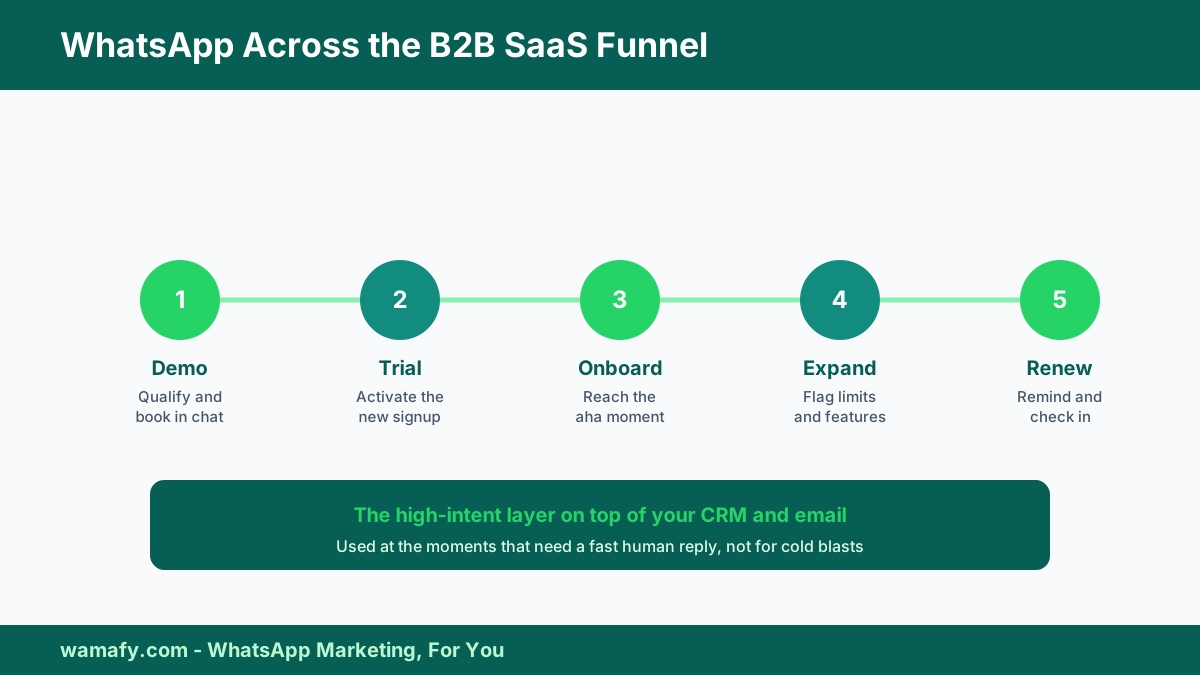
WhatsApp is not a replacement for your CRM or your email. It is the high-intent layer on top, used at the moments that need a fast human reply. Here is where it earns its place.
- Demo booking. Qualify and schedule a demo in chat, instead of a back-and-forth email thread.
- Trial activation. Nudge a new signup to the first valuable action before they forget you exist.
- Onboarding. Walk a trial user to the aha moment with timely, useful tips.
- Expansion. Flag when an account hits a limit or a new feature fits their use case.
- Renewal. Remind, check in, and answer questions before the contract lapses.
Booking demos in chat
The demo is where WhatsApp shines first. Email demo scheduling is a slow volley of "does Tuesday work" messages. In chat, you can qualify and book in a couple of minutes.
Use a WhatsApp Flow, a short guided form inside the chat, to qualify the lead before a call. Ask only what matters:
- Company and role. Who you are talking to, and how big the team is.
- Use case. What problem they want to solve.
- Timeline. Evaluating now, or just looking.
The Flow Builder is available on Wamafy's Bloom and Forest plans, so you can capture a qualified lead without a landing page. To see why in-chat forms convert better than a web form, read our guide on WhatsApp Flows and in-chat forms. If you want prospects to pick a demo slot themselves, the Appointments module on the Forest plan lets them choose a time in chat, with an automatic reminder before the call so they actually show up.
The trial onboarding sequence
Most trials fail in the first three days. The user signs up, gets busy, and never reaches the moment your product clicks. A short, well-timed WhatsApp sequence fixes that. The goal is not to sell. It is to get the user to their first win.
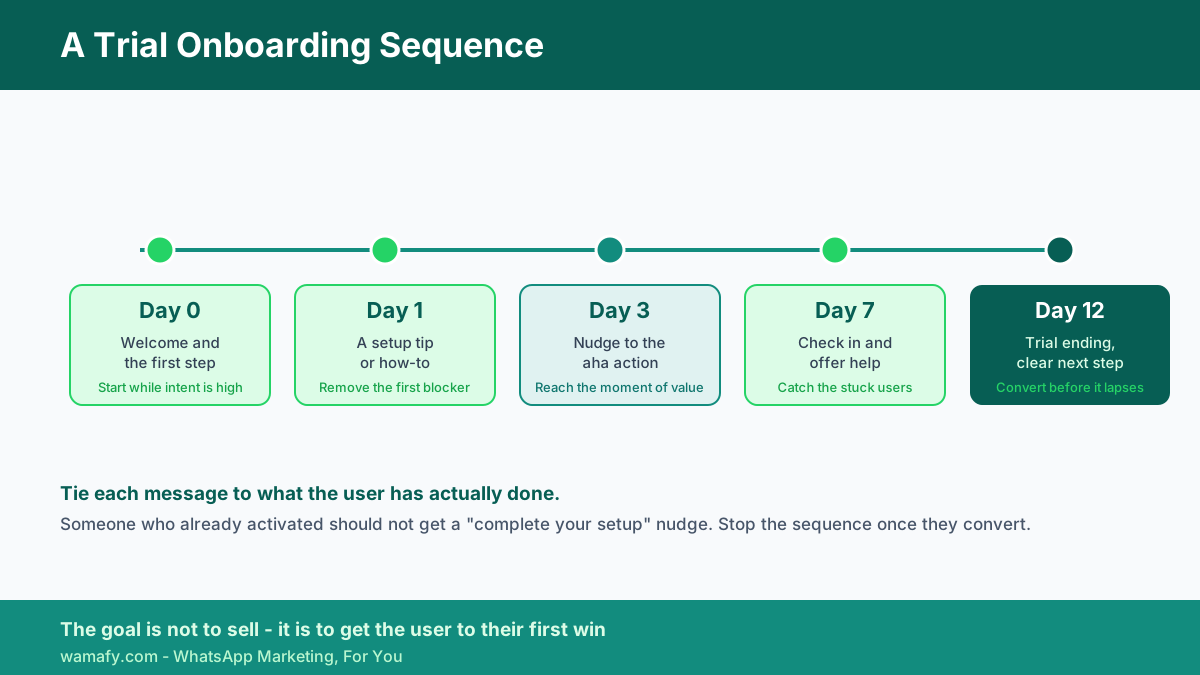
A simple onboarding sequence for a 14-day trial:
| Day | Message | Goal |
|---|---|---|
| 0 | Welcome and the single first step | Get them started while intent is high |
| 1 | A setup tip or short how-to | Remove the first blocker |
| 3 | Nudge toward the aha action | Reach the moment of value |
| 7 | Check in and offer help | Catch the stuck users |
| 12 | Trial ending, clear next step | Convert before it lapses |
Keep each message short and genuinely useful. A good onboarding nudge helps the user, and the sale follows. You can build this as a rule-based sequence with no code, which our no-code WhatsApp chatbot guide walks through. Tie each message to what the user has actually done, so someone who already activated does not get a "complete your setup" nudge.
Reducing churn with WhatsApp
Winning a customer is only half the job. Keeping them is where the money is. WhatsApp is a quiet, effective retention channel, because your check-ins actually get read.
Three retention plays work well:
- Usage nudges. If an account goes quiet, a short "anything blocking you?" message often surfaces a fixable problem before it becomes a cancellation.
- Renewal reminders. A friendly heads-up before a contract lapses, with a one-tap way to ask a question, beats a silent auto-charge that triggers a refund request.
- Expansion prompts. When an account nears a plan limit, a timely note about the next tier lands better than an in-app banner they scroll past.
The key is relevance. A renewal nudge to an active, happy account is welcome. The same message to someone who has not logged in for a month needs a different, more honest opening. Match the message to the account's real state.
Keeping it professional
B2B is a trust game, and the fastest way to lose is to treat a work number like a consumer promo list. A few rules keep you credible.
- Get real opt-in. A trial signup or a booked demo is permission to message about that. A bought list is not. Start every thread from a genuine action.
- Respect frequency. A few well-timed messages across a trial is right. Daily pings are not. When in doubt, send less.
- Keep the tone human, not salesy. Write like a helpful colleague, not a billboard. Short, clear, and useful wins.
- Always offer an easy opt-out. It protects your number's quality rating and your reputation. Blocks hurt far more than a polite unsubscribe.
One more point for 2026: business messages sent outside the 24-hour reply window use approved templates, and Meta is set to start charging for some service messages inside the window later this year. Keep your sequences lean, and lead with value, not volume.
A worked example: a 200-trial SaaS
Numbers make it concrete. Picture an Indian B2B SaaS getting 200 trial signups a month, with a plan that averages Rs 2,000 a month per customer. On email-only nurture, trial-to-paid sits around 8 percent, so about 16 new customers a month.
Now add a WhatsApp onboarding sequence tied to real usage. Teams that do this often report trial-to-paid lifting two to three times. Say it moves from 8 to 20 percent. That is 40 new customers a month, up from 16, an extra 24 customers every month.
| Metric | Email only | With WhatsApp nurture |
|---|---|---|
| Trials per month | 200 | 200 |
| Trial-to-paid | ~8% | ~20% |
| New customers/month | ~16 | ~40 |
| Added MRR (at Rs 2,000) | - | ~Rs 48,000 |
Now the cost. A five-message sequence to 200 trials is about 1,000 messages a month. At Meta's rates in India, that is well under Rs 1,000 in message fees, plus your plan and 18 percent GST, with no per-message markup on Wamafy. Against roughly Rs 48,000 in added monthly recurring revenue, the return is not a close call. Even a fraction of that lift pays for the whole setup many times over. For a broader scaling view, our D2C scale playbook shows the same mechanics applied to volume.
Frequently Asked Questions
Is WhatsApp too informal for B2B?
Not in India, where decision-makers actively use WhatsApp for work. The informality is an advantage when the message is useful and well-timed. Keep the tone like a helpful colleague, respect frequency, and it reads as responsive, not unprofessional.
Should WhatsApp replace email for my SaaS?
No. Use it alongside email, not instead of it. Email is still right for long-form updates, receipts, and formal records. WhatsApp is the high-intent layer for the moments that need a fast reply: demo booking, trial activation, and renewal.
How do I get B2B contacts to opt in?
Opt-in comes from a real action: a trial signup, a booked demo, a downloaded resource, or a reply to your first message. Make the value clear and let them choose their number for follow-ups. Never message a bought or scraped list, which risks your quality rating and your brand.
How many WhatsApp messages should I send during a trial?
For a 14-day trial, four to five well-timed messages is a good rhythm: welcome, a setup tip, an aha nudge, a check-in, and an end-of-trial step. Tie each to what the user has actually done, and stop the sequence once they convert or clearly disengage.
Can I book demos and reminders automatically?
Yes. Use a WhatsApp Flow on the Bloom or Forest plan to qualify a lead in chat, or the Appointments module on the Forest plan to let prospects pick a demo slot themselves. The Appointments module sends an automatic reminder before the call, which cuts demo no-shows.
What does a WhatsApp nurture setup cost for a small SaaS?
Very little relative to the return. A five-message sequence to a couple of hundred trials a month runs under Rs 1,000 in message fees at Meta's rates, plus your plan and 18 percent GST. Wamafy adds no per-message markup, so the cost stays predictable as you grow.
Put your funnel where your buyers already are
Your Indian B2B buyers are on WhatsApp, reading it before your email. Meet them there for the moments that matter, book the demo, activate the trial, save the renewal, and you turn a slow email funnel into a fast one. Do it with real opt-in and genuine value, and the channel rewards you.
Ready to move your funnel to a channel that actually gets replies? Start a 14-day free Wamafy trial. Your card is authorized during trial activation and charged only on day 15. Build your first demo Flow and trial onboarding sequence, and watch your reply rates climb.