WhatsApp Marketing for Restaurants and Cloud Kitchens
Most advice about WhatsApp marketing for restaurants stops at the ordering bot. Set up a menu, take orders in chat, skip the aggregator commission. Fine.
But the ordering system is the easy part. It takes an afternoon. We wrote the whole build out separately in our guide to building a WhatsApp ordering system for restaurants in India , so this post does not repeat it.
This post is about the harder thing. You have a number that customers can order from. Now how do you get people onto it, and what do you send them once they are there?
A restaurant list is not like other lists
Marketing advice usually assumes a slow buying cycle. Somebody researches, compares, decides over weeks.
Food does not work that way. Your customer decides in about ninety seconds, twice a day, on a schedule you can predict. That changes what a good message looks like.
Three things follow from it.
- Frequency is your advantage. A furniture shop gets one purchase every five years. You can get eight a month from the same person. A tiny lift in repeat rate compounds fast.
- Relevance is brutal. Send a mutton biryani offer to a vegetarian and you do not just get ignored. You get blocked.
- Timing is most of the job. The same message wins at 11:30 and dies at 16:00. More on that below.
So the goal is not the biggest list. It is a list you can message about the right food at the right hour.
Building the list without annoying anyone
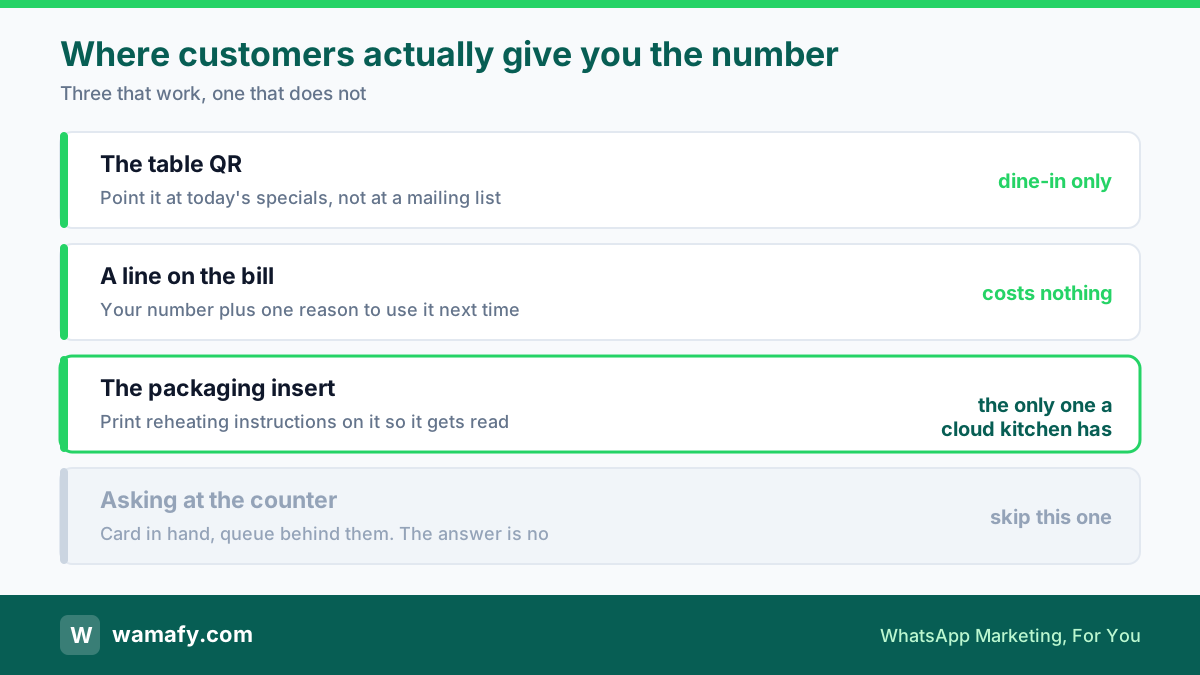
You have three moments where somebody will happily give you their number, and one where they will not.
The one that fails is asking at the counter while they are paying. They are holding a card, there is a queue behind them, and the honest answer to "can I have your number for offers" is no.
The three that work:
1. The table QR
A small standee, not a sticker on the wall. It should point at something they want right now, not at a mailing list. "Scan to see today's specials" gets scanned. "Scan to join our WhatsApp updates" does not.
Once they message you, you have the conversation. The offer to keep them posted comes after you have been useful, not before.
2. The bill
Print a line at the bottom with your WhatsApp number and one reason to use it. Ordering directly next time is a good reason. So is a first-order discount.
This is the cheapest acquisition you will ever run, because you are already printing the bill.
3. The packaging insert
A card in the bag, for delivery orders. This is the only touchpoint you control on an aggregator order, and it is worth taking seriously.
Keep it to one line, one number, one QR and one reason. Free delivery next time works. Ten percent works. "Follow us" does not.
The opt-in line that works
You need permission before you broadcast. The wording matters more than people think.
This gets refused: "Can we add you to our promotional list?"
This gets accepted: "Want us to message you when the Sunday biryani is on? We send about twice a month."
The second one names the thing they like, and it caps the frequency. Both matter. People say yes to specific and bounded, and no to vague and open-ended.
Cloud kitchens have a harder problem
If you have no dining room, you have no table QR and no counter. Every capture point above disappears except one.
So for a cloud kitchen the packaging insert is not a nice extra. It is your entire storefront. It is the only physical thing your customer ever touches that you designed.
Three things worth doing differently:
- Make it the first thing in the bag. Not under the containers. On top, facing up.
- Give it a job beyond marketing. Print the reheating instructions on it. Now it gets read instead of binned.
- Track it. Use a keyword on the card, so an order that starts with that word tells you the card worked. Without this you are guessing.
A realistic conversion rate on inserts is low, and anyone promising otherwise is selling something. But the cost per card is under two rupees and the customer is worth hundreds a year. It does not need to convert often.
The five messages worth automating
Do not build twenty flows. Build these five and stop.
| Message | When | Type |
|---|---|---|
| Order confirmed | Immediately | Utility |
| Out for delivery, with the rider | On dispatch | Utility |
| How was it? | 2 hours after delivery | Service |
| The weekend offer | Friday, before dinner | Marketing |
| We miss you | After 45 quiet days | Marketing |
The first two are not marketing and you should not treat them as marketing. They exist because "where is my food" is the question that eats your staff's time. Answer it before it gets asked.
The last one is the highest-value message on the list and the one nobody builds. A customer who ordered four times and then went quiet for six weeks has not left forever. They just forgot. One message brings a useful share of them back.
Who gets which message
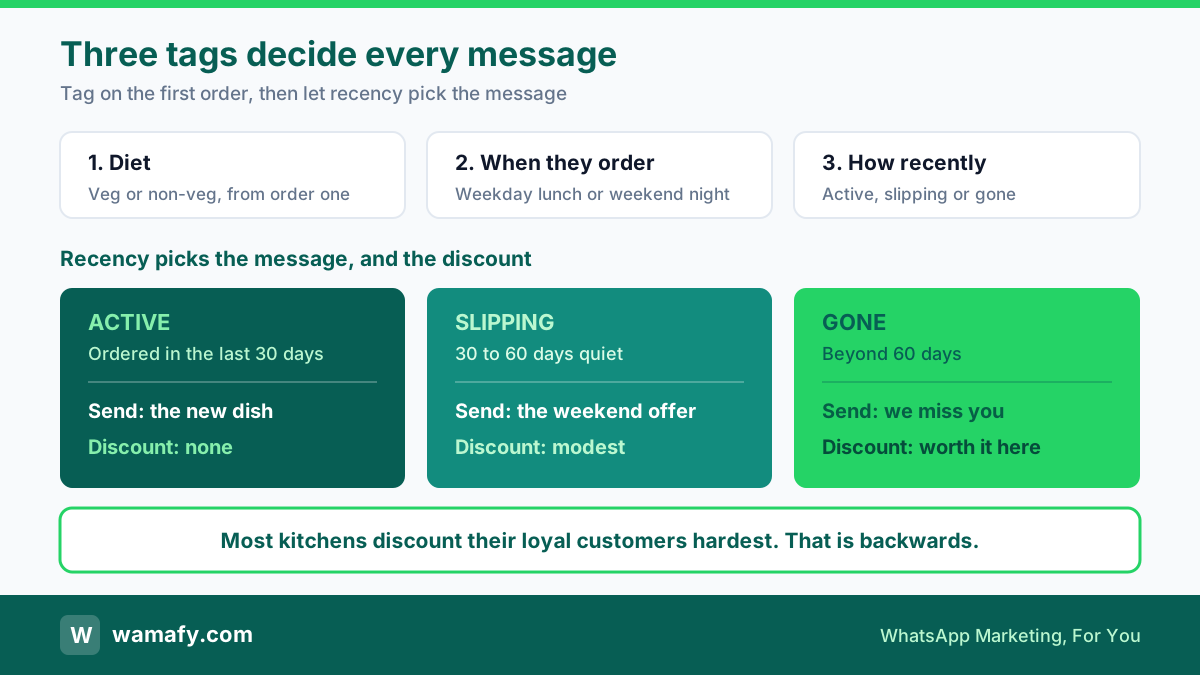
Segmentation sounds like enterprise vocabulary. For a restaurant it is three tags and about ten minutes of work.
Tag one: diet. Capture it on the first order and never guess again. This is the single highest-return thing you can do, because sending the wrong food to somebody's phone is how you earn a block rather than an unsubscribe. A block is permanent and it counts against your quality rating.
Tag two: when they order. Somebody who has only ever ordered lunch on weekdays is an office customer. Somebody who orders at 21:00 on Saturdays is not. The same weekend offer suits one and irritates the other, and you already have this information sitting in your order history.
Tag three: how recently. Split into active, slipping and gone. Active is an order in the last 30 days. Slipping is 30 to 60. Gone is beyond that.
Those three tags decide everything. Active customers get the new-dish announcement and no discount, because they were coming anyway and a discount just costs you margin. Slipping customers get the offer. Gone customers get the win-back, which is the only message where a real discount is worth it.
Most restaurants do the opposite. They send the deepest discount to their most loyal customers, because those are the people who open messages, and then wonder why margins fall while order counts stay flat.
Timing: land before the window, not during it
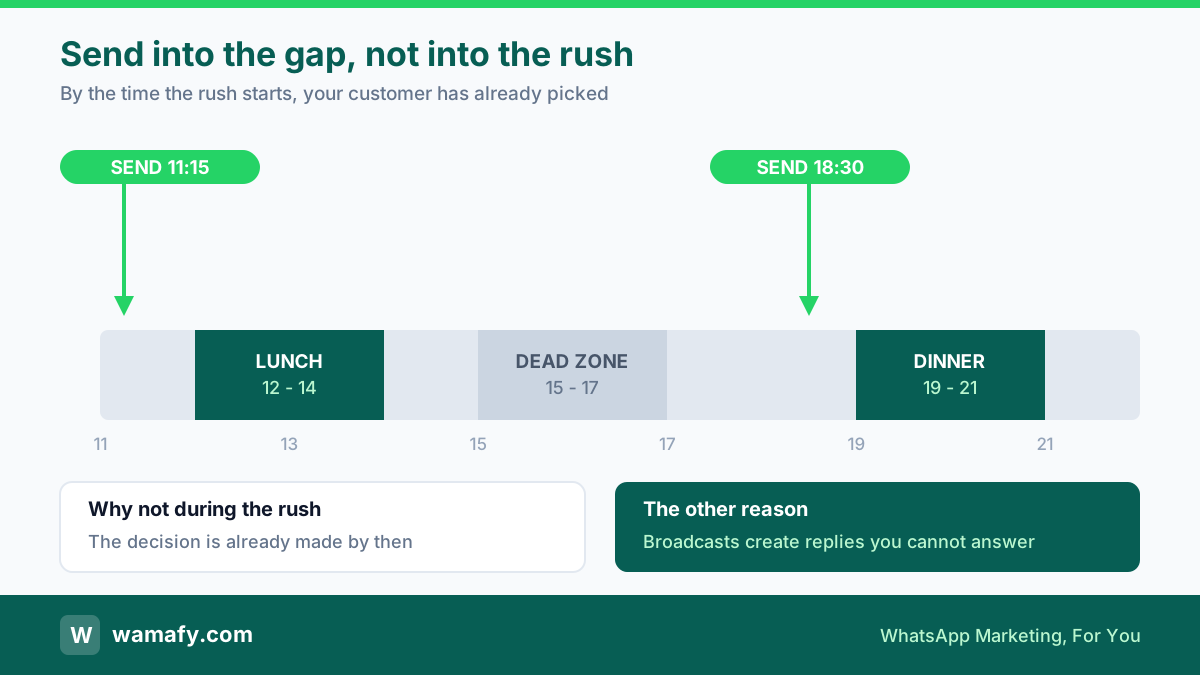
Ordering in India clusters hard. Lunch runs roughly 12 to 2, dinner roughly 7 to 9. Everything else is thin.
Here is where most restaurants get it wrong. They send the offer at 13:00, inside the lunch rush, because that is when people are ordering.
By 13:00 the decision is made. Your customer is already looking at a different menu.
Send it 45 to 60 minutes before the window instead. Around 11:15 for lunch. Around 18:30 for dinner. You want to land while they are getting hungry and before they have picked.
And there is a second reason to avoid sending during service, which has nothing to do with conversion. A marketing broadcast generates replies. If it lands at 13:00, those replies arrive while your kitchen is slammed and nobody can answer them. An unanswered reply is worse than no message at all.
The dead zone is 15:00 to 17:00. Nobody is hungry, and nothing you send then will be remembered at 20:00. Our post on the best time to send a WhatsApp broadcast in India covers the wider pattern.
Reviews, and where to route the unhappy ones
Two hours after delivery, ask one question. Not a form. One question.
Then split the answers. Happy diners get a link to your Google listing. Unhappy diners get a person.
This is the whole trick. Most restaurants either ask everyone for a public review, which surfaces the bad ones, or ask nobody, which surfaces nothing. Sorting first means your public rating climbs while your complaints get handled privately, where they can actually be fixed.
A word of caution: do not filter reviews in a way that misleads. You are choosing who to ask, which is fine, and everyone can still review you unprompted. Our guide on collecting reviews on WhatsApp goes into the mechanics.
The other use of the unhappy reply is that it gives you a second chance the same week. A free dessert on the next order costs you forty rupees and saves a customer worth thousands.
What this actually costs to run
A kitchen doing 900 orders a month, with 1,500 opted-in contacts. Here is the message bill.
| Message | Volume | Rate | Cost |
|---|---|---|---|
| Order confirmed | 900 | Rs 0.115 | Rs 104 |
| Out for delivery | 900 | Rs 0.115 | Rs 104 |
| Feedback ask | 900 | Free today | Rs 0 |
| Two offer broadcasts | 3,000 | Rs 0.8631 | Rs 2,589 |
| Win-back to 200 lapsed | 200 | Rs 0.8631 | Rs 173 |
| Total messages | 5,900 | Rs 2,970 |
Add a plan from Rs 799 a month. All in with GST, roughly Rs 4,447.
Two things stand out. The order updates, which your customers value most, cost about Rs 208 for the month. And the broadcasts are 87 percent of the bill.
That is the lever. If you cut broadcast frequency and raise relevance instead, your cost falls and your results usually improve. Sending less to the right people beats sending more to everyone.
What changes on 1 October 2026
Worth knowing now, because it lands in seven weeks.
Right now, replies inside the 24-hour window after a customer messages you are free. That includes your feedback ask and your back-and-forth about a missing raita.
From 1 October 2026, Meta starts charging for service messages and for utility templates sent inside that window. The rate is the same per-message rate already applied to utility templates, and service messages get no volume discount.
For the kitchen above, that adds about Rs 104 a month. Not painful. But it does mean loose, chatty automation gets a price tag it did not have, so this is a good moment to check that you are not sending five messages where two would do.
Four mistakes worth avoiding
- Broadcasting to everyone, every time. Split veg and non-veg on the first order. It costs you nothing and it is the single biggest cause of blocks in this category.
- Sending during service. Covered above. The replies arrive when you cannot answer them.
- Discounting on every message. Train people to wait for the offer and they will. Mix in a new dish, a festival special, a genuinely useful update.
- Buying a contact list. People who never gave you their number report you as spam, your quality rating drops, and your messaging limit falls. This ends badly every time.
Frequently Asked Questions
Do I need a POS integration to do this?
No. The messages that matter are triggered by order events, and you can drive those from the chat itself if the order was placed on WhatsApp. A POS link helps if most of your orders come in elsewhere, but it is not the starting point.
Can customers pay inside the chat?
Yes. Orders placed on WhatsApp can carry a payment link generated against your own gateway account, so the money moves directly to you. The setup is covered in the ordering system guide .
How often should a restaurant broadcast?
Twice a month for most kitchens. Weekly only if you genuinely have something new each week. Frequency is the fastest way to get blocked, and a block is permanent.
What is the difference between a utility and a marketing message?
A utility message is about an order the customer already placed, like a confirmation. A marketing message promotes something. Marketing costs roughly Rs 0.8631 in India against about Rs 0.115 for utility, so categorising correctly matters. Meta decides the category at template review, not you.
Will WhatsApp marketing replace Swiggy and Zomato?
No, and treating it that way is a mistake. Aggregators put you in front of people who have never heard of you. WhatsApp only works with people who already know your name. Use the platforms to find customers, then stop paying full commission on the ones you already earned.
How many contacts do I need before this is worth doing?
A few hundred is enough to see something. The order-update messages are worth running from day one regardless, because they cut the "where is my food" calls that eat your staff's evening.
Where to start
Pick one capture point this week. If you have a dining room, print the line on the bill. If you are a cloud kitchen, design the insert card.
Then build two messages, not five: order confirmed, and the feedback ask two hours later. Add the offer broadcast once you have a few hundred contacts who chose to be there.
If you want the ordering side running too, the full ordering system guide walks through the setup, and you can start a 14-day free Wamafy trial to try it. Your card is authorized when the trial begins and charged only on day 15.