AMC Renewal Reminder Software: Stop Losing Contracts to a Spreadsheet
Insurance firms in India measure renewals because a regulator makes them. IRDAI publishes persistency at the 13th, 25th, 37th, 49th and 61st month for every life insurer. Gyms measure renewals because fitness vendors publish benchmarks. AMC, lease and warranty providers measure nothing. There is no regulator, no published benchmark, and no software category that owns the problem. So the leak stays hidden, because you cannot miss a number you never had.
This post gives you that number, and the system that moves it. AMC renewal reminder software does not need to be complicated. It needs a list with dates on it, a reminder that goes out before each date, and a way to pay without a phone call.
Who this covers
The label changes. The problem does not. If your revenue depends on a contract that expires, you are in this category:
- Equipment servicing - air conditioning, cold storage, medical devices, kitchen gear, printers.
- IT and software AMCs - hardware support, CCTV, networks, licence renewals, website and app upkeep.
- Building systems - lifts, gensets, fire safety, water purifiers, solar.
- Leases and rentals - offices, shops, godowns, flats, hired plant.
- Extended warranties and service contracts - white goods, gadgets, cars and trucks.
- Facility upkeep - housekeeping, security, pest control, gardens.
Every one of these sells a promise with an end date, and every one of these loses money when that date passes quietly.
Why AMC renewal reminders are the worst-served job in Indian SMB software
Three things went wrong at once.
No benchmark exists. Search for an AMC renewal rate benchmark for India and you will find almost nothing. One figure does get quoted: that service firms lose 20 to 30 percent of AMC renewals because nobody called in time. It comes from a software vendor's blog, not from a regulator or a trade body, so treat it as a sales claim rather than a benchmark. That is the honest read, and it is also the point: nobody has measured this trade properly, so nobody knows how bad the leak really is.
No software category owns it. Insurance agents have renewal tools, gyms have membership software, and SaaS companies have churn dashboards. An AMC firm with 400 contracts falls between a CRM, a field service tool and an accounting package. None of the three is built around the end date.
The spreadsheet is genuinely the standard. This is not laziness. A sheet with customer, asset, amount and end date is a perfectly good tool. It fails at exactly one job: it cannot tell anyone that a date is near. It sits there being correct while the date goes by.
The structure they all share
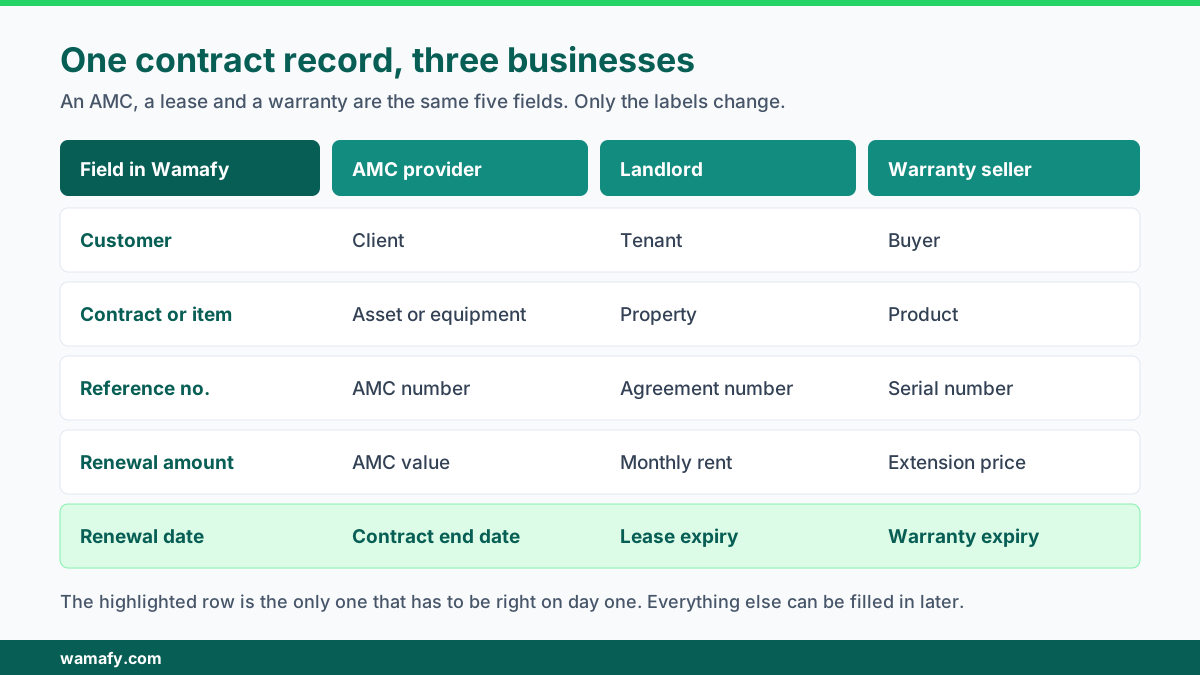
Here is the useful bit: an AMC, a lease and a warranty are the same record. Customer, thing, reference number, amount, end date. That is all of it, and only the words change.
So you do not need software built for your exact trade. You need one contract record you can relabel. That is the case made in why renewals belong on WhatsApp. The Contract Renewals add-on in Wamafy ships plain labels on purpose: Customer, Contract or item, Reference no., Renewal amount, Renewal date. You rename them under Setup, and you add your own fields for anything else.
| Neutral field | AMC provider | Landlord | Warranty seller |
|---|---|---|---|
| Customer | Client | Tenant | Buyer |
| Contract or item | Asset or equipment | Property | Product |
| Reference no. | AMC number | Agreement number | Invoice or serial number |
| Renewal amount | AMC value | Monthly rent | Extension price |
| Renewal date | Contract end date | Lease expiry | Warranty expiry |
Your own fields cover the rest. An AMC firm adds asset model and site address, and a landlord adds deposit and owner name. Those fields drop straight into the message text, so a reminder can name the exact machine at the exact site.
A common mistake is keeping one list per contract type. Do not: a single list with a type column is easier to sort, easier to import, and easier to hand over when your office staff change.
The reminder ladder for a high-value renewal
The default ladder is four reminders: 30, 15, 7 and 1 day before the date. Then a grace window of 15 days before the contract counts as lapsed. That default works well for a mid-value contract, but it is not right for every contract you hold.
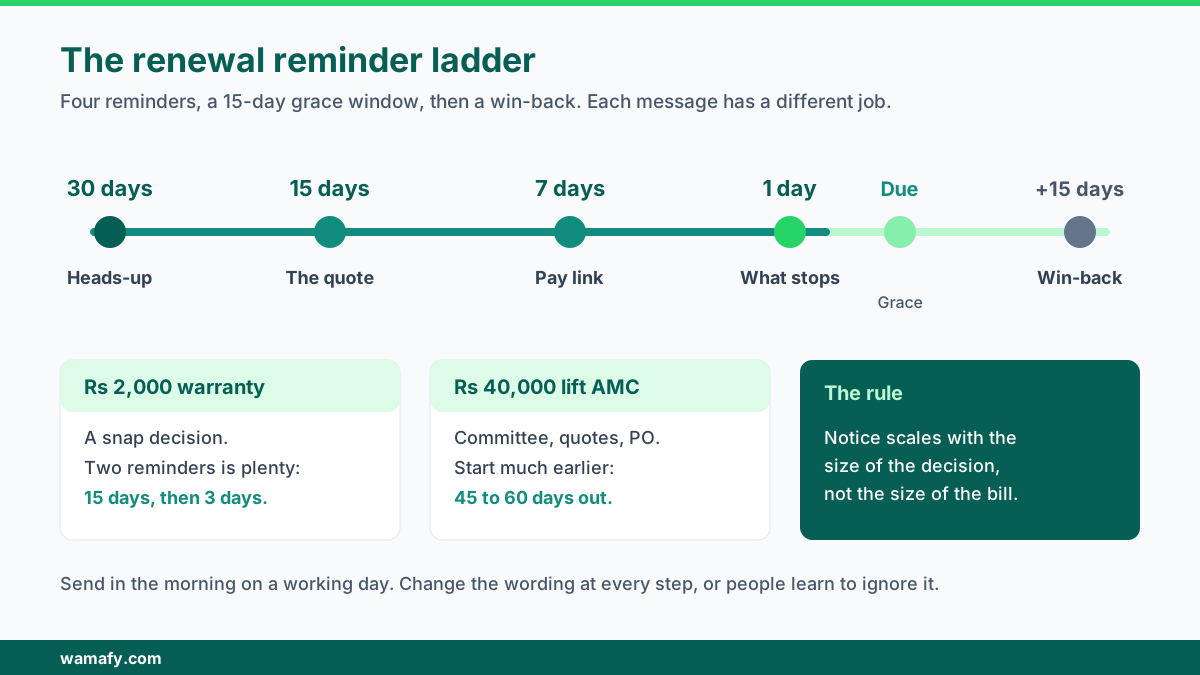
The rule to apply is simple. Notice should scale with the size of the decision, not the size of the bill.
A Rs 2,000 warranty top-up is a snap decision, so one reminder at 15 days and one at 3 days is plenty. More than that is nagging.
A Rs 40,000 lift AMC is not. Someone has to raise it with a committee, compare quotes and release a purchase order, and that takes weeks. Start at 45 or 60 days for contracts like these, and make the first message a heads-up rather than a bill. Day 30 is roughly when a rival quote lands, so you want to be in the conversation before it.
Three more judgement calls that matter more than the exact day counts:
- Send in the morning, on a working day. A reminder at 8 pm on Saturday gets read and forgotten, while one at 10:30 am on Tuesday gets forwarded to accounts.
- Change the message at each step. The same text four times teaches people to ignore it. Day 30 is a heads-up, day 15 is a quote, day 7 is a pay link, and day 1 is one plain line about what stops working.
- Say what lapsing costs. Not "your AMC expires". Say that a callout with no contract is billed per visit, and give the figure. Most people do not renew late to save money; they renew late because nobody told them the difference.
The lapse message is the one most people skip, and it often pays the best. A short note a few days after the grace window ends, offering to restore the cover, catches the customer who simply forgot. The same idea drives an insurance renewal reminder sequence, where the lapsed policy win-back does real work.
Getting the renewal date into the system
This is the step that stops most people, so plan for it properly.
Import is a CSV, and you map each column yourself. Only two are required, phone number and renewal date, so the rest can wait. That means you can start with a thin list and fill in the detail later, rather than cleaning the whole book first.
What nobody warns you about is the state of the contract book itself. Expect to find:
- Dates in four formats. 01/04/26, 1-Apr-2026, April 2026, and "renewed last April". Pick one before you export.
- Numbers that belong to the wrong person. The number on file is often the technician, the security guard, or someone who left, while the renewal decision sits with the owner or the accounts head. Fix your top 50 contracts by value first.
- Landlines. WhatsApp needs a mobile. These rows need a call, not a message.
- Contracts that already ran out. Usually more than you expect. Do not import them as active; put them in their own list and work them as a win-back campaign.
- One customer, many contracts. Four lifts in one building is four records against one customer, so keep them apart and let each asset renew on its own date.
A fair plan for a 500-contract book is two working days of cleanup: do the top 50 by value with care, and bulk import the rest. If your field service or property software already holds the dates, it can push contracts in through the renewals API, and you skip the CSV.
Start with one quarter of end dates rather than the whole year. Your wording will be wrong on the first batch, and fixing it on 120 contracts is cheaper than fixing it on 500.
Pay to renew, inside the chat
The reminder is only half the job; the other half is what the customer can do next.
With no payment path, a good reminder leads to a call to your office, then a request for a fresh quote, then an invoice by email, then a bank transfer some time later. That is four steps and three chances to go quiet. This is where most renewals actually die: not in the decision, but in the paperwork after it.
With a payment path, the reminder carries a Renew now button. The customer taps it and pays, the contract is marked paid, the date rolls forward one cycle, and the ladder resets for the next term.
Two things are worth being clear about. First, the pay link is a button on the template, not a link typed into the message body. Meta treats the two very differently, and a raw link in body text hurts template approval. Second, the gateway is yours: Wamafy mints a Razorpay link against your own account, so the money goes straight to you and never sits with the platform.
If you would rather not collect in chat, turn payment off and keep the reminder as a nudge. Plenty of B2B contracts must go through a purchase order and cannot be settled with a tap. The reminder still does its job.
The manual override you will definitely need
Automation fails in this trade for one specific reason: a meaningful share of renewals are negotiations, not transactions.
Three cases need a person, and your system has to let one step in without breaking:
- Contracts in dispute. A customer with an open service complaint should not get a cheerful bill. Pause that contract until the complaint is closed.
- Customers asking for a new rate. If they have asked, the amount on file is wrong, and sending it anyway starts the conversation on the wrong number.
- Accounts your sales head wants to call. Your biggest contracts are relationships, and a Rs 3 lakh renewal deserves a phone call. Turn the ladder off for those, or leave a single early heads-up before the call.
A simple rule works: tag your top 10 percent by value as call-first, and let the other 90 percent run on the ladder. The reminders then do the dull work while your best accounts still get a person. It is the same idea behind any well-built WhatsApp drip campaign, where a reply from a real customer should always be able to stop the sequence.
What AMC renewal reminder software actually costs
Take a provider managing 500 contracts a year. Average contract value Rs 15,000.
Message volume is small, which surprises people. Four reminders per contract is the most you send, and many customers renew after the first or second, which stops the rest. Add a payment confirmation and a lapse win-back where needed, and call it about 2,000 utility messages across the year.
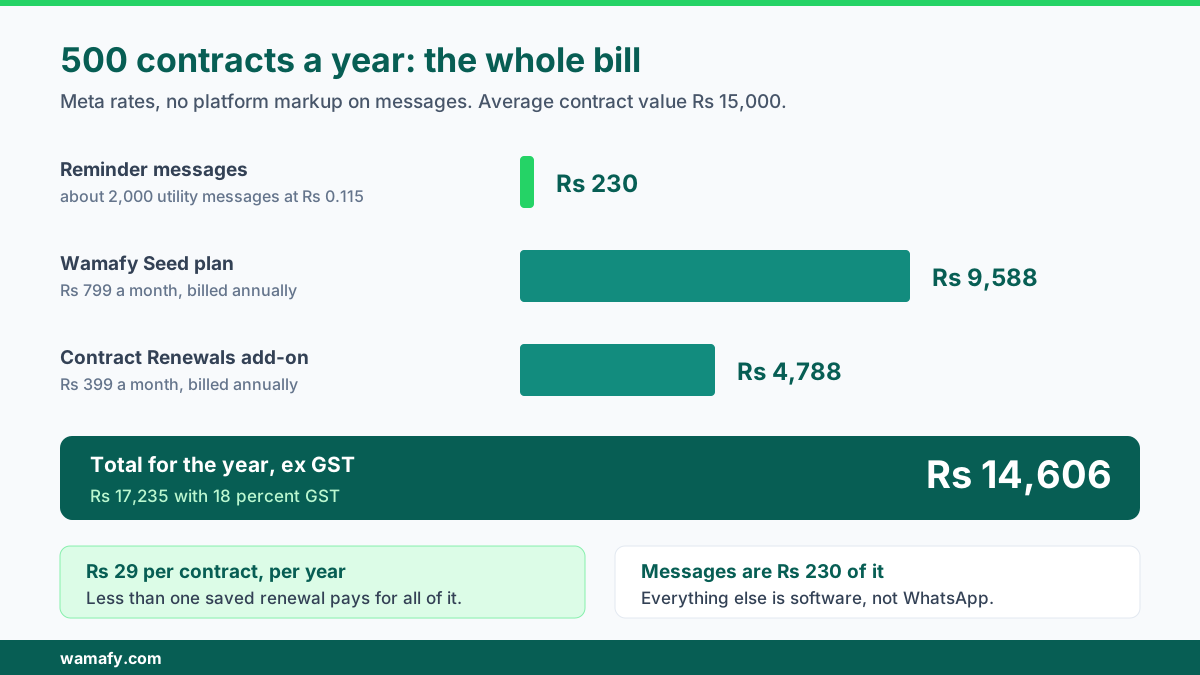
| Line | Working | Cost per year |
|---|---|---|
| Reminder and confirmation messages | about 2,000 utility messages at Rs 0.115 | Rs 230 |
| Wamafy Seed plan | Rs 799 a month, billed annually | Rs 9,588 |
| Contract Renewals add-on | Rs 399 a month, billed annually | Rs 4,788 |
| Total ex GST | Rs 14,606 | |
| With 18 percent GST | Rs 17,235 |
That is about Rs 29 per contract a year, or Rs 35 with GST. Against a Rs 15,000 average contract, the whole system costs less than one saved renewal. Note where the money actually goes: the messages are Rs 230 of it, and everything else is software.
Two cost notes for this trade. Renewal reminders are utility templates, so they bill at Rs 0.115, not the Rs 0.8631 marketing rate. Keep discount offers out of them, because a template carrying an offer gets re-graded as marketing and costs seven times more. Also, Wamafy adds no markup on message fees, so that Rs 230 is what Meta charges. A platform that adds 10 to 30 percent per message costs more, though at this volume the gap is small. The markup matters far more if you also run broadcasts from the same number.
One more thing worth knowing. From 1 October 2026, replies your team sends inside the 24-hour service window become billable, with a monthly allowance of free service messages per number before charges start. A renewals business sends few enough replies to stay inside that allowance in most months, so this change hits busy support teams rather than contract books.
What to measure
The trade has no benchmark, so build your own. Two numbers, worked out once a quarter:
- Renewal rate. Contracts renewed inside the grace window, divided by contracts that came up for renewal. Count by number and then again by value, because losing five small AMCs is not the same as losing one large one.
- Days to payment. From the first reminder to money in the bank. This is the number that moves when you add a pay button, and it is the easiest win to see.
Work out both for the quarter before you set anything up. That is your baseline, and without it you will never know whether the reminders worked.
Frequently Asked Questions
Can I relabel the fields for my business?
Yes. The built-in fields ship with plain labels and you rename them under Setup. An AMC firm can call them Asset and AMC number, while a landlord calls them Property and Agreement number. You can also add fields of your own and use them inside the message text.
Does it handle multi-year contracts?
Yes. You set the term yourself, with 12 months as the default, so a 24 or 36 month term makes the ladder run against the real end date. When the contract is marked paid, the date rolls forward one full cycle rather than one year.
What happens if a customer pays offline?
Mark the contract paid by hand. That closes it exactly as an online payment does: the date moves on, the reminders reset, and the contract goes back to active. Cheques and bank transfers are normal here, so the system does not assume every renewal comes through the link.
Do reminder messages need template approval?
Yes, like every message a business starts on WhatsApp. Starter templates for a renewal reminder and a lapsed win-back can be sent to Meta during setup. Keep them in the utility class and free of offer words so they stay at the utility rate.
Can external software push contracts in automatically?
Yes. If your field service, property or books system already holds renewal dates, it can push contracts through the renewals API instead of a CSV upload. That drops the manual export step.
What does this cost on the cheapest plan?
The Contract Renewals add-on works on every plan, including Seed at Rs 799 a month. Add-ons are not tier-gated in Wamafy, so a small firm does not need an expensive plan to get the renewal engine. The add-on is Rs 399 a month billed yearly, or Rs 499 billed monthly, plus GST.
Where to start
Export your contract book and count how many contracts came up last quarter against how many were renewed inside the grace window. Most firms in this trade have never done that single calculation, and it usually settles whether this is worth building.
Then import one quarter of end dates, set the ladder, and watch the first batch closely. You can do all of it inside a 14-day free Wamafy trial. The card is authorised when the trial starts and charged on day 15. That is enough time to run a real batch of reminders and read the replies before you decide.