WhatsApp Marketing for Coaching Institutes in India (2026 Playbook)
Indian coaching institutes that put WhatsApp at the centre of their admissions funnel close far more enrolments than those running only Instagram and email. The reason is simple. Almost every parent and student in India checks WhatsApp daily. Open rates cross 90 percent, while email sits near 20 percent. This playbook covers WhatsApp marketing for coaching institutes across the full journey, from first inquiry to fee payment to next-session re-enrolment. It works for JEE and NEET prep, IELTS and spoken English, professional courses, and K-12 tuitions.
Most coaching enquiries in India already end on WhatsApp. A parent sees your Instagram ad, clicks, and within seconds wants to chat. The institutes that win are the ones ready to reply in that moment, not three hours later. This guide shows you how to build that system without hiring an agency.
Why WhatsApp beats every other channel for admissions
The admissions decision in India is emotional and fast. A parent comparing three coaching centres for their child will pick the one that answers first and feels human. Speed wins. Studies of inbound leads show that replying within five minutes makes a lead far more likely to convert than replying an hour later. No human team can hit that window at 9 PM. Automation can.
Here is the channel reality for Indian edtech in 2026:
- WhatsApp open rates cross 90 percent. Email rarely clears 20 percent.
- Demo class invites sent on WhatsApp pull far more sign-ups than the same invite by email.
- Fee reminders on WhatsApp get read, so fewer payments slip past the due date.
- Parents reply on WhatsApp in a way they never do on a missed phone call.
The point is not to drop your other channels. The point is to make WhatsApp the spine that holds the funnel together. Instagram and Google bring the lead. WhatsApp closes it.
The admissions funnel on WhatsApp
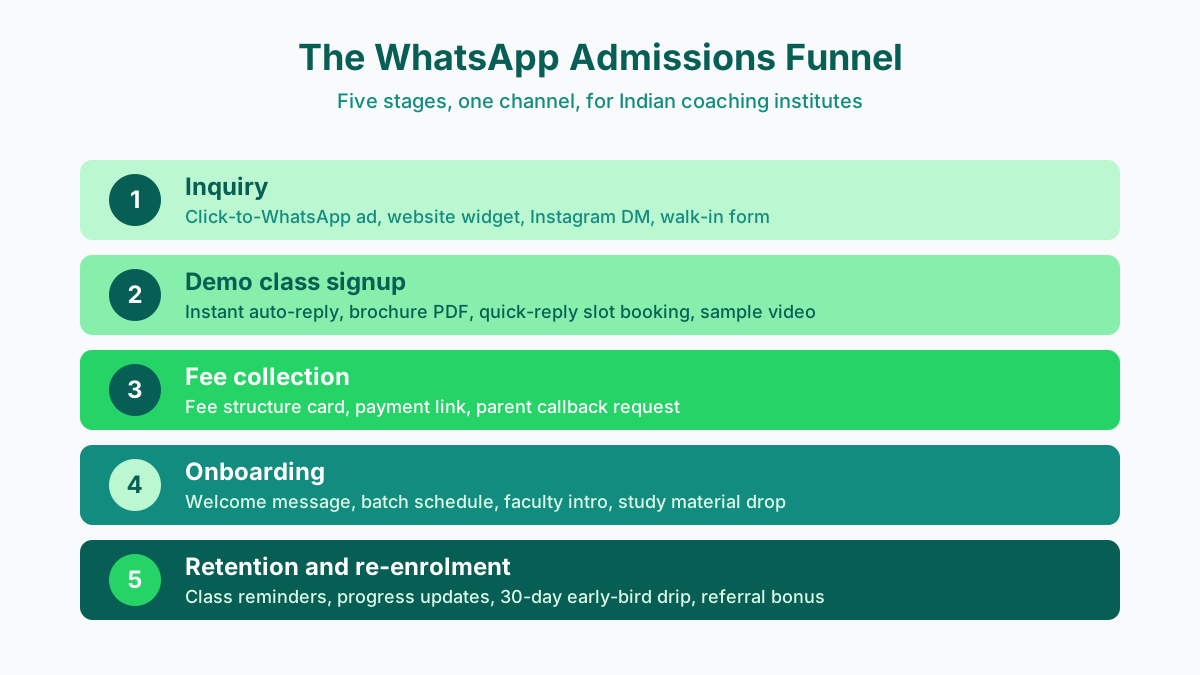
Think of your admissions process as five stages. WhatsApp has a job at each one. Most institutes only use it at one or two stages, then wonder why leads leak. Map all five and the leak stops.
- Inquiry - a parent or student first reaches out.
- Demo class signup - they try before they buy.
- Fee collection - the enrolment closes with payment.
- Onboarding - the new student gets set up.
- Retention and re-enrolment - they stay, and they come back next session.
The admissions cycle for the September academic year peaks between August and October. So mid-June is the right time to set this up. That gives you six to ten weeks to test templates, train your front desk, and get your number warmed up before the rush.
Top of funnel: capturing leads
You cannot nurture a lead you never captured. Most coaching institutes lose people here through slow replies and dead landing pages. Here are the four lead sources that work best in India.
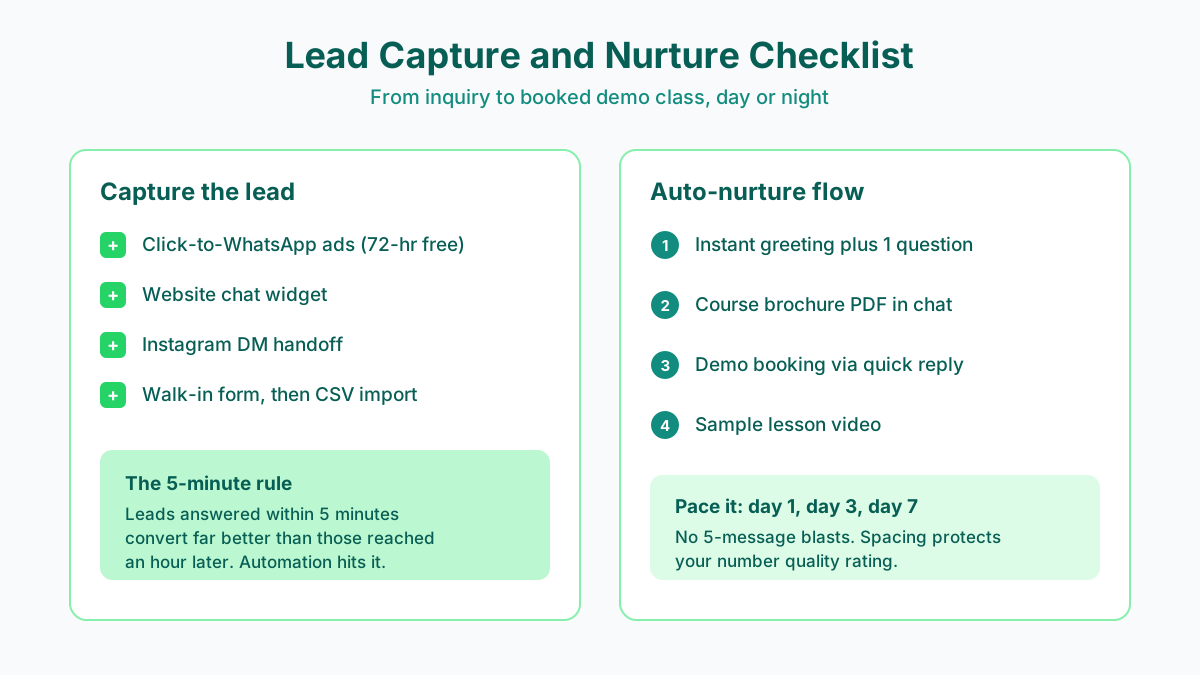
Click-to-WhatsApp ads
This is the single highest-return lead source for coaching institutes in 2026. A click-to-WhatsApp ad on Instagram or Facebook skips the landing page. The parent taps the ad and lands straight in a WhatsApp chat with you. There is a hidden cost advantage too. When someone messages you from a click-to-WhatsApp ad, the conversation is free for the next 72 hours, even for template messages. That makes paid ads on this channel cheaper than they look.
Website chat widget
Add a WhatsApp button to your website. A visitor reading your course page can ask one question without filling a form. Forms scare people off. A chat does not.
Social media DMs
Move Instagram DM enquiries into WhatsApp fast. Reply to the DM, then send your WhatsApp number or a click-to-chat link. WhatsApp gives you templates and automation that Instagram DMs cannot.
In-person inquiry forms
Walk-in parents and education-fair visitors should leave their number with consent to message them. Collect those numbers, then import them. With a tool like Wamafy you can upload a CSV and the numbers are cleaned and formatted on the way in.
Middle of funnel: nurturing the inquiry
A captured lead is not an enrolment. The gap between them is the nurture. This is where a rule-based chatbot earns its keep. You do not need AI for this. You need a flow that fires instantly, day or night.
Here is a nurture flow that works for most coaching institutes:
- Instant auto-reply the moment someone messages. Greet them, name your top course, and ask one question to qualify them.
- Course brochure as a PDF sent right inside the chat. No download page, no email hunt.
- Demo class booking through a quick-reply button. The parent taps a slot and they are booked.
- Sample lesson video for the fence-sitters. A two-minute clip of your best teacher beats any sales pitch.
Build this once with a no-code WhatsApp chatbot and it runs every day without you. The auto-reply hits that five-minute window even when your front desk has gone home for the night.
One common mistake here is over-messaging. Do not blast five follow-ups in one day. Space them. A good rhythm is day one, day three, and day seven across a one-to-two week window. That keeps you present without feeling pushy, which protects your number quality.
Bottom of funnel: closing the enrolment
Now the parent is warm. They have seen a demo and liked it. The job is to remove friction from the final yes. Three things close the deal on WhatsApp.
- A clear fee structure card. Lay out the course, the duration, and the fee in one clean message. If you run several courses, a carousel template can show each option as a scrollable card. Read more on WhatsApp carousel templates.
- A payment link. Drop a link to your payment page right in the chat. The parent pays without leaving WhatsApp to find your website.
- A parent call request. Some families want a human voice before paying a large fee. Offer a quick-reply button that books a callback. Respect that, and you close more high-ticket enrolments.
Be honest about what your tool does here. Wamafy sends the payment link as a message. It does not process the payment inside the chat. The parent taps your Razorpay or other payment-page link and pays there. That distinction matters when you set expectations with your team.
Onboarding new students
The enrolment is not the finish line. A rough first week causes early drop-outs and refund requests. A warm onboarding does the opposite. Send a short sequence the day a student joins:
- A welcome message that names their batch and start date.
- The batch schedule, so parents can plan around it.
- A short faculty introduction, which builds trust fast.
- The first study material, dropped straight into the chat.
This is where WhatsApp quietly beats email again. Parents actually open these messages. A study schedule sent by email often sits unread until the first missed class.
Retention and attendance
Retention is cheaper than acquisition. Keeping a student through the full course protects the revenue you already won. WhatsApp helps you stay present without nagging.
Use utility templates for the operational messages. Utility templates cost far less than marketing templates, and many service replies inside the 24-hour window are free. Here is what to automate:
- Daily or weekly class reminders so students show up on time.
- Missed-class alerts to parents. A parent who learns about an absence the same day stays engaged.
- Monthly progress updates. A short note on test scores keeps parents feeling the value of the fee.
Send these on a steady rhythm and your number stays healthy. If you want to keep your quality rating green, study how WhatsApp marketing works for Indian businesses and respect opt-out requests every time.
Re-enrolment for the next session
The easiest sale you will ever make is to a happy current student. Yet most institutes forget to ask. Build a re-enrolment drip that starts about 30 days before the session ends:
- An early-bird offer for students who renew before the session closes.
- An alumni offer for students who finished and might want an advanced course.
- A referral bonus, since one happy parent in an Indian housing society brings three more.
Tag every enrolled student by batch and course. Next session, a single segmented broadcast reaches exactly the right group. That is far better than one generic blast to your whole list, which hurts your quality rating and annoys people.
A real INR cost example
Founders always ask the same question. What will this actually cost? Here is a realistic month for a mid-sized coaching institute. Assume 500 inquiries a month and 100 enrolments.
| Cost line | Volume | Rate | Monthly cost |
|---|---|---|---|
| Wamafy Seed plan | 1 number | Rs 799/mo | Rs 799 |
| Marketing templates (offers, demo invites, re-enrolment) | ~2,500 sends | Rs 0.8631 each | Rs 2,158 |
| Utility templates (reminders, schedules, progress notes) | ~8,000 sends | ~Rs 0.13 each | Rs 1,040 |
| Service replies inside the 24-hour window | Thousands | Free | Rs 0 |
| Click-to-WhatsApp ad conversations (72-hour free window) | Many | Free | Rs 0 |
| Total all-in | Under Rs 4,000 | ||
Note one thing. The Meta message rates above are the same on any platform, because you pay Meta directly. Many providers add a markup of 10 to 60 percent on top of those rates. Wamafy does not. So your bill stays close to the raw Meta cost. Compare the real numbers in this breakdown of the true cost of WhatsApp marketing in India.
Most institutes can run their entire admissions and retention engine for under Rs 4,000 a month. If even five extra students enrol because you replied in five minutes instead of five hours, the channel has paid for itself many times over.
Ready to set this up before the August admissions rush? Start a 14-day free Wamafy trial. Card authorized during trial activation, charged only on day 15. Build your auto-reply flow, import your inquiry list, and send your first demo-class broadcast this week.
Frequently Asked Questions
How do I run WhatsApp marketing for a coaching institute with multiple batches?
Tag each contact by batch and course when you import them. Then send segmented broadcasts to one batch at a time. This keeps reminders relevant and protects your number quality, since you never message students about a batch they are not in.
Do parents and students both need to opt in separately?
Yes. Opt-in is mandatory in India before you message anyone. Collect consent from both the parent and the adult student where each is a contact. For a minor, the parent is the right opt-in. Keep your opt-in proof, since it protects your number if anyone reports you.
Can I send fee reminders and class schedules for free?
Class schedules and reminders use utility templates, which cost far less than marketing templates. Replies you send inside the 24-hour service window are free. So most of your operational messaging is very cheap or free.
What is the best way to handle a flood of inquiries during admission season?
Set up an instant auto-reply with a rule-based chatbot. It greets every inquiry within seconds, sends the brochure, and books a demo slot. Your front-desk team then handles only the warm, qualified leads instead of every cold message.
How fast should I reply to a coaching inquiry on WhatsApp?
As fast as possible, ideally within five minutes. Leads contacted within five minutes convert far better than those reached an hour later. An auto-reply lets you hit that window even at night or on a holiday, then a human follows up.
Will WhatsApp marketing work for a small single-subject tuition centre?
Yes. The Seed plan at Rs 799 a month covers one number, which is enough for a small centre. The same funnel applies at a smaller scale. You capture inquiries, auto-reply, book demos, collect fees, and send reminders, just with fewer contacts.